
Choosing the right sleeping bag
Useful questions to ask yourself
Our sleeping bag guide will help you answer questions you've probably been asking yourself:
- What do you want to use your sleeping bag for? These four factors will influence the selection of your sleeping bag.
- Synthetic or down sleeping bag? The advantages and disadvantages of these two sleeping bag fill materials.
- What kinds of sleeping bags are there? At deuter, sleeping bags can be selected according to material, type of use and length.
- What kinds of temperatures should a sleeping bag be able to handle? deuter labels its sleeping bags with the relevant data; but just how warm your sleeping bag needs to keep you also depends on your own constitution.
- After buying your sleeping bag: top tips for a restful night’s sleep

What do you want to use your sleeping bag for?

Finding the right sleeping bag is actually pretty simple if you know what you’ll be using it for. The following questions will help you figure out whether you should choose a down sleeping bag or a synthetic fill sleeping bag.
- Climate: Do you often travel to rainy environments? Or usually hike from hut to hut in the mountains? What kind of climate do you expect to encounter?
- Activity: How will you be moving about? Will you be carrying your sleeping bag or staying in one place?
- Space: Wide quilt-style or snug mummy shape? Getting the correct size is important. The narrower the fit, the quicker it will warm up the air inside the bag. But too narrow is not good either.
- Durability: The more you move about, the more mechanical strain your bag will be put through through all the packing and unpacking.
| Types | Down sleepping bag | Synthetic sleeping bag |
|---|---|---|
| Advantages |
|
|
| Disadvantages |
|
|


TEMPERATURE RANGES
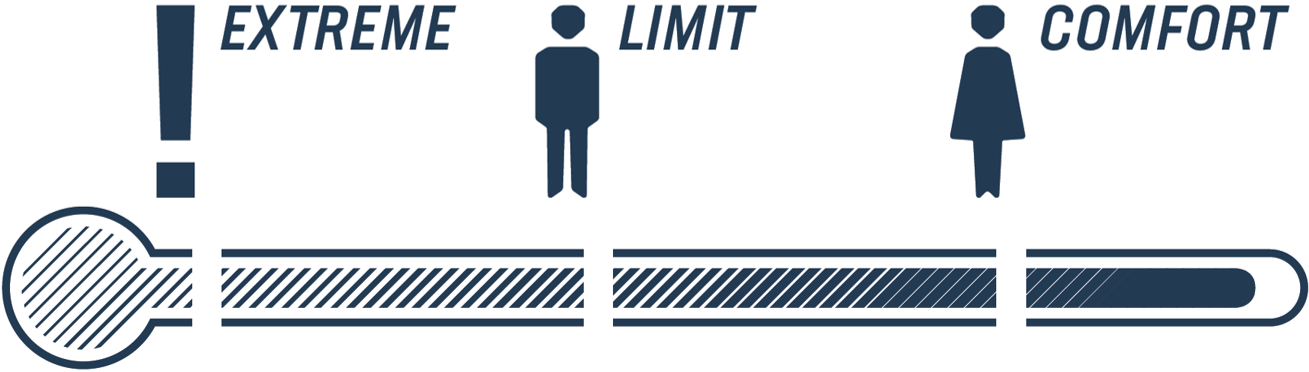
- T-COM: The Comfort temperature rating indicates the lowest temperature at which an average woman (25 yrs / 60 kg / 160 cm) can spend a comfortable night’s sleep. This is also the temperature range that an inexperienced user will feel comfortable.
- T-LIM: The Limit temperature rating indicates the lowest temperature at which an average man (25 yrs / 70 kg / 173 cm) can spend a comfortable night’s sleep. To stay warm at this temperature, the user will also need to adjust clothing and behavior.
- T-EXT: The Extreme temperature rating indicates the lowest temperature at which an average woman can survive for 6 hours in extreme conditions. Sleep is not in question here. This is where there is a risk to health such as hypothermia.
Other temperature factors to consider when buying a sleeping bag:
These standardized values are simply laboratory test results. They are designed to provide a good basis from which to compare products from different manufacturers. But because everybody is unique, and everyone responds to situations differently, the temperature ratings should only be used as a guide when buying a sleeping bag. Other factors you should also consider include:
- People are affected by more determinants of warmth than a ‘mannequin’ in a climate chamber. For example, men and women perceive temperatures differently; and then there is also age, physical condition, and experience. Plus, how tired someone is (exhausted or well rested); how much they have eaten, or whether they’ve drunk alcohol (alcohol makes you feel the cold faster) which all contribute to warmth.
- Environmental factors, that are regulated or ‘normalized’ in the climate chamber, play an important role in real-world situations. And affect how effectively the insulation can be.
- A good base underneath insulates the sleeper from the ground.
- Technical baselayers, that are dry and wick moisture to the outside (beanie hat!) and finding a sheltered sleeping spot are important – wind and dampness can severely impact your recovery sleep.
- The temperature data is taken in a climate chamber. Remember that conditions can be entirely different on multi-day trips or in challenging natural environments, and you should therefore adapt to these.


