
deuter's actionable areas
We want to make a holistic contribution to society and the environment. Under the maxim ‘Together for 360° Responsibility’ we’ve set ourselves transparent, interdisciplinary measures with quantifiable objectives across six actionable areas. Our actionable areas and sustainability goals are based on the UN’s 17 Sustainable Development Goals.


Find out more about our goals in these fields of action: climate protection, environmental protection and animal welfare.
Climate protection
Our promise
We will continue to identify and reduce our carbon footprint, and offset any unavoidable CO2 emissions through climate-positive projects.
Our objective
Our goal is to reduce the CO2 footprint at all deuter locations and across our global production facilities. Since 2020, we have been working with ClimatePartner to track location-specific and product-specific emissions in order to drive targeted reductions. Our headquarter has been ClimatePartner-certified since 2021, and as of 2025, all products in our range carry this certification. Together with ClimatePartner, we will continue to support global climate protection projects to reduce our CO₂ footprint. In doing so, we are contributing to the goals of the Paris Climate Agreement.
Our climate strategy
The climate crisis is the biggest challenge mankind is currently facing. The increase in industrialization worldwide is playing a major role in altering our climate. The textile industry ranks just behind the oil industry in terms of greenhouse gas emissions and even ahead of transportation and power generation. At 1.2 trillion tons of CO2 emissions per year, the production of textiles causes more greenhouse gases than all international flights and all shipping combined. This is driven by steadily growing production volumes and ever-shorter product life cycles. The extraction of raw materials, processing and transport are the main sources of emissions where textiles are concerned. More than 170 countries have now committed themselves to joint climate action with the Paris Climate Agreement. The international resolution is intended to ensure that global warming does not surpass 1.5 degrees Celsius. In order to achieve this, we have to reduce carbon emissions worldwide by 50%. As a company that acts responsibly and takes its role in society seriously, we share the objectives of this agreement and are committed to taking all appropriate action within our power.
To this end, we have embarked on an ambitious path and initiated structured processes. Following extensive analysis, we are implementing clear, integrated strategies that will help us achieve our climate target by 2028 through carbon reduction and offsetting. We believe the greatest potential lies in reducing emissions upstream in our supply chain. Here, we need to work with our partners to find adequate and sustainable solutions. However, in order to also reduce the impact on global warming in the areas of product design and development, we are replacing existing processes and materials with more climate-friendly alternatives, such as recycled materials, spin-dyed fabrics etc. The longevity of our products also contributes to a reduction in carbon emissions, because by extending product life cycles by 10%, for instance, we not only reduce CO2 by 8%, but also cut water consumption by 10% and waste by 9%, and even cut resource consumption costs by 9%.*
In doing so, we are contributing to the following SDGs:
Environmental protection
Our promise
We will do our best to minimize the impact of our products on the environment.
Our objective
To protect the environment by selecting resources carefully, reducing the amount of resources used and avoiding harmful substances. And to engage in environmental projects together with partner organizations and NGOs, and continually expand these.
Our strategic measures
- Together with ClimatePartner, we track and reduce the emissions of our headquarters in Gersthofen as well as our entire product range of backpacks, bags, sleeping bags, and accessories through targeted measures. Any remaining emissions are offset by supporting climate protection projects.
- Sustainability is reflected in our strategic product development from the get-go. Before embarking on the development of new products, we investigate the degree of sustainability we can incorporate. We’re also consistently improving them so that they last longer, are easier to repair, or are made from recycled or certified materials.
- Our policy is to incorporate existing options into product planning. In terms of innovation, we will proceed with concepts for sustainable materials and products so that at least 50% of our products are made of recycled core materials by 2025 at the latest. We’re facing a number of major challenges in this respect. We need to close material loops, develop plastics without petroleum and employ new technologies that save resources.
- Our materials and product experts are experimenting with new approaches to turn our vision into reality. In this case, interacting with other companies and the Textile Alliance (e.g. in the circular economy expert group) is vital. What’s more, we’re enhancing in-house systems to provide performance indicators and make progress easier to evaluate.
- As part of the bluesign® partnership, we work with our suppliers and manufacturers to create more resource-efficient and environmentally friendly products and production processes. We make use of all the tools that the bluesign® system offers and have set ambitious goals: We want to keep increasing the number of bluesign® products in our collection, and use a minimum of 70% sustainably-made, bluesign®-certified main materials (fabrics).
- Our efforts have also helped us attain Green Button (Grüner Knopf) certification. To bear the international hallmark for sustainable textiles, initiated by the German government, products must be manufactured in line with strict environmental and social standards as laid out by the government. The Green Button logo indicates to consumers that they are buying sustainable textiles. All of our bluesign® certified products automatically bear the Green Button seal.
- We’re also looking at making improvements further down the supply chain because this is where consumption of energy and chemicals is the highest. We help our suppliers to manage chemicals so that the environment, wastewater, and climate are not polluted unnecessarily. Training courses, flyers and certification (e.g. bluesign®) help to put our message across.
- And not just products. The packaging we use also needs to be as sustainable as possible. Which is why we’re working on material-saving and recyclable alternatives to our current packaging.
- As a member of the European Outdoor Conservation Association (EOCA), we support select nature conservation projects worldwide. We want to forge ahead with this commitment and nominate at least one of our own projects for association support and implement it, if selected.
- 10% of revenue from the sale of the deuter Infiniti series, an upcycled collection made using fabric remnants from past collections, goes to the 1% for the Planet organization. This organization supports the work of carefully selected partners in six core environmental areas: Climate, land, water, food, wildlife and pollution.
- We’re also reviving the successful deuter dirtbag concept. The little bag has already encouraged lots of people to pick up any waste they find, or have dropped themselves on mountain treks, and take it back home with them.
- We want our products to give our customers lasting value. However, some items are only required in certain phases of life, or in special circumstances, and purchasing them is unsustainable given how little they’re used. Which is why we launched a free child carrier rental scheme. The scheme has been well received and will be extended to include other product categories in addition to child carriers.
- Our Second Life products are backpacks with signs of minor wear and tear, or manufacturing flaws. They could equally be returns and product samples no longer required. These items are carefully and expertly restored by our experienced repair service team. This option extends the life of our products, prevents waste and allows customers to purchase high-quality, fully functional gear for less – and contribute to saving the environment at the same time.
- And by offering a repair service, we extend the working life of our products even more. In Germany alone, 3,500 items were repaired in just one year (2018-2019), which equates to 14 repairs each working day. We also want to help customers carry out repairs themselves. As a result, we’re planning a DIY repair guide, repair courses and the option to order more spare parts than was possible in the past.
- All deuter products are made without PFAS since 2020. This will remain the case in future because we don’t use any durable water repellents (DWR) containing PFASs in our production lines.
In doing so, we are contributing to the following SDGs:
Animal welfare
Our promise
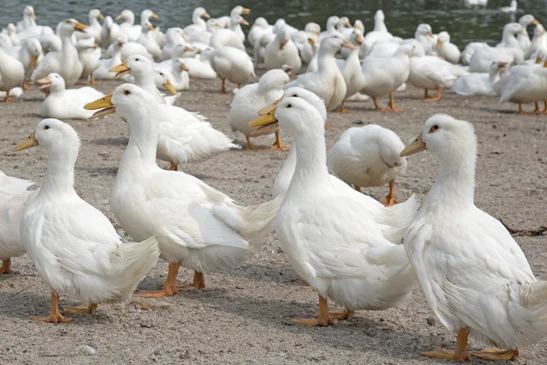
No animals will suffer or be harmed in the creation our products.
Our objective
To consciously avoid animal-based products where possible. We ensure, where possible, that all components used in our production chain are vegan.
Our strategic measures
- Where it’s in our power to do so, we ensure that all components used in the production of our backpacks are vegan.
- All our down sleeping bags are made using RDS-certified down since 2015 and carry bluesign® certification too.
- We source essential functional natural materials like down as a waste product from the food industry and through sustainable, certified supply chains.
In doing so, we are contributing to the following SDGs:
Find out more about our goals in these fields of action: climate protection, environmental protection and animal welfare.
Climate protection
Our promise
We will continue to identify and reduce our carbon footprint, and offset any unavoidable CO2 emissions through climate-positive projects.
Our objective
Our goal is to reduce the CO2 footprint at all deuter locations and across our global production facilities. Since 2020, we have been working with ClimatePartner to track location-specific and product-specific emissions in order to drive targeted reductions. Our headquarter has been ClimatePartner-certified since 2021, and as of 2025, all products in our range carry this certification. Together with ClimatePartner, we will continue to support global climate protection projects to reduce our CO₂ footprint. In doing so, we are contributing to the goals of the Paris Climate Agreement.
Our climate strategy
The climate crisis is the biggest challenge mankind is currently facing. The increase in industrialization worldwide is playing a major role in altering our climate. The textile industry ranks just behind the oil industry in terms of greenhouse gas emissions and even ahead of transportation and power generation. At 1.2 trillion tons of CO2 emissions per year, the production of textiles causes more greenhouse gases than all international flights and all shipping combined. This is driven by steadily growing production volumes and ever-shorter product life cycles. The extraction of raw materials, processing and transport are the main sources of emissions where textiles are concerned. More than 170 countries have now committed themselves to joint climate action with the Paris Climate Agreement. The international resolution is intended to ensure that global warming does not surpass 1.5 degrees Celsius. In order to achieve this, we have to reduce carbon emissions worldwide by 50%. As a company that acts responsibly and takes its role in society seriously, we share the objectives of this agreement and are committed to taking all appropriate action within our power.
To this end, we have embarked on an ambitious path and initiated structured processes. Following extensive analysis, we are implementing clear, integrated strategies that will help us achieve our climate target by 2028 through carbon reduction and offsetting. We believe the greatest potential lies in reducing emissions upstream in our supply chain. Here, we need to work with our partners to find adequate and sustainable solutions. However, in order to also reduce the impact on global warming in the areas of product design and development, we are replacing existing processes and materials with more climate-friendly alternatives, such as recycled materials, spin-dyed fabrics etc. The longevity of our products also contributes to a reduction in carbon emissions, because by extending product life cycles by 10%, for instance, we not only reduce CO2 by 8%, but also cut water consumption by 10% and waste by 9%, and even cut resource consumption costs by 9%.*
In doing so, we are contributing to the following SDGs:
Environmental protection
Our promise
We will do our best to minimize the impact of our products on the environment.
Our objective
To protect the environment by selecting resources carefully, reducing the amount of resources used and avoiding harmful substances. And to engage in environmental projects together with partner organizations and NGOs, and continually expand these.
Our strategic measures
- Together with ClimatePartner, we track and reduce the emissions of our headquarters in Gersthofen as well as our entire product range of backpacks, bags, sleeping bags, and accessories through targeted measures. Any remaining emissions are offset by supporting climate protection projects.
- Sustainability is reflected in our strategic product development from the get-go. Before embarking on the development of new products, we investigate the degree of sustainability we can incorporate. We’re also consistently improving them so that they last longer, are easier to repair, or are made from recycled or certified materials.
- Our policy is to incorporate existing options into product planning. In terms of innovation, we will proceed with concepts for sustainable materials and products so that at least 50% of our products are made of recycled core materials by 2025 at the latest. We’re facing a number of major challenges in this respect. We need to close material loops, develop plastics without petroleum and employ new technologies that save resources.
- Our materials and product experts are experimenting with new approaches to turn our vision into reality. In this case, interacting with other companies and the Textile Alliance (e.g. in the circular economy expert group) is vital. What’s more, we’re enhancing in-house systems to provide performance indicators and make progress easier to evaluate.
- As part of the bluesign® partnership, we work with our suppliers and manufacturers to create more resource-efficient and environmentally friendly products and production processes. We make use of all the tools that the bluesign® system offers and have set ambitious goals: We want to keep increasing the number of bluesign® products in our collection, and use a minimum of 70% sustainably-made, bluesign®-certified main materials (fabrics).
- Our efforts have also helped us attain Green Button (Grüner Knopf) certification. To bear the international hallmark for sustainable textiles, initiated by the German government, products must be manufactured in line with strict environmental and social standards as laid out by the government. The Green Button logo indicates to consumers that they are buying sustainable textiles. All of our bluesign® certified products automatically bear the Green Button seal.
- We’re also looking at making improvements further down the supply chain because this is where consumption of energy and chemicals is the highest. We help our suppliers to manage chemicals so that the environment, wastewater, and climate are not polluted unnecessarily. Training courses, flyers and certification (e.g. bluesign®) help to put our message across.
- And not just products. The packaging we use also needs to be as sustainable as possible. Which is why we’re working on material-saving and recyclable alternatives to our current packaging.
- As a member of the European Outdoor Conservation Association (EOCA), we support select nature conservation projects worldwide. We want to forge ahead with this commitment and nominate at least one of our own projects for association support and implement it, if selected.
- 10% of revenue from the sale of the deuter Infiniti series, an upcycled collection made using fabric remnants from past collections, goes to the 1% for the Planet organization. This organization supports the work of carefully selected partners in six core environmental areas: Climate, land, water, food, wildlife and pollution.
- We’re also reviving the successful deuter dirtbag concept. The little bag has already encouraged lots of people to pick up any waste they find, or have dropped themselves on mountain treks, and take it back home with them.
- We want our products to give our customers lasting value. However, some items are only required in certain phases of life, or in special circumstances, and purchasing them is unsustainable given how little they’re used. Which is why we launched a free child carrier rental scheme. The scheme has been well received and will be extended to include other product categories in addition to child carriers.
- Our Second Life products are backpacks with signs of minor wear and tear, or manufacturing flaws. They could equally be returns and product samples no longer required. These items are carefully and expertly restored by our experienced repair service team. This option extends the life of our products, prevents waste and allows customers to purchase high-quality, fully functional gear for less – and contribute to saving the environment at the same time.
- And by offering a repair service, we extend the working life of our products even more. In Germany alone, 3,500 items were repaired in just one year (2018-2019), which equates to 14 repairs each working day. We also want to help customers carry out repairs themselves. As a result, we’re planning a DIY repair guide, repair courses and the option to order more spare parts than was possible in the past.
- All deuter products are made without PFAS since 2020. This will remain the case in future because we don’t use any durable water repellents (DWR) containing PFASs in our production lines.
In doing so, we are contributing to the following SDGs:
Animal welfare
Our promise
No animals will suffer or be harmed in the creation our products.
Our objective
To consciously avoid animal-based products where possible. We ensure, where possible, that all components used in our production chain are vegan.
Our strategic measures
- Where it’s in our power to do so, we ensure that all components used in the production of our backpacks are vegan.
- All our down sleeping bags are made using RDS-certified down since 2015 and carry bluesign® certification too.
- We source essential functional natural materials like down as a waste product from the food industry and through sustainable, certified supply chains.
In doing so, we are contributing to the following SDGs: