A restful sleep in a camper
A relaxing night’s sleep in a camper – how to make it cosy even when you’re on the road.
After all, there’s nothing quite like sleeping in your own bed. But what if you can’t take it with you on a camping holiday? Then it’s time to look for possible alternatives that can offer a similarly restful night’s sleep.
In this blog post, we’ll be introducing different types of bedding, explaining their pros and cons, and showcasing a great alternative from deuter that combines almost all your needs under a single ‘duvet’.

Sleeping just like at home, even on a campervan and cycling holiday. Is that possible?
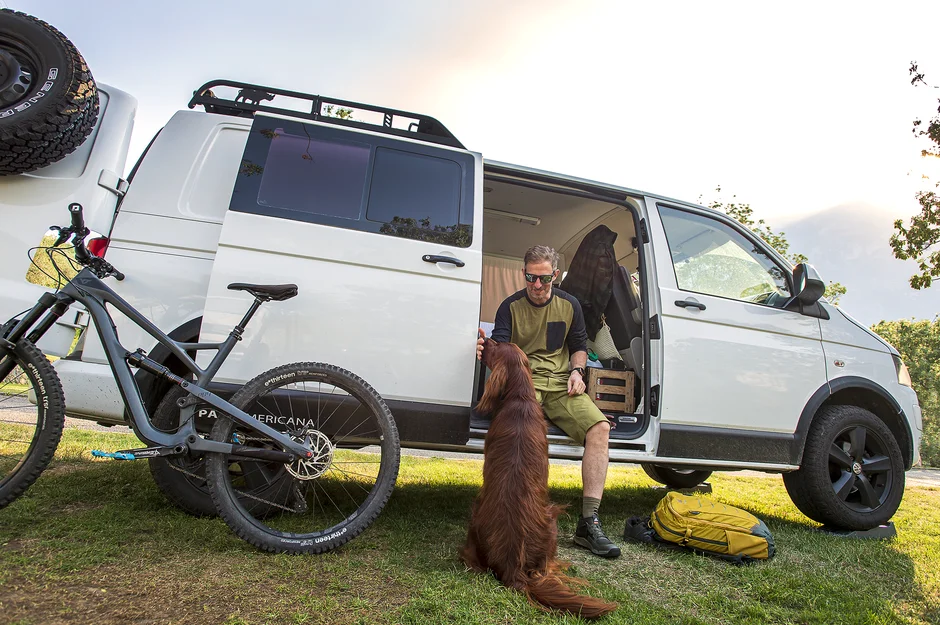
Off to Lake Garda. Finally, a chance to spend a long weekend with friends and the dog again. Mountains, the lake, cycling and la dolce vita – it’s precisely this combination that still makes Lake Garda so appealing, even after all these years. So we grab our converted T5 van and pack for four days. And this is where the question has always arisen for us: what should we take with us to be able to sleep in our van as comfortably and cosily as at home? Bedding, a sleeping bag or blankets?

Duvet, blanket or sleeping bag? What are the pros and cons?
It’s a hotly and divides the camping community into three camps: those who prefer practical sleeping bags, those who can’t do without cosy duvets, and those who have come to appreciate the flexibility of blankets through and through. There doesn’t seem to be a clear winner, because if you look a bit closer, all three options have their pros and cons.
Duvets – cosy, but very bulky
One thing is quite clear: you certainly get the best night’s sleep under your own duvet. Add to that your favourite, freshly washed bed linen, and it almost feels like being at home. You can cope with the temperature fluctuations from spring to autumn using thin summer duvets or thicker down duvets. A duvet also offers plenty of freedom of movement for restless sleepers or those who like to have plenty of legroom. However, this luxury does have its drawbacks. For one thing, down duvets are very sensitive to humidity, which rises above the dew point overnight or seeps in from outside in damp weather. Due to their fine structure, the tiny down clusters can ‘absorb’ three times their own weight in moisture, thereby losing their effectiveness. However, duvets with other natural or synthetic fillings can often feel damp too and take quite a long time to dry. Another disadvantage of bringing your own duvets is the amount of space they take up. They do not compress well and therefore take up a lot of space in a campervan or van. Furthermore, they are extremely prone to getting dirty and are really only suitable for indoor use. 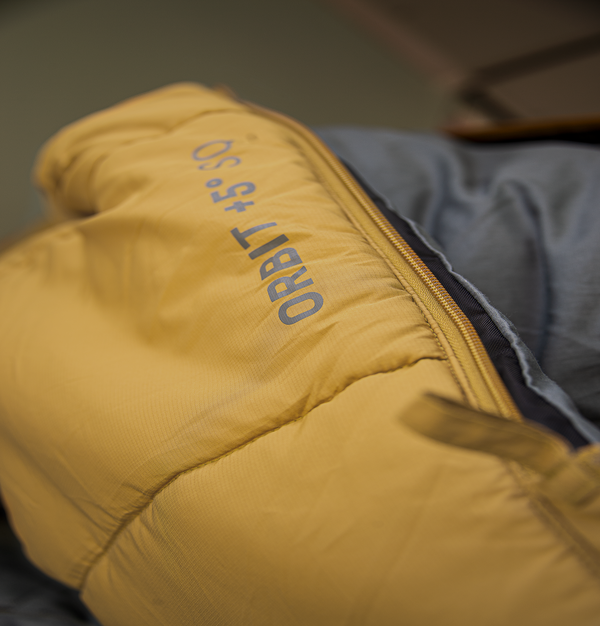
Blankets – multifunctional, but with limited versatility
From lightweight cotton bedspreads and fleece throws made from synthetic fibres right through to high-quality woollen and natural fibre blankets. There are no limits here, and there’s a suitable solution for every taste, every temperature and every purpose. Blanket enthusiasts value precisely this multifunctionality and flexibility. And so, depending on the temperature, some people travel with a thin or thicker blanket, which can then be converted into a duvet by using a duvet cover. Blankets are also often used as an ‘emergency kit’ for cold nights – whether as an extra layer over the duvet or Sleeping bag, or as a warming wrap for a cosy, cool evening under the starry sky. Nevertheless, blankets do not have superpowers, for even the warmest woollen blanket can no longer create a cosy, comfortable atmosphere in cold temperatures. What’s more, much like duvets, they’re quite bulky, take up a lot of storage space and, due to their rough texture, are prone to getting dirty.
Sleeping bag – practical, but usually uncomfortable
That leaves the sleeping bag. It’s actually a real all-rounder. It can be compressed to the smallest size and easily stowed away; it keeps you nice and warm even in the harshest winter and shields you from the cold on all sides; thanks to its hard-wearing material, it can be used both inside and outside the campervan or van; and it can be used zipped up as a Sleeping bag or unzipped as a blanket. However, there are also limitations, the causes of which lie in the sleeping bag’s actual intended purpose: mummy-style sleeping bags are usually narrow in cut to keep the heat inside for as long as possible. As functionality is the priority, the legroom we enjoy under duvets is quite restricted here. Durable, hard-wearing material is important for a sleeping bag, but it lacks the cosiness and texture of a duvet. Furthermore, the issue with down and moisture also applies here. You should also avoid washing the sleeping bag too often, so that the filling doesn’t lose its effectiveness too quickly. And if you want to use the open sleeping bag as a duvet on warmer days, the tapered shape and the head section hanging down are usually a nuisance.
Why is a blanket-style sleeping bag the ideal solution?
We, too, had different favourites up until this camping trip. I never wanted to be without my luxury down duvet, whilst Jan preferred the rather spartan solution of a sleeping bag. But this time, we’d packed the deuter Orbit SQ to test out. A blanket-style sleeping bag specifically designed to meet the needs of campers and van life enthusiasts. And one that combines the advantages of each alternative. 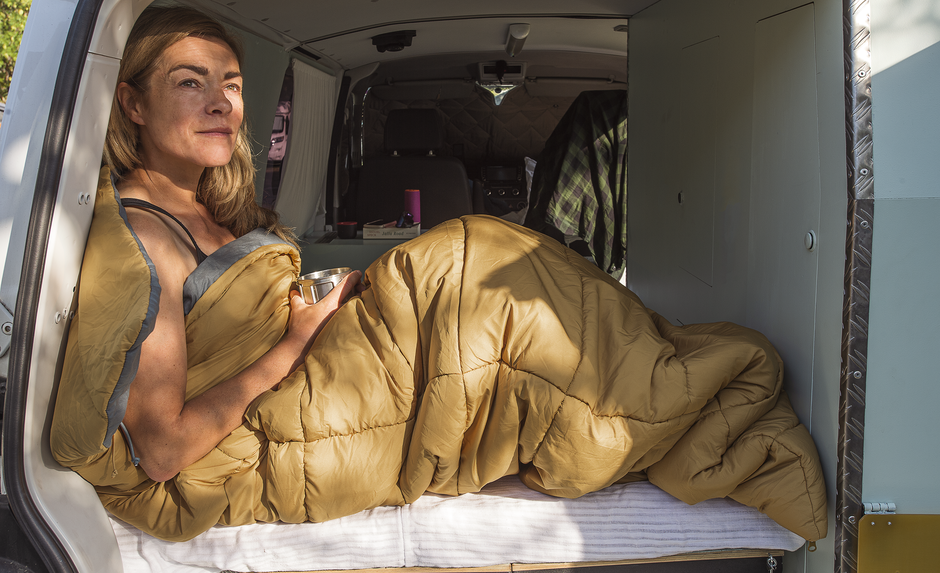
The first thing that catches the eye is its appearance. The blanket sleeping bag’s matt, soft yet robust outer material feels pleasant to the touch and is made from 100 per cent recycled materials. What’s more, unlike ‘normal’ sleeping bags, the Orbis SQ has a cool, lifestyle-oriented look. And it scores highly in terms of functionality too. Thanks to its double-zipper design, the Orbis SQ can be used open as a blanket, as a Sleeping bag for colder nights, or zipped together as a double Sleeping bag or double blanket with your partner, both indoors and outdoors. This all-rounder therefore covers all areas of camping use.
So far, so good. But what about how it feels to sleep in it? Does it come close to my down duvet? I’m still sceptical. However, after the first night, I have to admit that, thanks to the high-loft hollow-fibre filling, the Sleeping bag provides an extremely comfortable thermal environment. And the soft inner lining made from a cotton-blend fabric also ensures a soft, pleasant feel against the skin. Almost like bed linen. I really notice the difference compared to normal sleeping bags, especially at the head end where I rest my face. An added bonus: the head section can be detached and washed separately, so it smells fresh every time I return home from a trip. What’s more, thanks to the straight cut, I have plenty of legroom, which is particularly important to me as I can’t keep my feet still at night. And if it gets a bit cooler, I simply pull the drawstrings on the hood to keep the warmth inside.
In terms of comfort and functionality, the Orbit SQ is a genuine alternative – or rather, an upgrade – to our previous solutions. And when it comes to pack size, at the very least, my down duvet option is running out of space, as the blanket sleeping bag can be stuffed into the Pack sack to save space and stowed away in the wall cupboard with ease.
After four days of intensive testing, one thing is clear: We’re welcoming a new member to our van life family. The Orbit SQ blanket sleeping bag has impressed us in every respect. What’s more, the colour goes perfectly with Jan’s outfit and our dog. So we’ve really ‘killed several birds with one stone’. 
Click here for Orbit