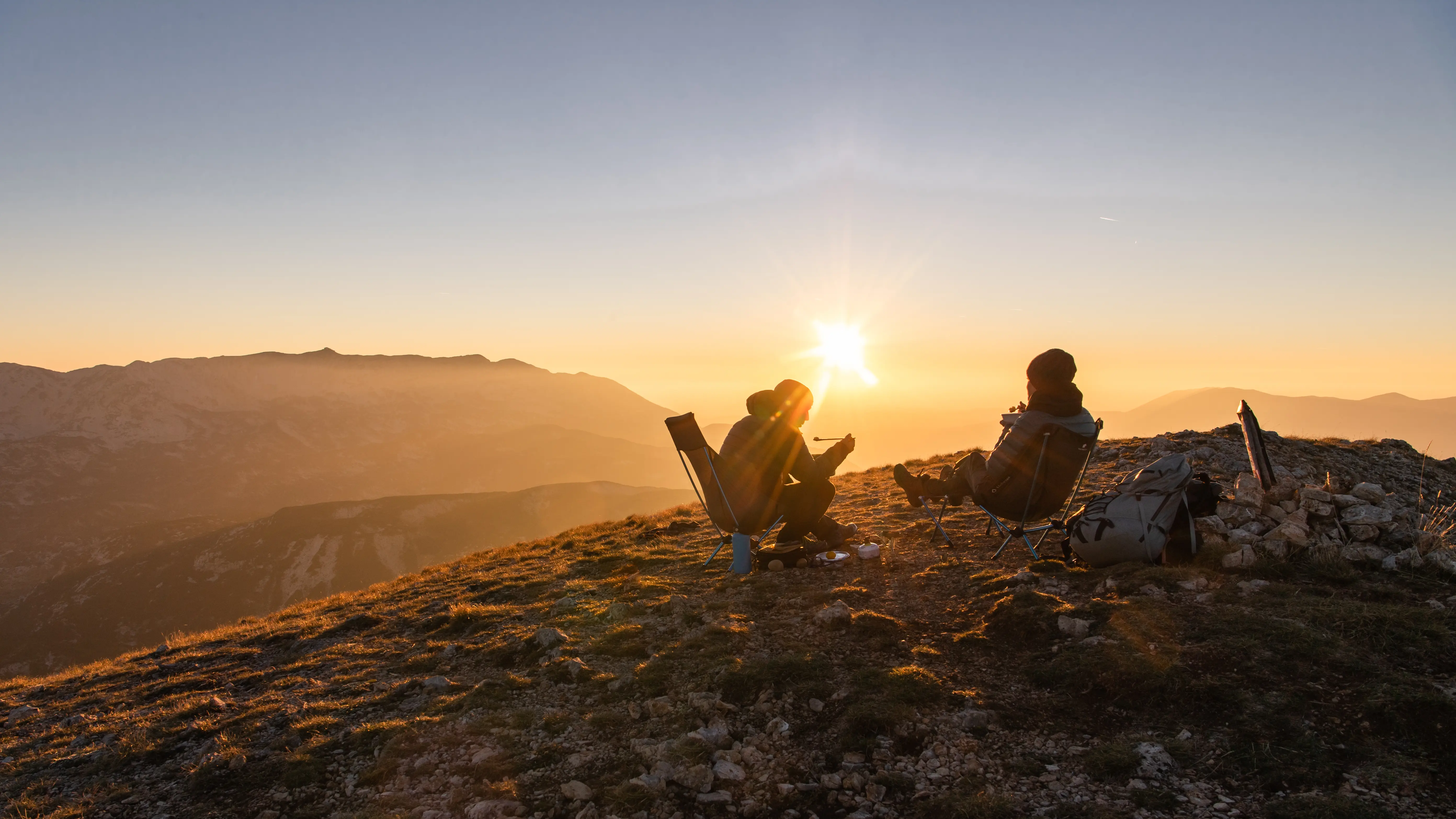
Do I have what it takes to be a mountain guide?
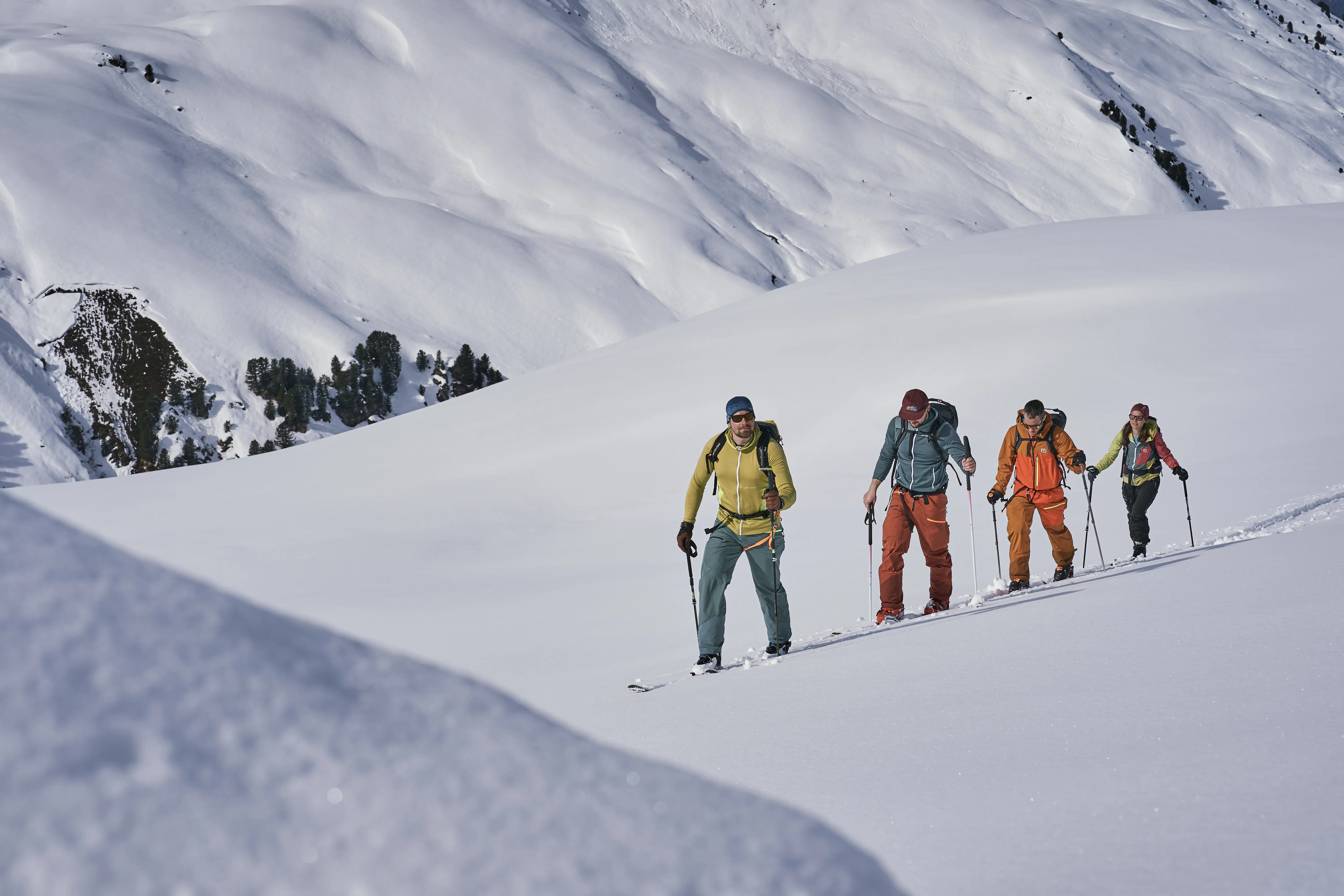
Dream job mountain guide
You clearly enjoy mountaineering and climbing. The mountains fascinate you, and you spend every spare moment there. How cool would it be to do it professionally and get paid to climb mountains! Perhaps you’ve caught yourself thinking exactly that before? You might be toying with the idea of becoming a mountain guide, but aren’t quite sure yet whether it’s actually the right thing for you. Or perhaps you’re not yet sure how to go about achieving this goal. Well, you’ve come to the right place. In this Basecamp post, we’ll explain the key principles, requirements and procedures, and share professional tips and tricks with you – from your first serious mountain tours right through to specific preparation for the entrance exams for the mountain guide training programme. Let’s go – the mountains are calling!
A career with a future
Being a mountain guide is a demanding profession that carries a great deal of responsibility. At the same time, it is a profession with a bright future. Varied and attractive. Perfect for mountain enthusiasts with teaching and communication skills.
As a mountain sports brand, deuter places great importance on working with competent partners and is committed to promoting qualified young talent. Perhaps you’ll soon be among the next candidates for the mountain guide training programme.
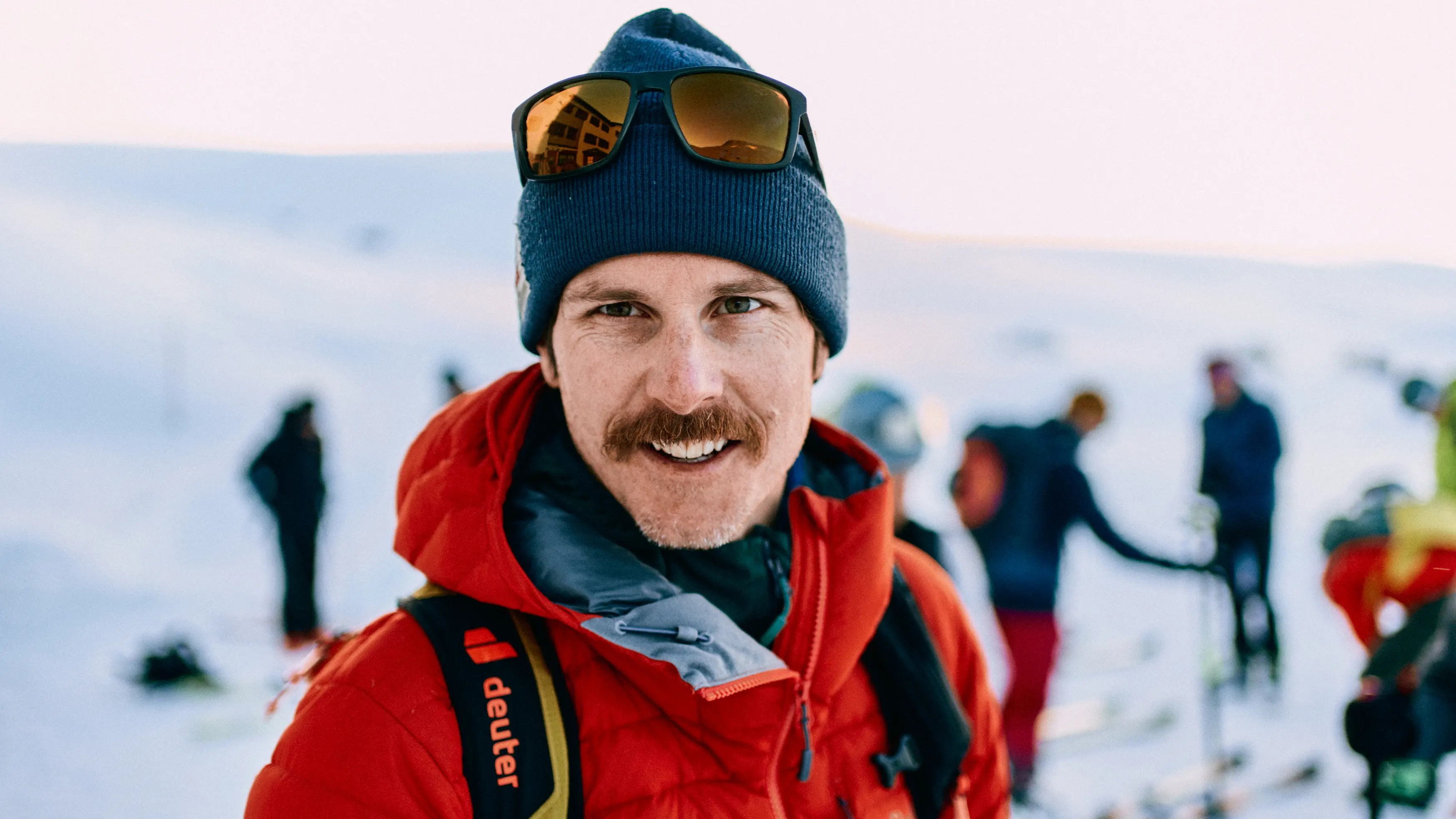
“As a mountain guide, you turn your hobby into a career and are rewarded by the sparkle in your guests’ eyes. It’s a very varied profession focused on ‘making dreams come true’ …!”
Michael Bückers, State-certified mountain and ski guide, deuter Pro Team
Why am I becoming a guide?
Mountain guide – a dream job? Perhaps not for everyone, but undoubtedly for those who have a deep connection with the mountains and with people. For those who feel called to it. This job not only takes you to many peaks, but also to the pinnacle of your own dreams. For many a mountaineer, passing the mountain guide exam is the crowning glory of their mountaineering career.
However, guiding is by no means solely about mountaineering achievements. In addition to technical skill, the following are crucial:
Group work
It’s not primarily about achieving your own goals. As a mountain guide, you support others and enable them to reach their goals in the mountains safely.
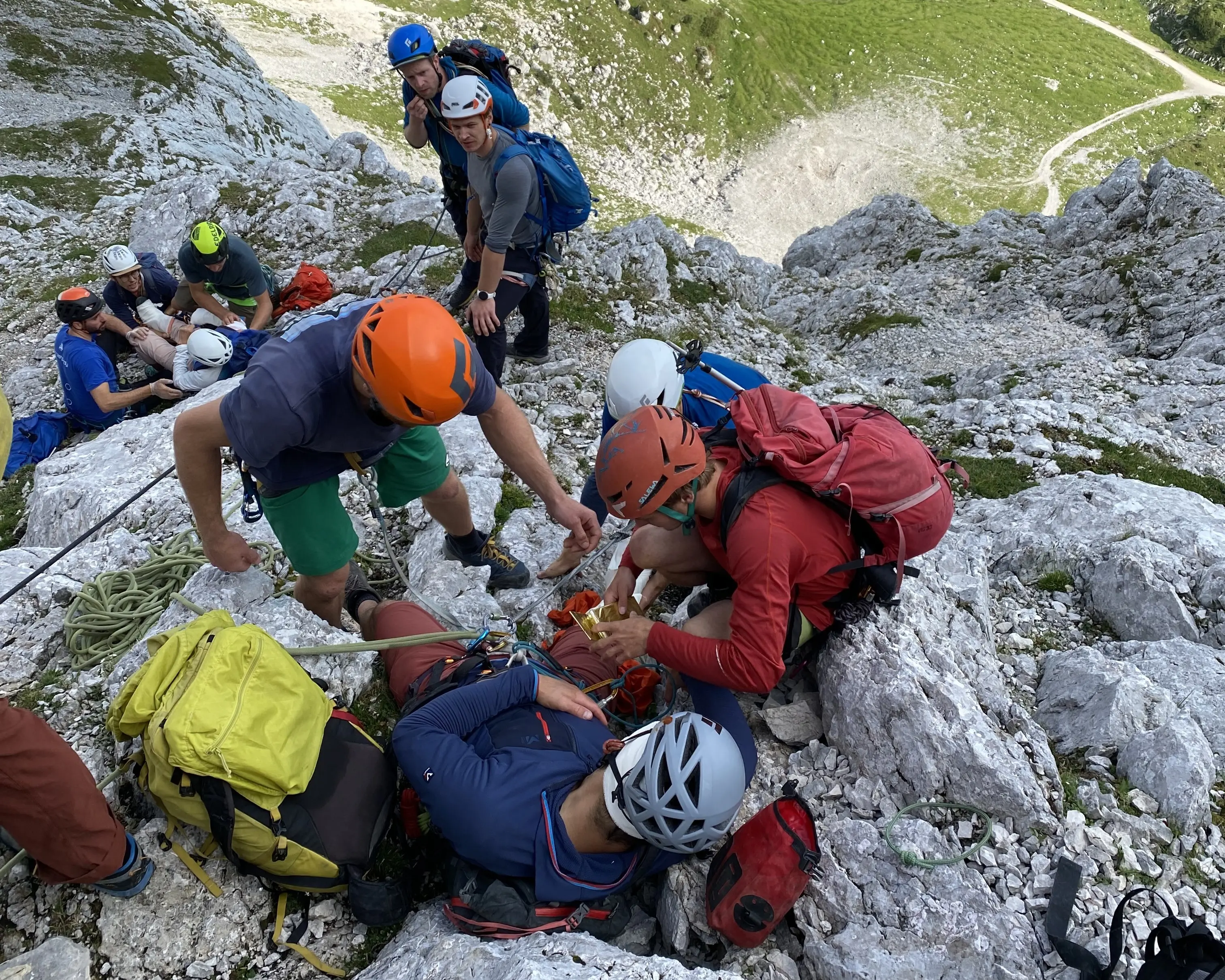
Responsibility and trust
Mountain guides are people you can trust, almost a bit like doctors. As a mountain guide, you are responsible for the lives of your clients.
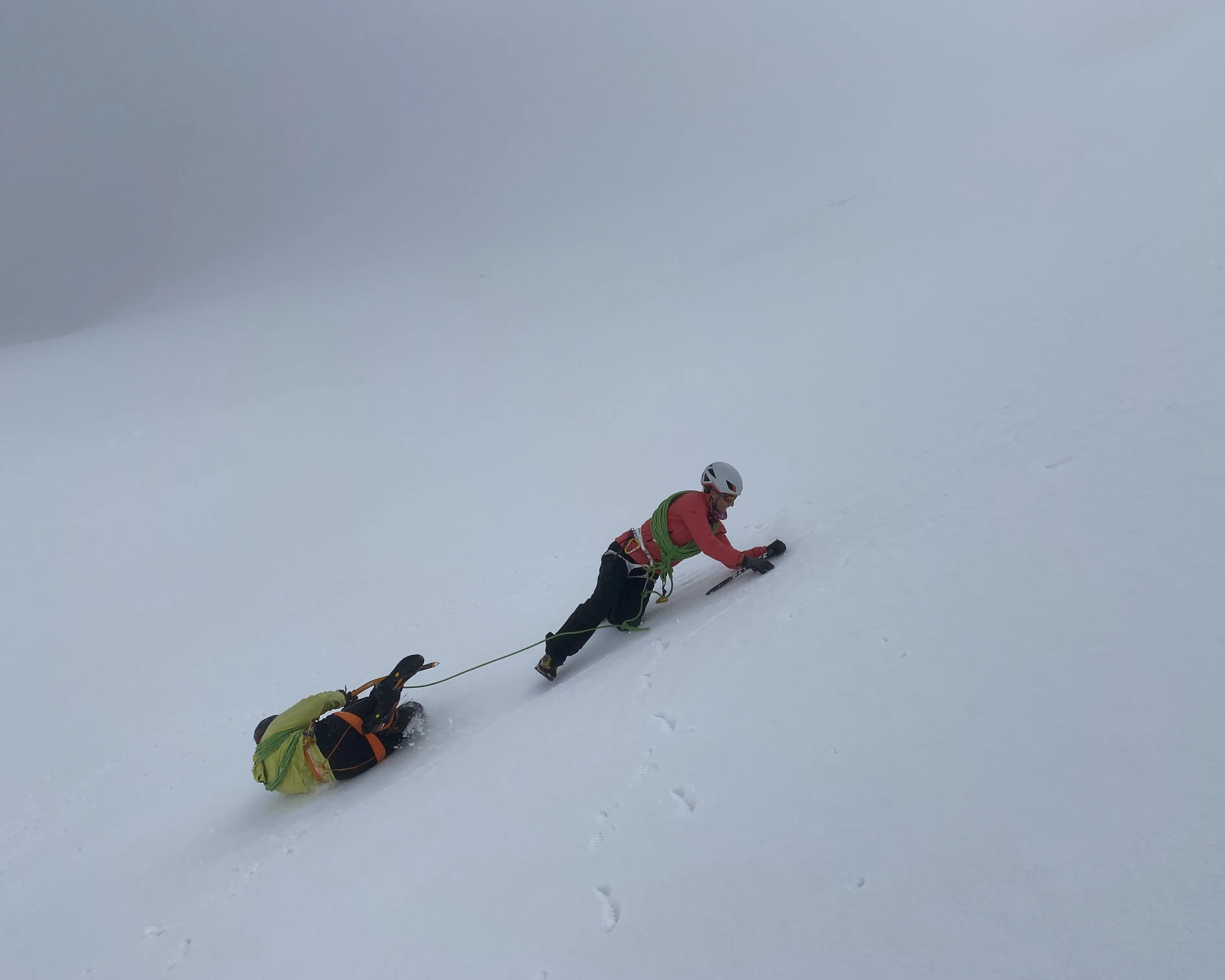
This is a task that should not be underestimated. That is why the mountain guide examination is preceded by a rigorous training programme.
How long does the mountain guide training course last?
The course lasts three years and is supervised by the Technical University of Munich (TUM). It is organised by the VDBS in cooperation with the Bavarian State Ministry of Education and Cultural Affairs. Those who can fit it into their schedule can complete the modules, work placement and exams in as little as around two and a half years – or they can simply take a little longer.
Mountain guides – from a supporting role to managing experiences
Watch our documentary “Becoming a Guide”. In episode 4, “Guiding Lights”, you’ll learn more about the origins and history of this multifaceted profession.
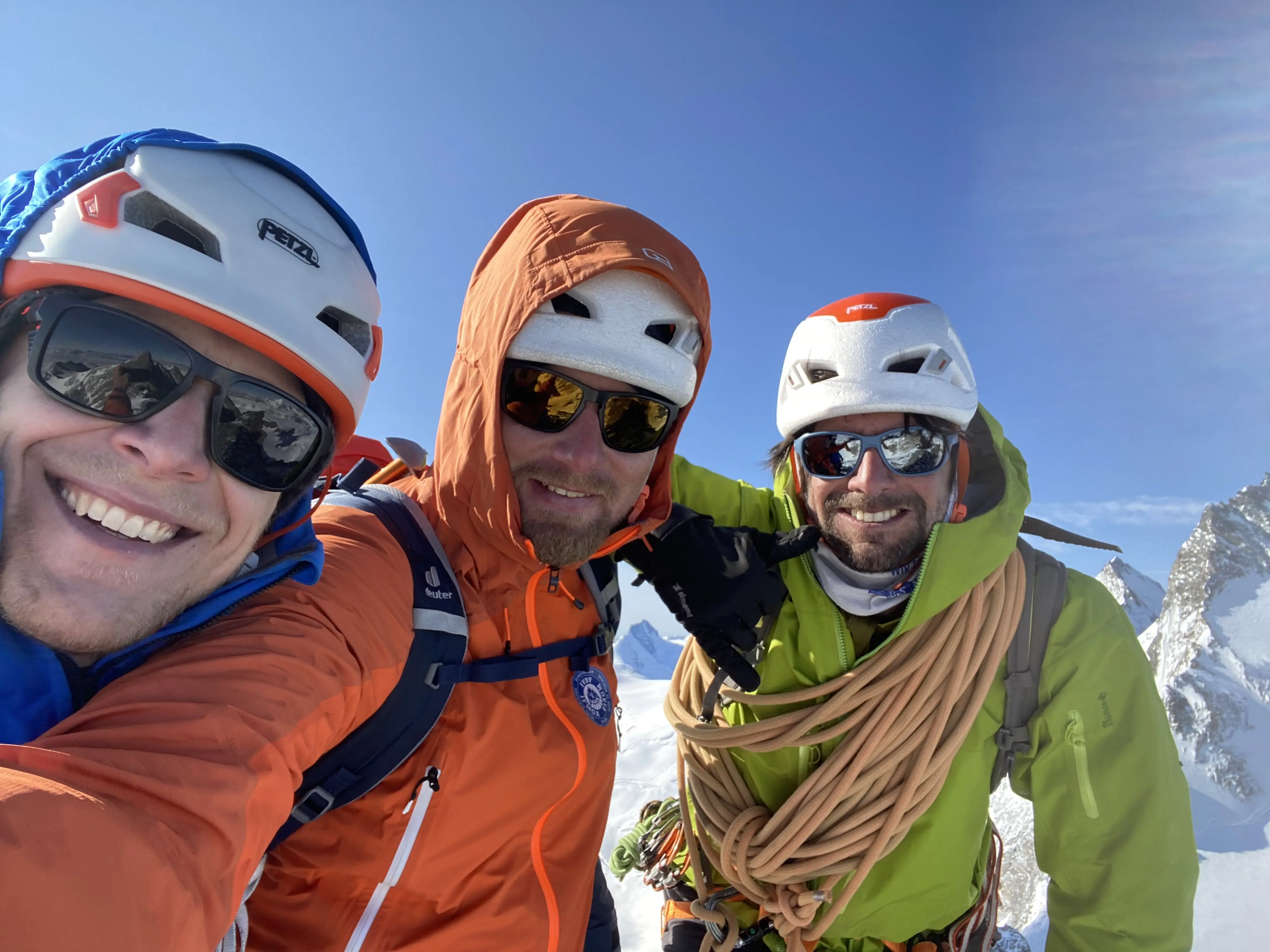
As a modern mountain guide, you are much more than just a skilled mountaineer with local knowledge. You are:
- A mediator between the urban environment and the wilderness of the mountains.
- A motivator who helps guests achieve the goals they have set for themselves.
- A competent and responsible guide for guests who entrust their lives to you.
- A helper and safety professional with empathy, who can intuitively recognise the support your guests need.
- A service provider with strong human values and empathy.
- An enthusiastic and perceptive nature observer.
“The aim isn’t to be the best climber, but to guide people in the mountains to a high standard – safely and in a way that ensures they enjoy themselves.”
Bianca “Bibi” Schöferle, state-certified mountain and ski guide, deuter Pro Team
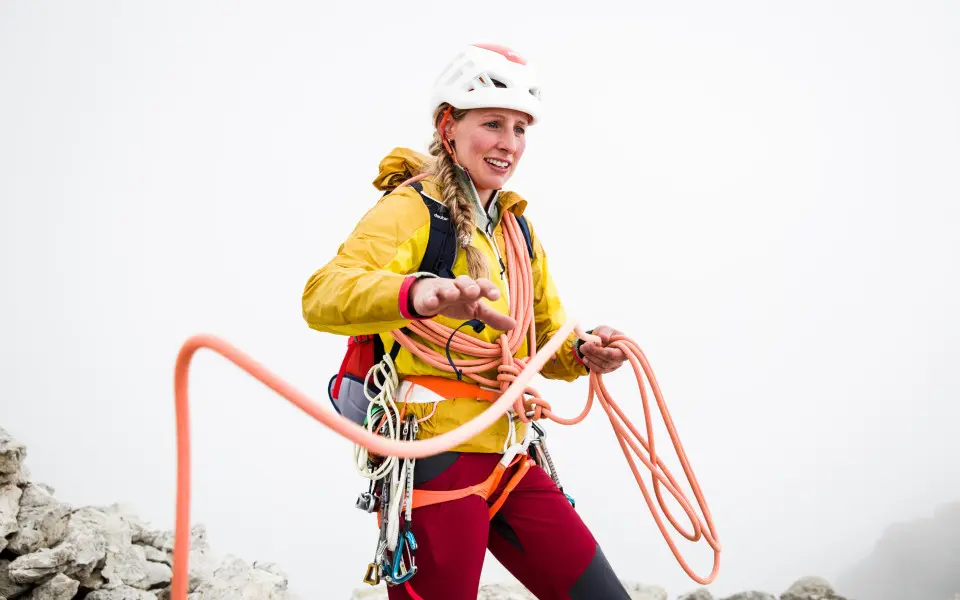
Why is being a mountain guide an attractive job?
“A reliable, responsible motivator and experienced risk manager with leadership qualities and organisational skills – with plenty of freedom to carry out their projects.” – That’s roughly how the job profile of a modern mountain guide might be described in a job advertisement.
Sounds appealing – and it is. Being a mountain guide is indeed an exciting job – far removed from the nine-to-five grind. A job with a great deal of personal responsibility and plenty of exercise in the fresh air. Ideal for multi-tasking talents who can find the positive side of wind and weather.
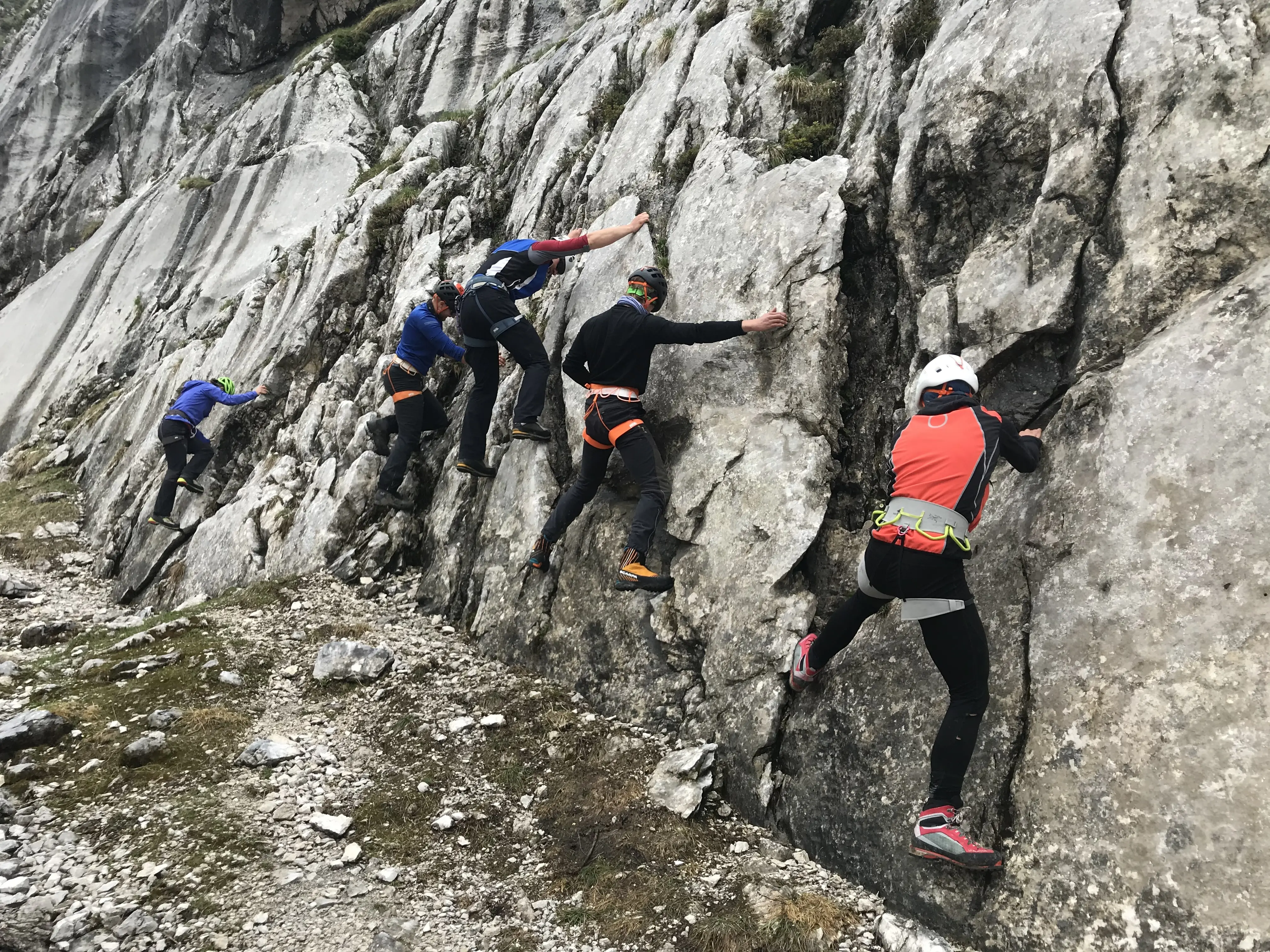
5 reasons to consider a career as a mountain guide:
Thanks to rising demand, mountain guides need not worry about finding work. Experienced mountain guides can set up their own businesses offering a wide range of mountain sports activities. Developments in the tourism sector are constantly opening up new opportunities for mountain guides.
Mountain guides are more than just technical assistants on the way to the summit. They are psychologists, organisers, sports instructors and mountain experts.
Even though the atmosphere can be tense during difficult situations on a tour, the general mood on mountain tours is positive. This requires the right mindset.
If you love nature and enjoy sharing your enthusiasm for the mountains with others, whilst at the same time helping others to develop an appreciation for safe, responsible and sustainable outdoor experiences, then as a mountain guide you have many opportunities to guide others towards a mindful experience of the mountains.
“As mountain guides, we cover all aspects of our profession. Versatility is therefore an essential skill.”
Hans Hocke, state-certified mountain and ski guide
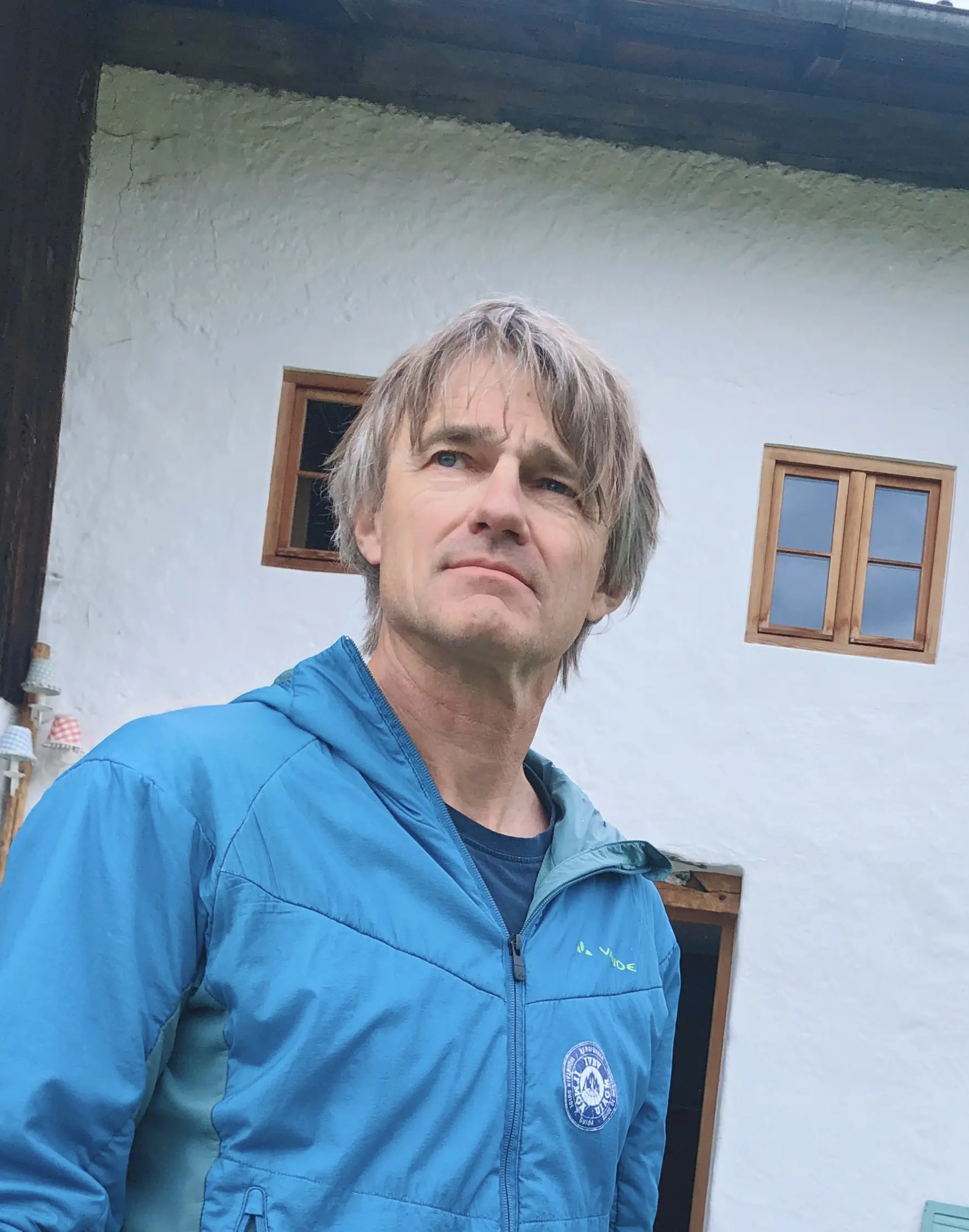
Mountaineering is becoming more female – women in the mountain guiding profession
It wasn’t so long ago that women made up a mere 1 per cent of mountain guides in the Alps. But things are changing. Although the proportion of women is still well below ten per cent, it is on the rise. And new opportunities are opening up for female mountain guides. This is because mountaineering is becoming more popular with women in general. More women are taking to the mountains. More women also want to experience challenging tours that they wouldn’t dare attempt on their own. And more women would like to be guided by a woman. So there are good career prospects for female mountaineers who aren’t afraid to meet the same performance standards as men in the entrance exam and during training.
Take a look at our documentary “Becoming a Guide”. The first episode, “It’s not a man’s world”, focuses particularly on women in the profession of mountain guiding.
Interview with Bianca ‘Bibi’ Schöferle
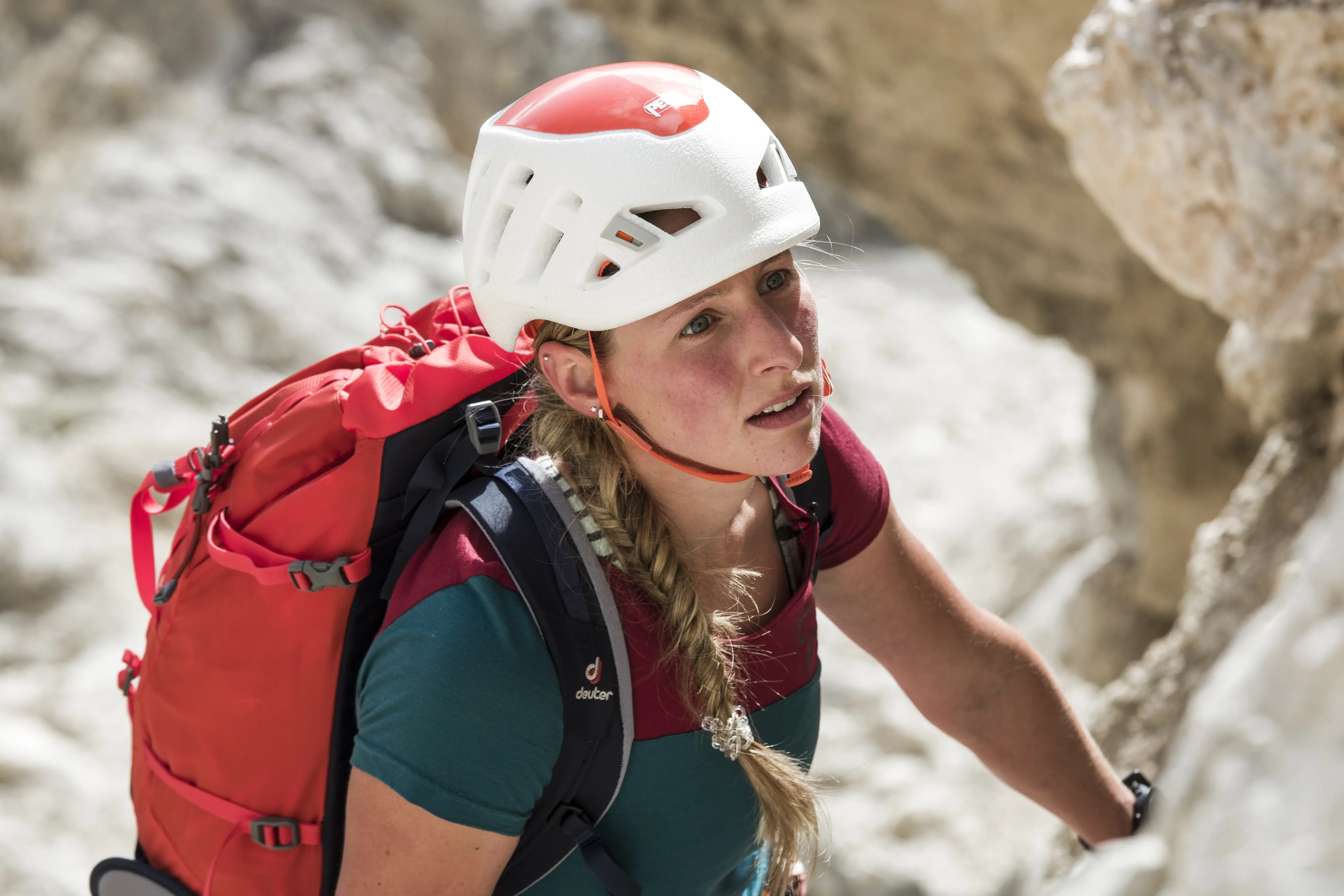
Why are there still so few female mountain guides? What do women have to achieve to become mountain guides? And what strengths do women bring to the role? Allgäu-based mountain guide Bianca “Bibi” Schöferle offers fascinating insights into her life in the mountains and her training as a mountain guide. Bibi is a passionate skier and mountaineer. Having grown up in the Allgäu, she turned her passion for the mountains into a career after completing her degree in mechanical engineering.
Female mountain guides on the deuter podcast
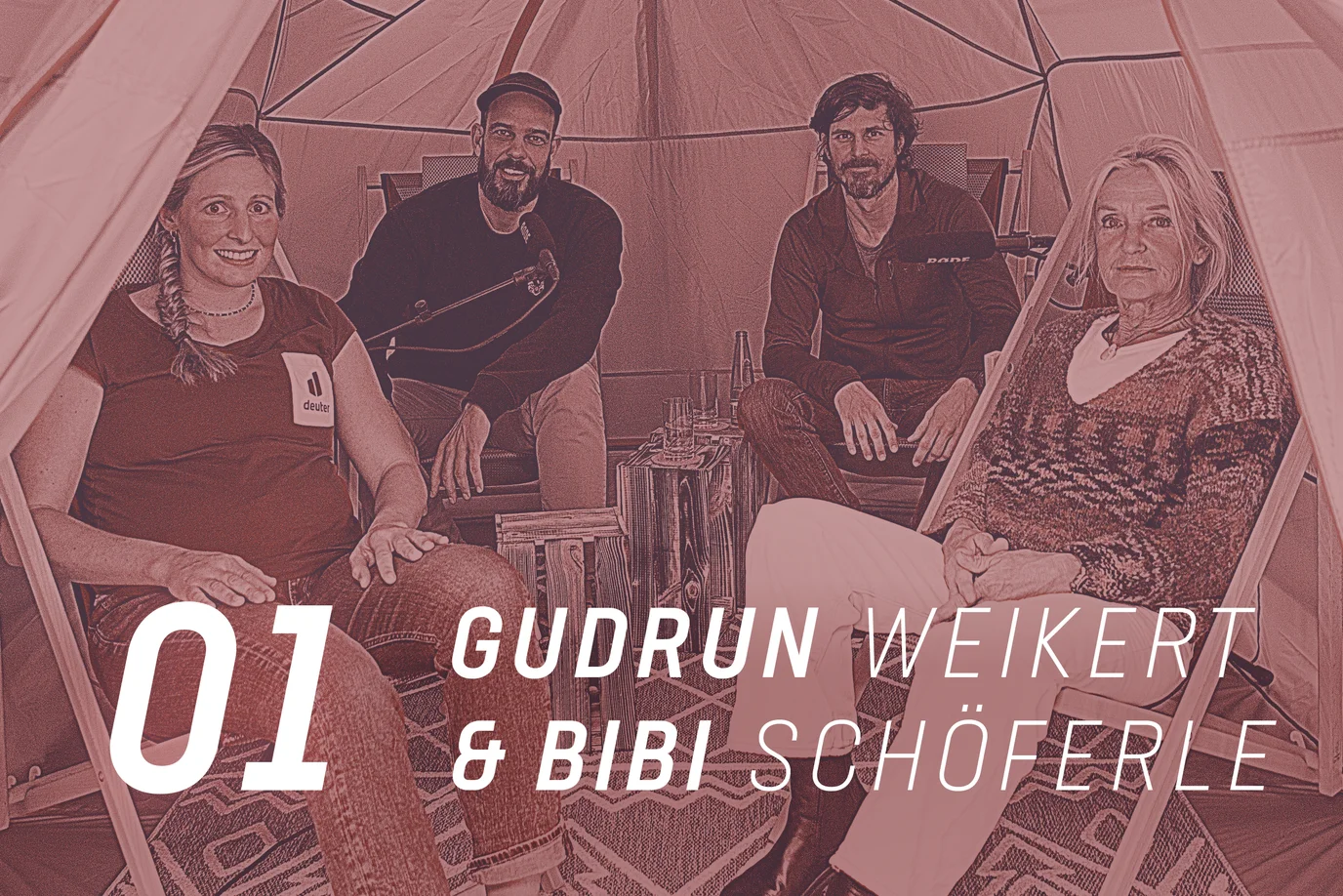
Fancy finding out more about what it’s like to be a mountain guide and how to become one? Then have a listen to our deuter podcast, Schlafsackgeflüster. In the episode “Women in Mountain Sports”, Germany’s first female mountain guide and instructor Gudrun Weikert, along with Bibi Schöferle, reveal what it takes to become a state-certified mountain and ski guide. And they explain how the job can be balanced with being a mum.
General requirements
Mountain guide – a job for ambitious all-rounders
Training to become a mountain guide is no walk in the park. But don’t worry – you don’t need to be a world-class mountaineer. What matters far more is being highly versatile. You should be just as much in your element on a ski tour as you are climbing on limestone or granite. And that includes belaying and walking with crampons on glaciated terrain.
As a prospective mountain guide, you can imagine that a successful lead on a difficult mixed route isn’t the only thing that makes for a good day in the mountains. Rather, you’ll also find joy and fulfilment in your guests’ experiences – in the shared experience on the mountain, regardless of how difficult or easy the tour was.
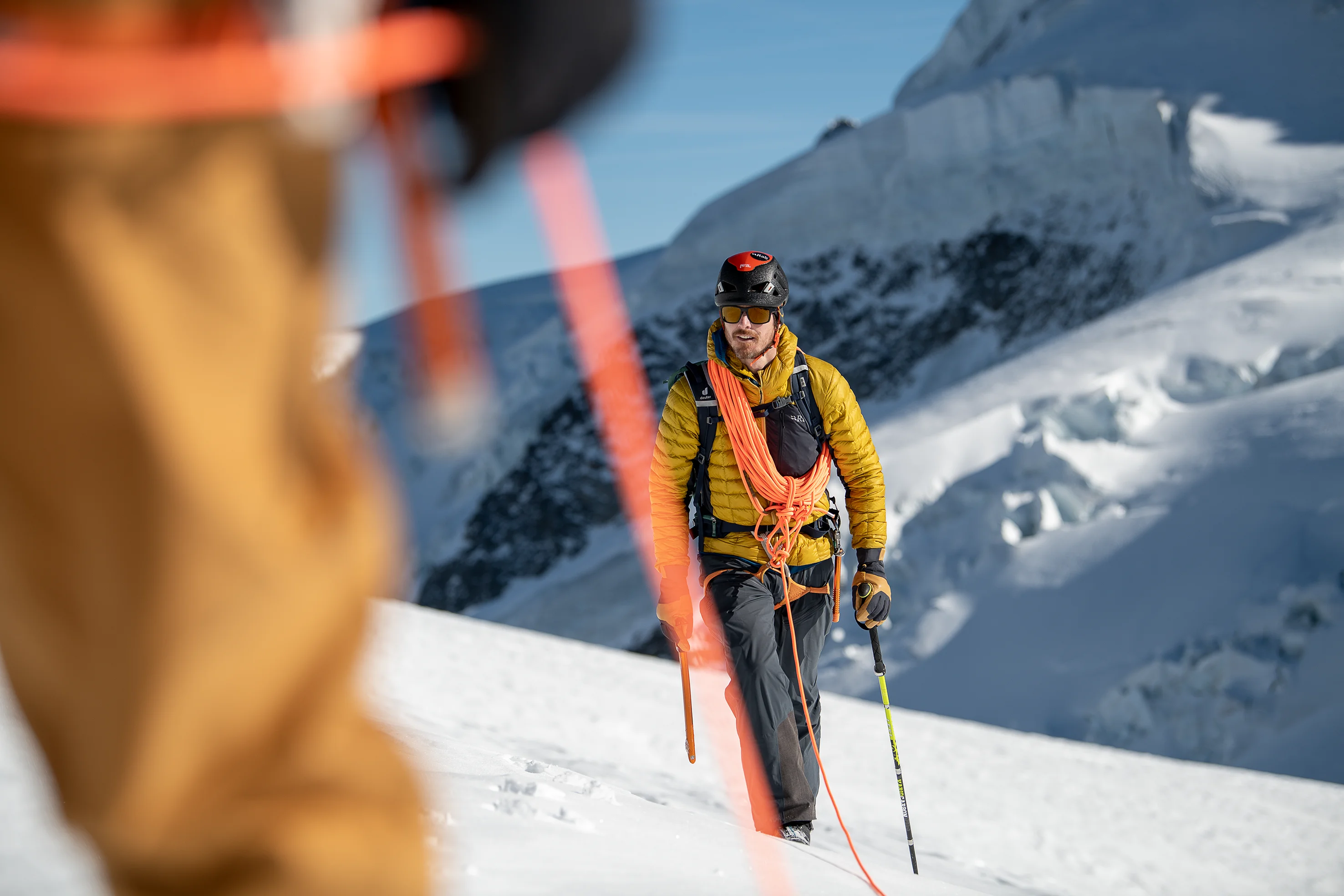
‘For me, the most important thing about mountaineering, skiing, climbing and guiding is the adventure, the experience and, of course, the fun. As Alex Lowe once said: “The best mountaineer is the one who has the most fun.”’
Michael Bückers, state-certified mountain and ski guide, deuter Pro Team
Mountain guides – instructors in mountain sports
As well as simply guiding, teaching is also a key aspect of the mountain guide profession – the art of teaching. This starts with teaching safety techniques for climbing or the kick-turn technique for ski touring, and doesn’t stop at helping people cope mentally with situations that cause anxiety. You’ll learn the details of this during your mountain guide training. But it’s worth thinking now about whether you enjoy this and are motivated to pass on your knowledge and expertise in the mountains to others – in a way that ensures they enjoy it too.
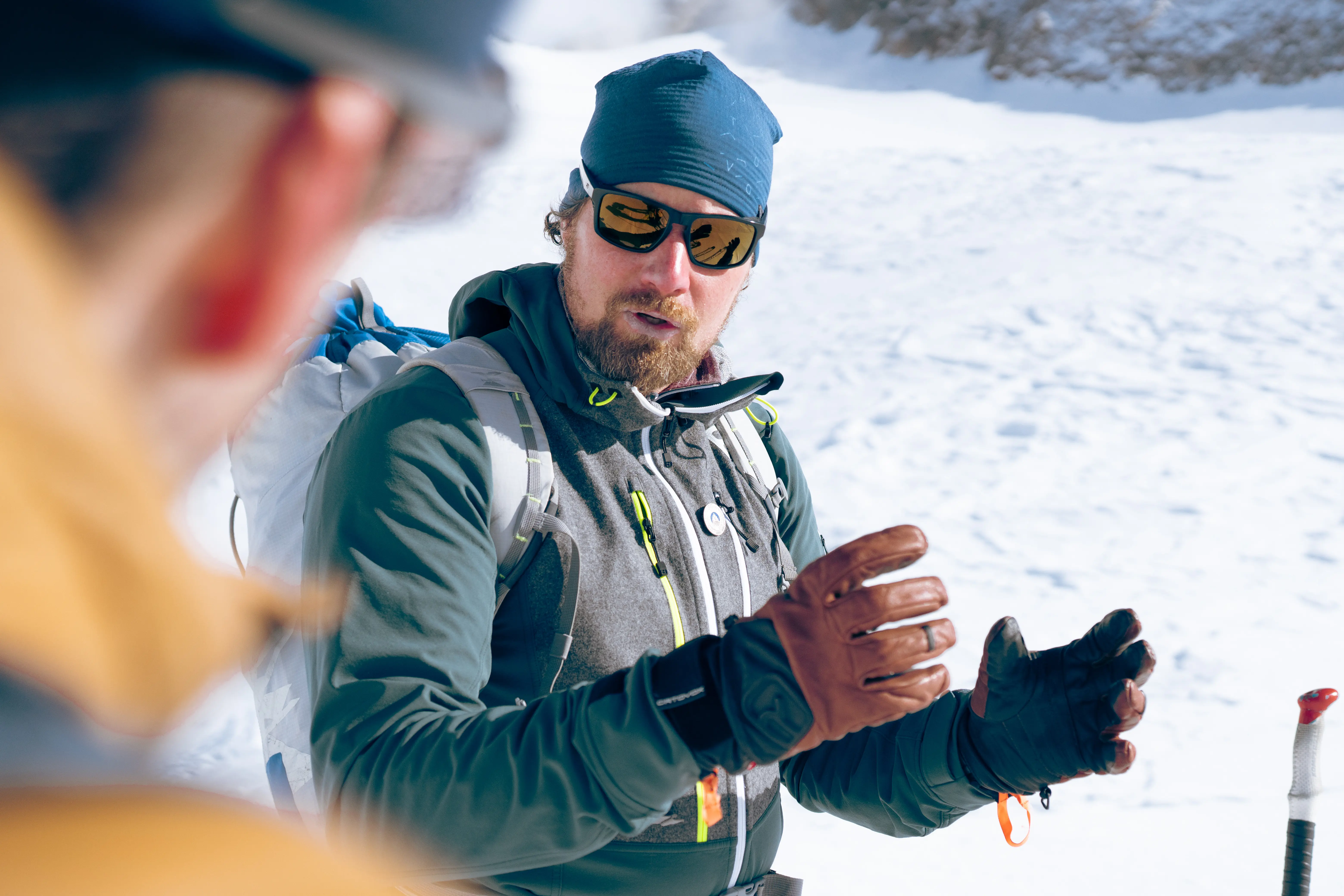
The path to becoming a mountain guide involves three steps:
- Assessments/aptitude tests (skiing, climbing, ice)
- Mountain guide training (minimum 2½ years)
- Job as a mountain guide
“As well as technical knowledge, sensitivity and empathy play a major role in the role of a mountain guide. We mountain guides are service providers and rely on our guests wanting to come back. People are particularly keen to return to those with whom they feel at ease, well understood and safe. Furthermore, safety can be enhanced if, as a mountain guide, I can anticipate my guests’ fears, weaknesses and concerns.”
Michael Bückers, state-certified mountain and ski guide, deuter Pro Team
Mountain guide – is it the right fit for me?
Before you ‘commit’ to becoming a mountain guide, you should seriously ask yourself whether you’re really cut out for being out in the mountains with people you don’t know. After all, as a mountain guide, you’re rarely out on the tours you’d choose yourself, but rather on those chosen by your guests.
Even if you’re climbing the Zugspitze or the Weisshorn for the tenth time this summer, you should be just as motivated as you would be on a tour of your own choosing. As a mountain guide, fulfilling your guests’ dreams should ideally be a labour of love. To find out whether guiding really suits you, you have two options:
DAV instructor training
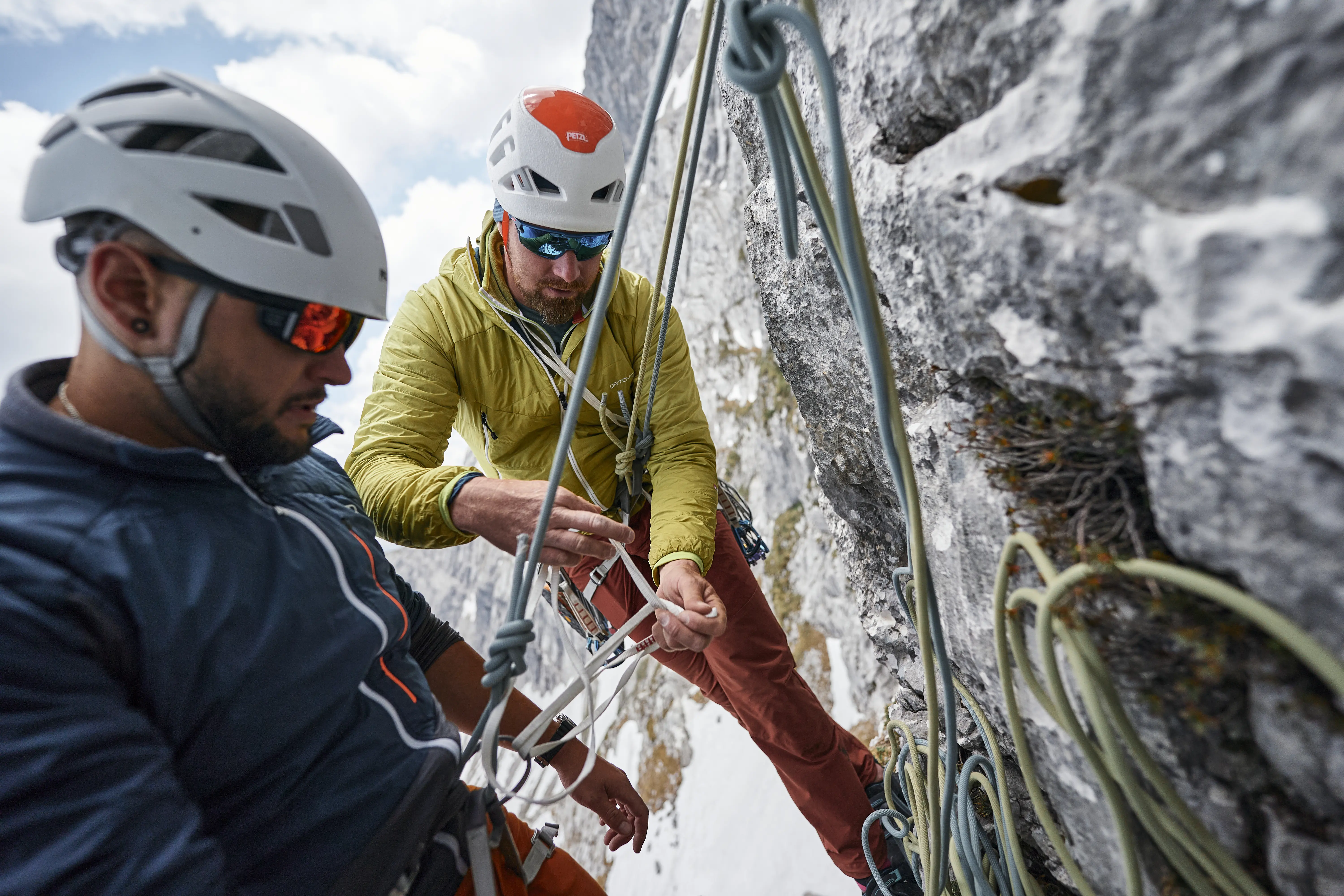
The instructor training course run by the German Alpine Club (DAV) provides a solid foundation that will also help you develop your safety skills. Above all, however, you’ll gain an initial insight into leadership techniques, get to know mountain guides (your instructors) and can then try out section tours to see if you’d like to work professionally with people outdoors and take full responsibility for your participants. There’s a wide range of courses on offer across the various disciplines. Feel free to start with one of your favourite disciplines and then venture into new territory. You can find details of the training courses at the DAV here.
VDBS Evaluation Camps
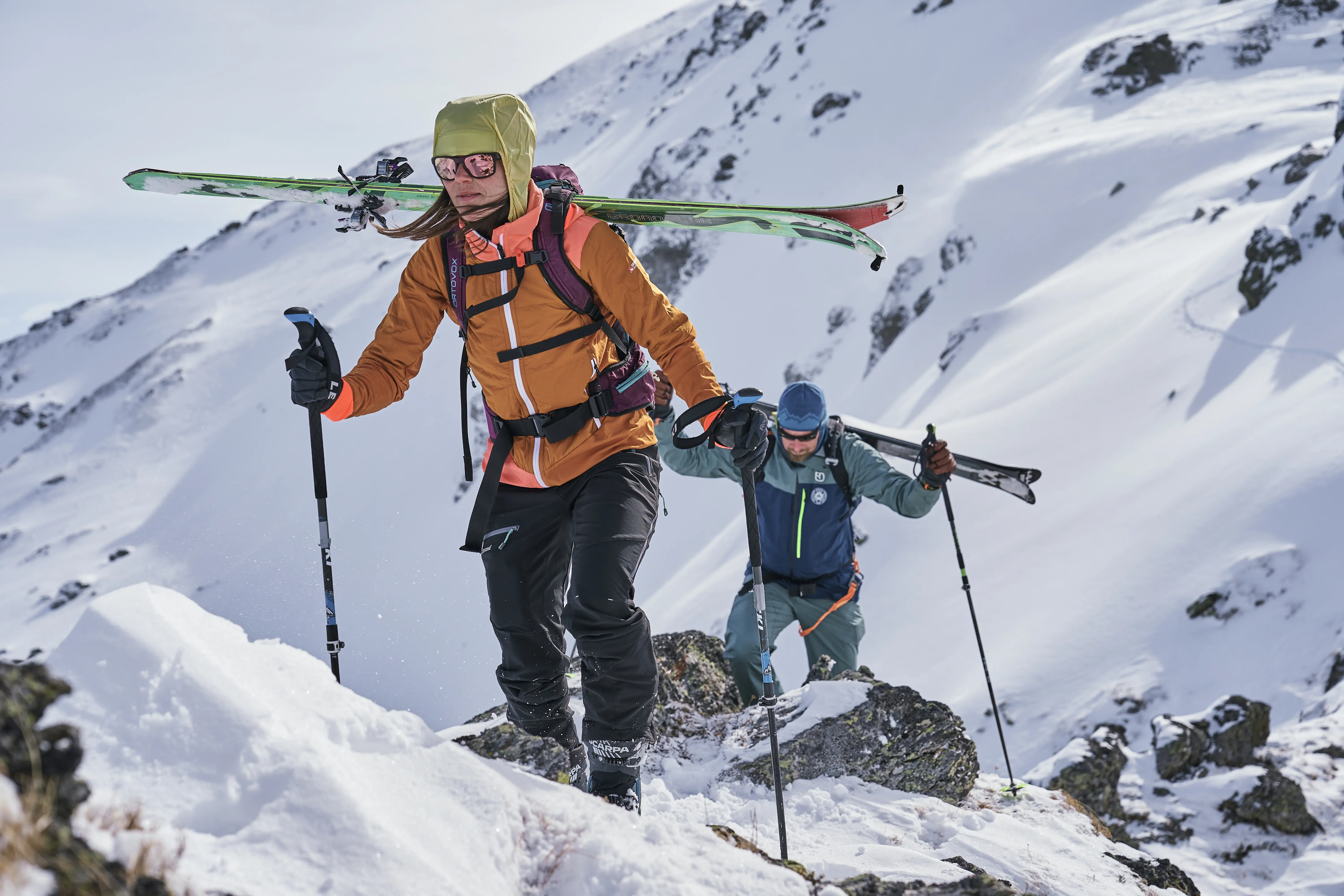
Not sure yet whether your skills are up to the standard required for the aptitude test and the subsequent mountain guide training? No problem! That’s exactly why the VDBS offers evaluation camps – in the disciplines of rock, ice and skiing. During these one- to two-day workshops, you’ll receive expert feedback on your skills and tips on how to improve in specific areas. Experienced mountain guides will be on hand to coach you. They’ll help you assess your skills and knowledge without any exam stress. And best of all: you’ll get an initial insight into what it takes to be a mountain guide and can network with like-minded people who are also about to embark on their mountain guide training. The VDBS Evaluation Camps are free of charge, excluding accommodation, meals and travel costs. You can find the latest information on the Evaluation Camps here.
“For anyone who already has plenty of experience in challenging mountain terrain but is still unsure whether they’re ready for mountain guide training – the VDBS Evaluation Camps are a great way to get feedback on your current skill level and the direction you should take.”
Hans Hocke, state-certified mountain and ski guide
Enjoying mountaineering – the ideal preparation
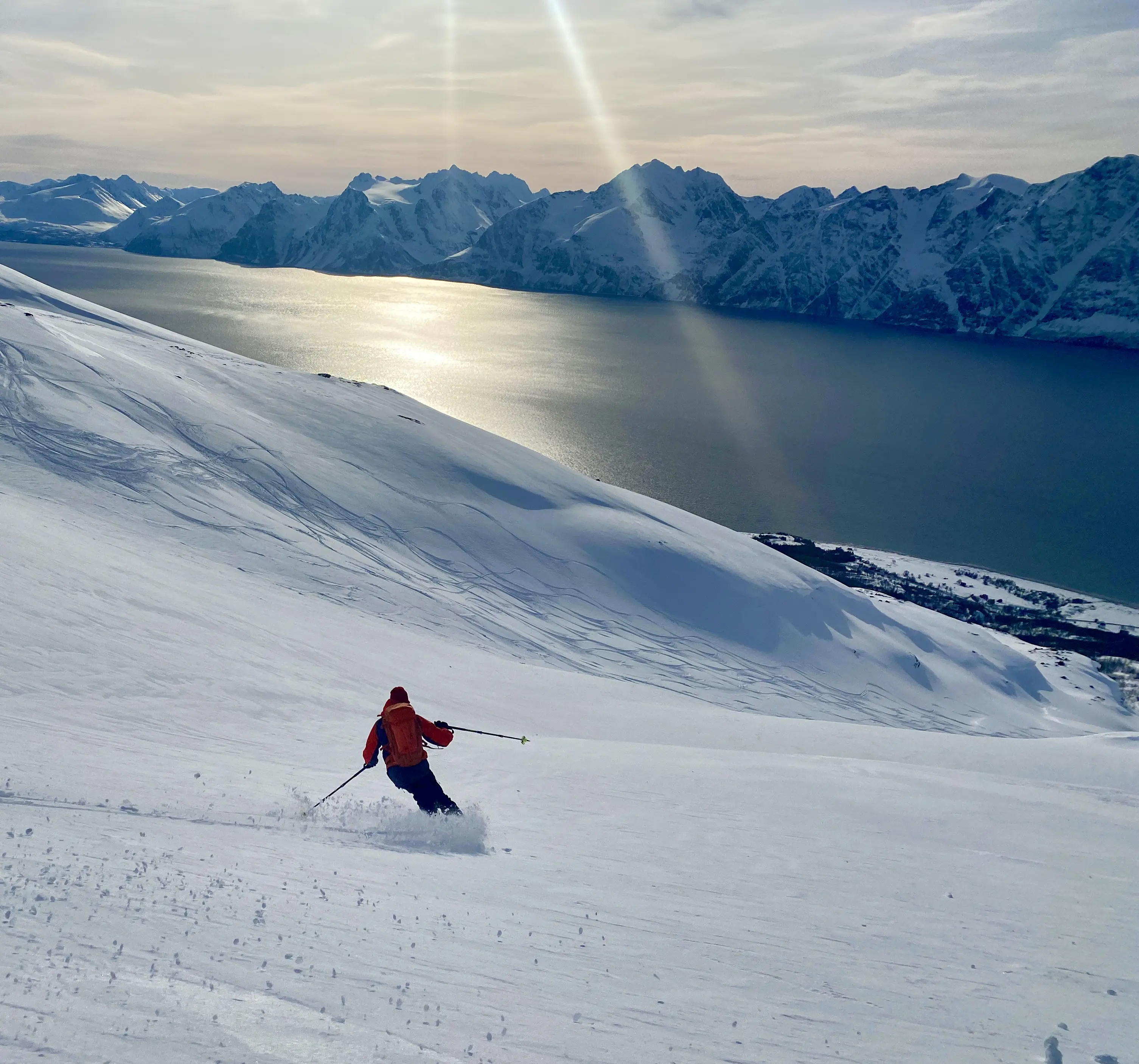
At the start of your mountaineering career, it’s best not to think too much about training to become a mountain guide. The important thing is to gain experience in all disciplines of mountaineering, become increasingly confident, and not lose your enjoyment of climbing. Future mountain guides are well-rounded individuals who engage in all disciplines of mountaineering throughout the year:
- Ice and mixed climbing
- Ski touring
- Sport and alpine climbing
- High-altitude mountaineering
A solid foundation in all areas is essential. Even the best mountaineers started small. Ensure variety in your choice of destinations: try granite climbing at the Furka Pass, seek adventure on the alpine routes of the Dolomites, and undertake high-altitude tours in the Valais and the Bernese Oberland. And do pop over to the stronghold of alpinism in Chamonix. This variety doesn’t just make you a better all-rounder. Every time you explore new areas and routes, you’re also honing your sense of direction. That way, you learn to adapt to constantly changing situations.
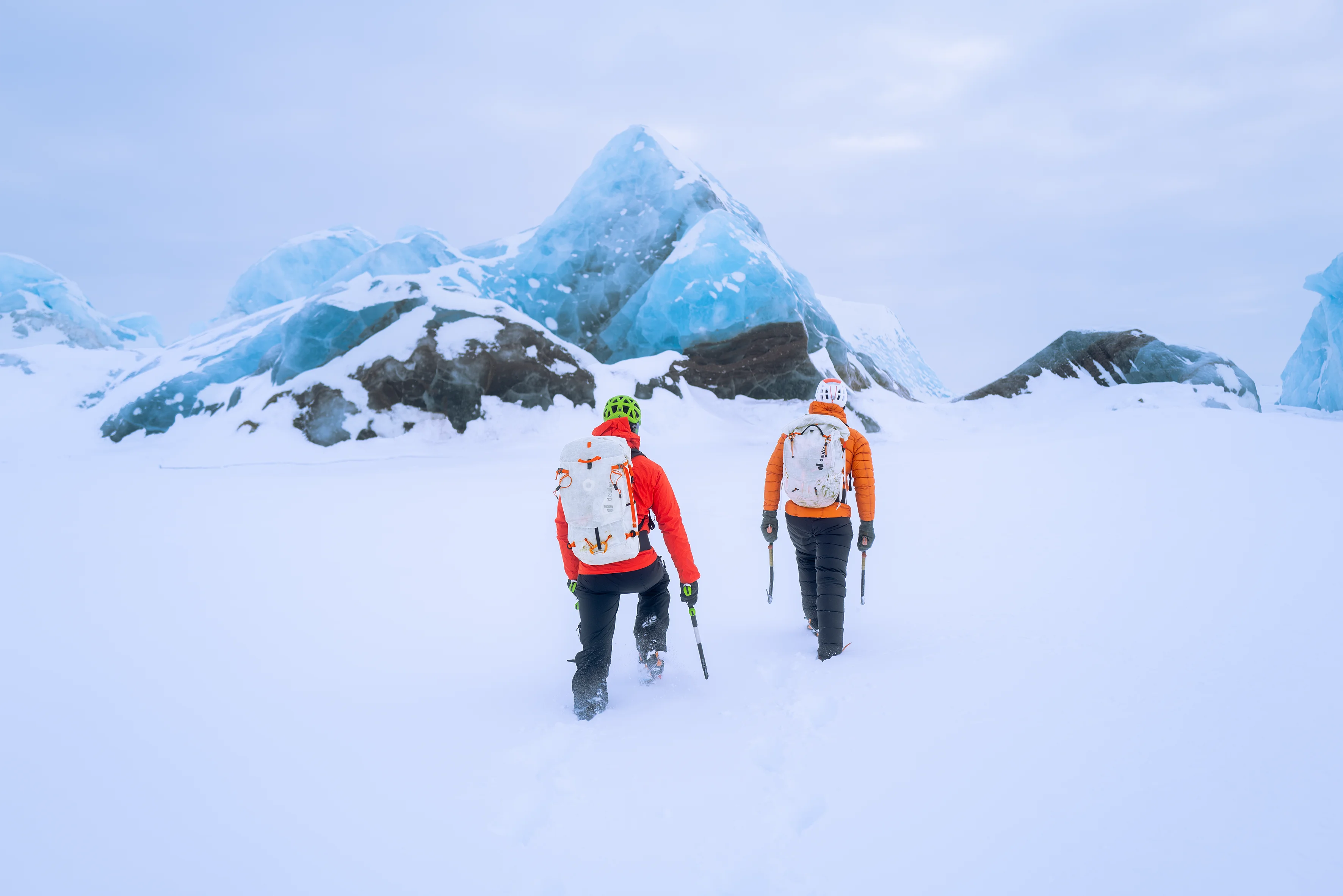
Level – step by step
Increase the difficulty and challenge of your route step by step. Turn back if it doesn’t feel right, and don’t put yourself under pressure. The mountains aren’t going anywhere. Many routes require good conditions to be feasible at all. Stay away from suicide routes like the Ortler North Face. “Routes that require long stretches of climbing beneath seracs may be prestigious,” says mountain guide instructor Martin Schmidt, “but in truth they are one thing above all else: absolutely dangerous!” So look after yourself as best you can. And remember: the best mountaineer is the one who has the most fun. By the end of this phase, you should have gained the necessary experience and developed the personal skills required to consider mountain guide training.
What does that mean in practice?
Before you can begin your mountain guide training, you must pass the aptitude assessment test (EFP). Here, too, you’ll need to demonstrate versatility in mountaineering across the disciplines of rock climbing, ice climbing and ski touring. Use the time before registering for the aptitude test to brush up on your tour logbook. See where you still have gaps in your skills. Find suitable partners who ideally already have more experience in the relevant disciplines and regions, and use this to familiarise yourself with the requirements. You’ll see that exciting and enriching mountain adventures await you along the way. And that makes updating your tour log a real pleasure.
And one more tip: don’t rush things! Better to have a blank space in your tour log than a serious mountain accident.
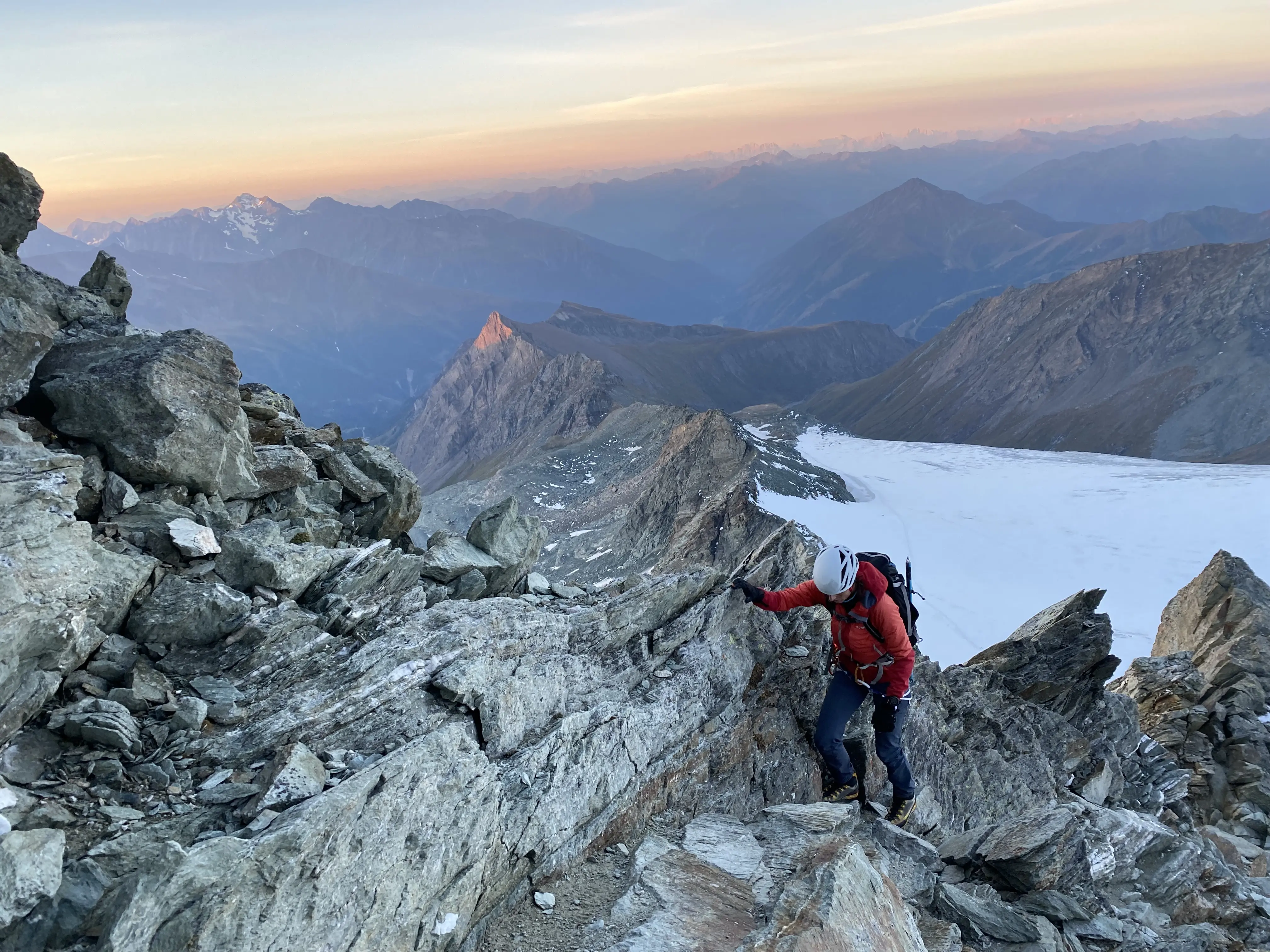
“The tour logbook serves as proof of alpine experience. This can only be gained through numerous tours. Of course, experience is acquired during training. However, a basic level of prior experience is also necessary to ensure safe and effective training.”
Michael Bückers, state-certified mountain and ski guide, deuter Pro Team
The Climbing Log
Your mountaineering CV
To demonstrate your experience when applying for the mountain guide training course, you should keep a logbook. In it, you should record your mountaineering activities and projects. The trips documented in the logbook should cover a period of at least three years.
What qualifications do you need to sit the aptitude test?
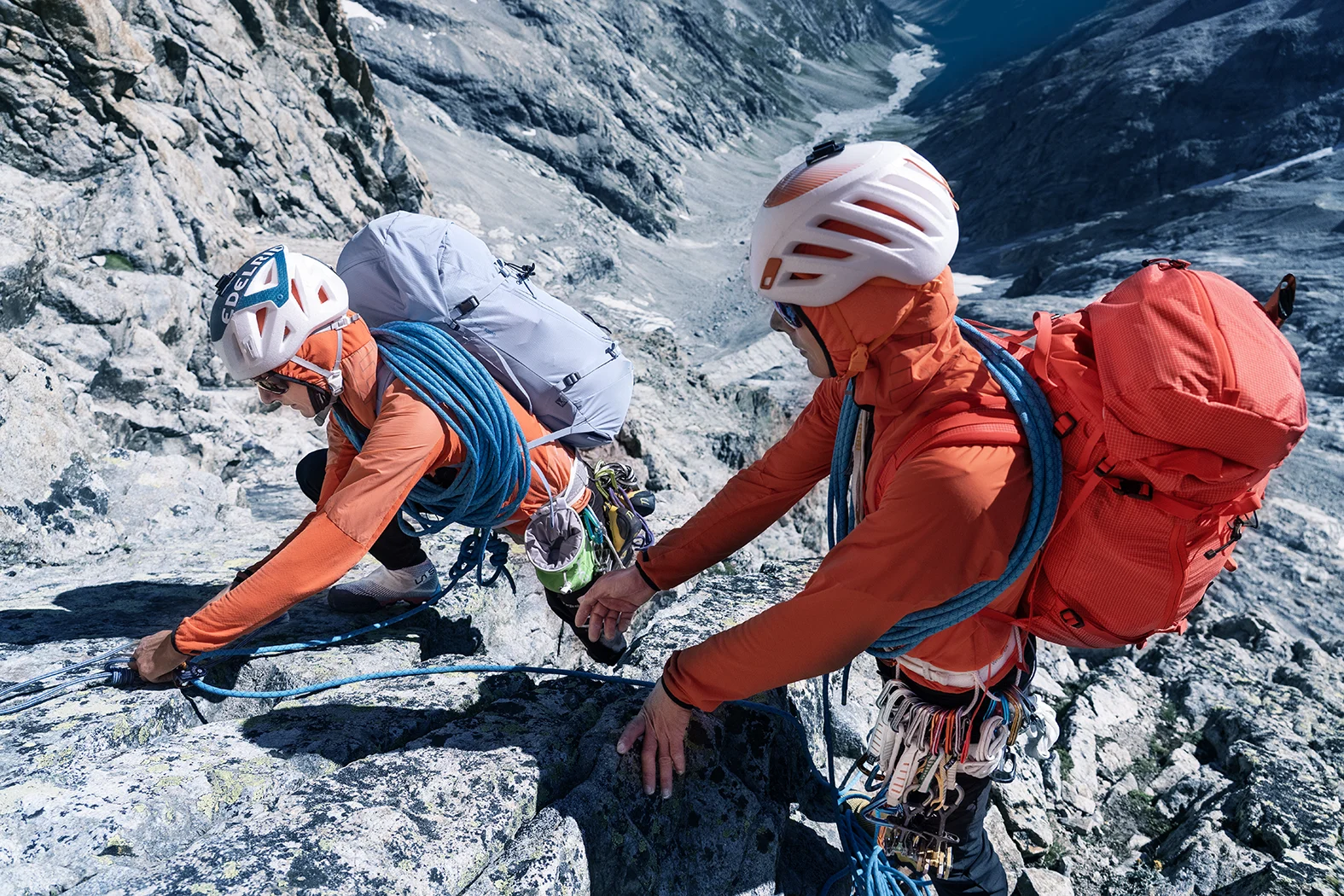
- Climbing: You should be able to lead climb at around the lower 8th grade on the UIAA scale for sport climbing, and at the upper 6th to just below 7th grade for alpine climbing (even when the protection is a bit dodgy or you have to place your own protection).
- You should have completed high-altitude tours up to S/difficult on the SAC scale.
- Ice climbing: You should have safely led ice falls up to WI 5.
- Ski touring: You should have completed many ski tours and high-altitude ski tours, including some challenging projects.
Get ready
Preparing for the aptitude tests
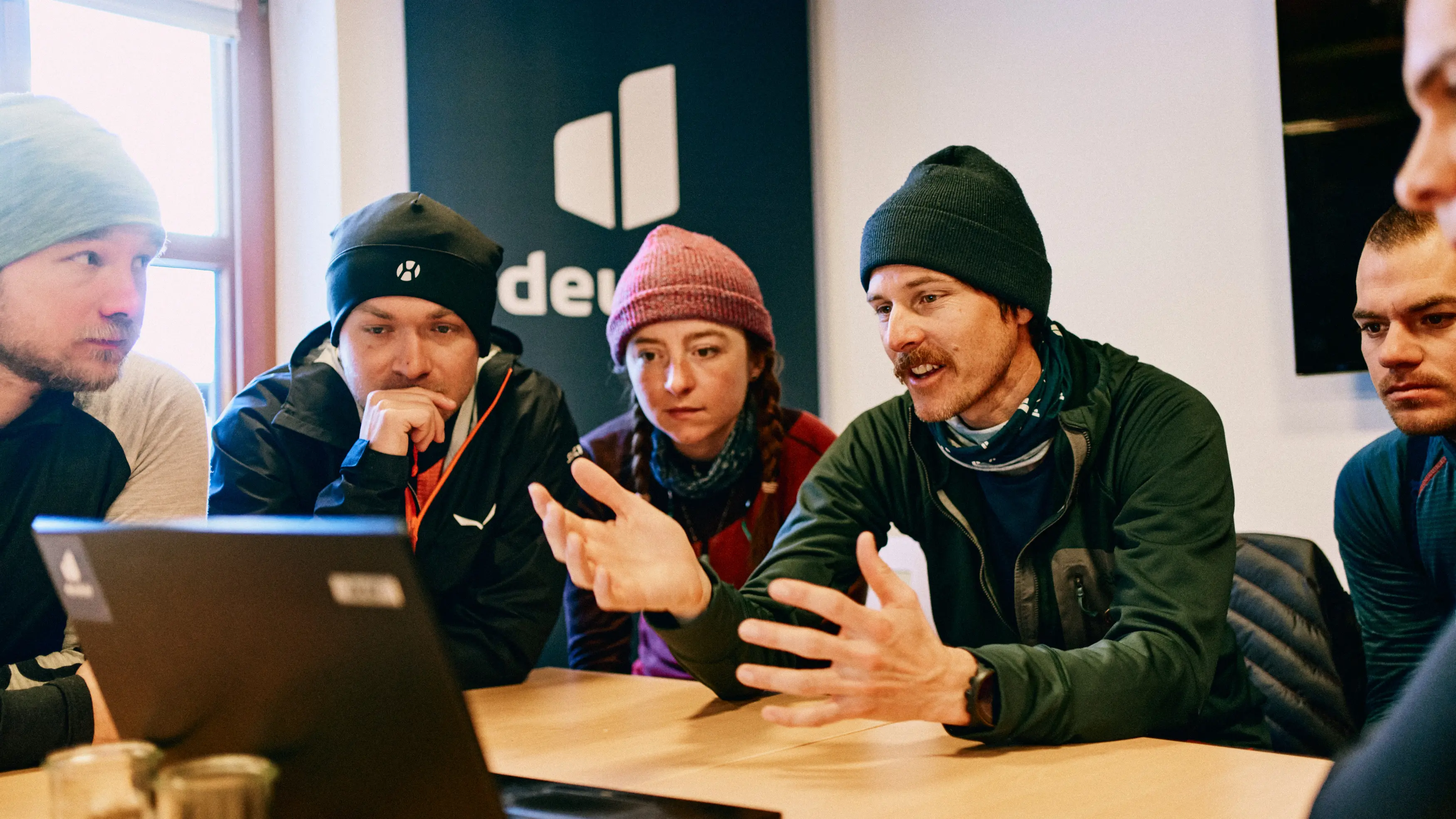
The aptitude tests are just as varied as the role of a mountain guide. You should be well prepared for the ten tests that make up the VDBS Aptitude Assessment Test (EFP).
The aptitude tests – an alpine decathlon
- Downhill skiing on the piste
- Off-piste skiing
- Ski touring: track-setting, safety procedures and avalanche awareness.
- Limestone climbing (routes up to a maximum of 6c+ lead climbing, taking into account the belaying techniques used, navigation, mountaineering conduct and physical fitness)
- Granite climbing (routes up to a maximum of 6c+ lead climbing, taking into account the belaying techniques used, navigation, mountaineering conduct and physical fitness)
- Mountain running (fitness test): target time 750 metres of elevation gain per hour
- Lead climbing on ice up to a maximum gradient of 80° (taking into account the belaying techniques used, navigation, alpine conduct and physical fitness)
- Demonstration of technical skills in vertical ice climbing techniques
- Steep ice climbing (ice cracks, ice falls)
- Mixed climbing
If you don’t pass part of the EFP, don’t worry. You can retake the aptitude test twice. So you have three attempts.
You can find detailed information about the aptitude test here.