Climbing terms explained
Rock climbing
Who would have thought it: Rock climbing refers to climbing on rocks. In other words, out in the great outdoors rather than indoors. In rock climbing, a distinction is made between different types of climbing, and within these, different techniques and styles of ascent.
What is alpine climbing?
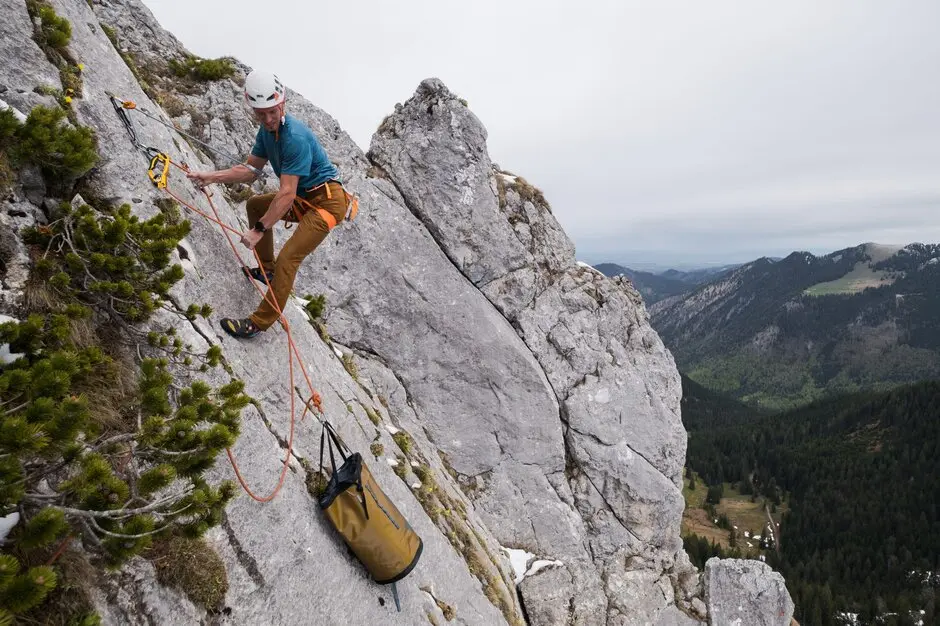
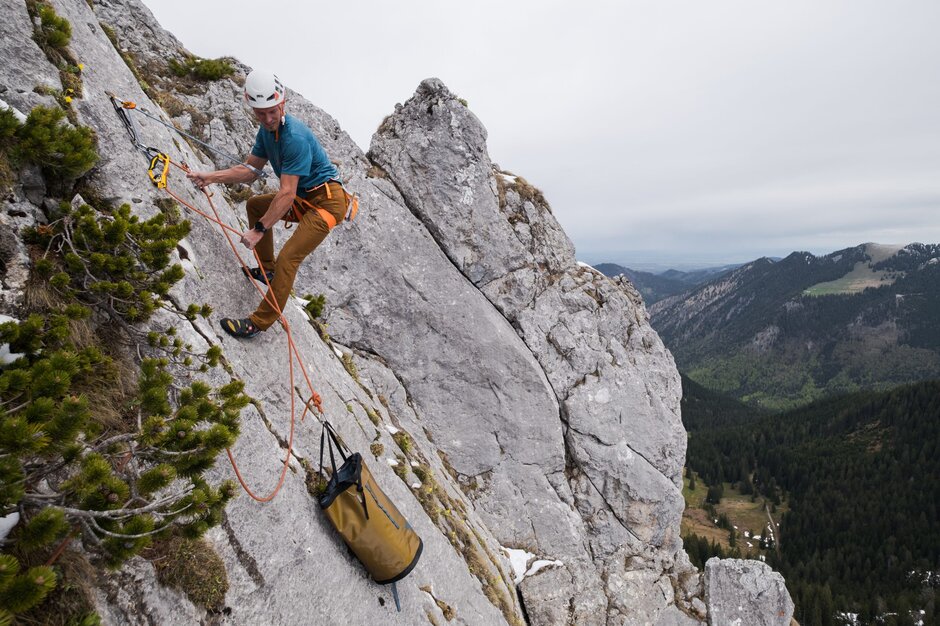
Here’s the lowdown Alpine climbing is climbing in an alpine context. This isn’t about climbing at a climbing garden, but about climbing over several pitches (multi-pitch climbing) on a high rock face in the mountains. In pure alpine climbing, you often encounter a mix of different types of protection points. This means a combination of bolts, pitons or hammer-driven pitons, and your own placements (protection devices such as Camalots, Friends and nuts).
What is the difference between alpine climbing and alpine sport climbing?
Alpine sport climbing also takes place in an alpine context, including in climbing gardens. Whilst in classic alpine climbing the focus is often on conquering a mountain, sport climbing is largely about mastering routes (often at one’s own limits). Sport climbing routes are generally much shorter and often extend over just a single rock face. The routes are usually secured with fixed bolts .
What techniques are there in climbing?
In both alpine and sport climbing, there are different techniques for tackling routes, depending on the route:
- Alpine – pitons, belay devices, slings are used solely for belaying, but not for progression.
- Clean – Belaying is carried out using mobile belay devices only. After the climb, the route is restored to its natural state, i.e. ‘cleaned’, and nothing is left behind on the wall.
- Technical – all technical aids are used to progress.
- Free Solo – without any belaying and without a rope.
What do ‘redpoint’, ‘onsite’, ‘flash’ and ‘speed’ mean in climbing?
A distinction is also made between different ways of ascending a climbing route:
Redpoint – is the free ascent of a climbing route familiar to the climber (the route may have been climbed by the climber any number of times previously) in lead climbing (all pitches) in one go, whereby the belay chain is not under load, i.e. without fall, resting on the rope or pulling oneself up on bolts.
Flash – refers to the redpoint ascent of a route unknown to the climber on the first attempt, whereby the climber has access to information about the route that goes beyond generally known facts such as the name, grade and height.
On-site – refers to the ascent of an unknown route on the first attempt, whereby the climber has no further information about the route apart from the generally known facts, and in particular has not watched any other climber on the route.
Speed – climbing a route in the shortest possible time.
Bouldering – What is the difference between this and climbing?
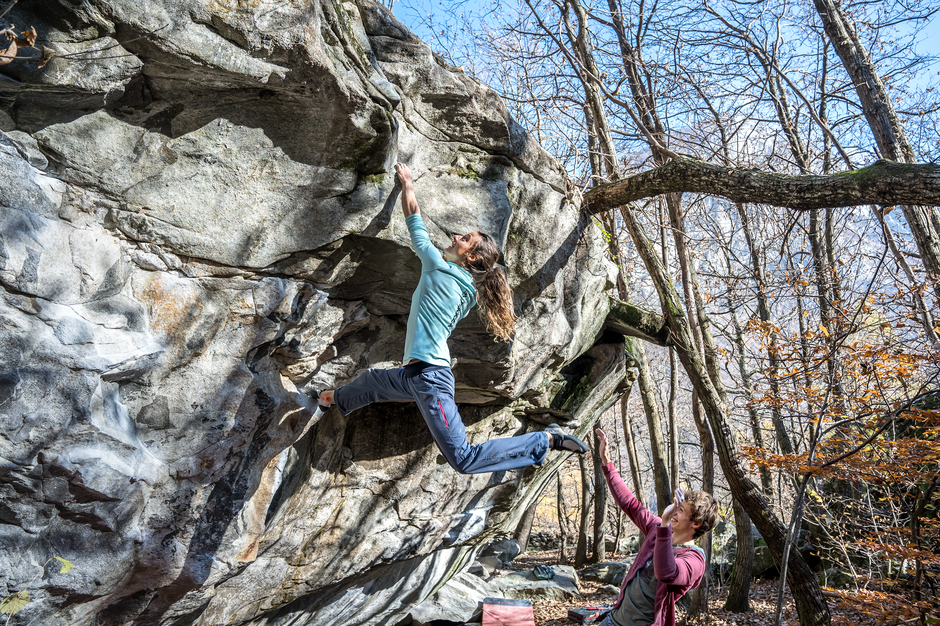
Bouldering is the term used for climbing without a climbing rope or harness on boulders, rock faces or even on artificial climbing walls (indoor) up to the jump-off height. The jump-off height is the height from which one can jump from the wall to the ground without any significant risk of injury. This eliminates not only the entire belaying technique and the fear of falling, but also the need for belay equipment. Instead of belay devices and ropes, bouldering is secured by the bouldering mat (English crashpad) and the climbing partner, who, if the worst comes to the worst, uses their hands to guide the climber so that they land upright on their feet and on the bouldering mat.
To be fair, it must be added that a fear of falling can also arise when bouldering. This is particularly the case when the bouldering walls are high and confidence in one’s own ability – and possibly in one’s partner – is low. The great thing is that you can gradually test your personal limits.
Indoor climbing
As the name suggests, indoor climbing refers to climbing in the climbing centre or on training walls. This means there is no ‘alpine character’ and, consequently, no opportunity to climb multi-pitch routes. Nevertheless, the popularity of indoor climbing is on the rise. It is true that most indoor climbers eventually make the transition to outdoor climbing. However, many outdoor climbers also use indoor climbing centres, particularly in winter, as a training venue.
What is the difference between bouldering indoors and on the rock?
Bouldering in a climbing centre differs from bouldering on the rock face in that it features artificial holds and colour-coded routes, which indicate the respective level of difficulty. And the floor is covered with thick mats to ensure a soft landing. p>
Top-rope or lead climbing – which is easier?
Top-rope climbing is the safest and easiest way to learn how to climb and belay. Here, the rope is clipped into an anchor point at the top, and the belayer secures the climber from the ground. Lead climbing involves climbing whilst being belayed from below. This is undoubtedly the most physically and mentally demanding belayed ascent of a climbing route, as both the height of a fall and the physical effort required to clip the rope into the intermediate belays are greater than with other types of belay.
The different climbing styles found on alpine routes can also be found in the climbing hall.
What do you need for climbing?
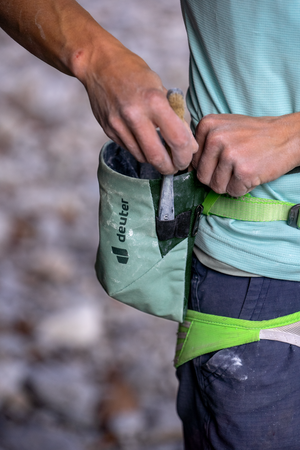
You don’t need much basic climbing kit to get started. The most important items are definitely a good fit climbing shoes. As with other equipment, you can often hire these at climbing centres, but only your own will fit perfectly. As well as shoes, a suitable climbing harness is also essential. As a rule, harness-style climbing harnesses are used for climbing. Full-body harnesses and combination harnesses comprising a chest harness and seat harness are generally only used for professional applications (industrial climbing, tree care, etc.) and for children.
Many climbing centres have so-called top-rope machines. These allow you to climb with automatic belaying and also to be lowered automatically. If you’re climbing with a rope partner, you’ll need a belay device. When it comes to belay devices, “semi-automatic belay devices” offer significant safety advantages and are therefore highly recommended for beginners.
Of course, a complete set of climbing equipment also includes a rope. As there are different types of rope, you should make sure to choose a “single rope” when buying one. The length of the rope depends on where you intend to climb. In most indoor climbing centres, a 50-metre rope is sufficient. In contrast, rope lengths of 70 metres or more are often required, particularly in modern outdoor sport climbing areas.
Especially in warm indoor climbing centres and when climbing on the rocks in summer, a chalk bag with a supply of chalk is worth its weight in gold. It effectively combats sweaty hands, helping you maintain a better grip. Magnesium is available loose, in fabric pouches or as a liquid. The latter is usually used by ‘pros’ as a primer and is applied before climbing. 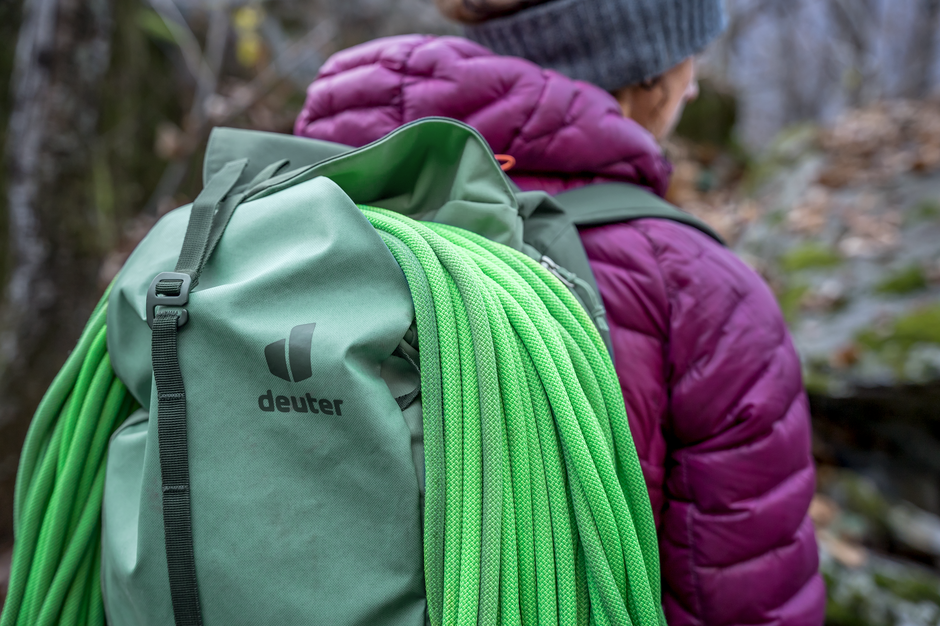
When rock climbing, so-called quickdraws complement the climbing kit. This is the name given to the two carabiners connected by a high-strength sling. One carabiner is clipped into the bolt on the wall and the other into the rope.
What do you need for bouldering?
The list of essential basic kit for indoor bouldering is really very straightforward: climbing shoes and a chalk bag with chalk. That’s it!
There are special bouldering chalk bags, which aren’t worn on the body but can simply be placed on the mat and have a larger capacity. However, the same chalk bag is often used for both climbing and bouldering. 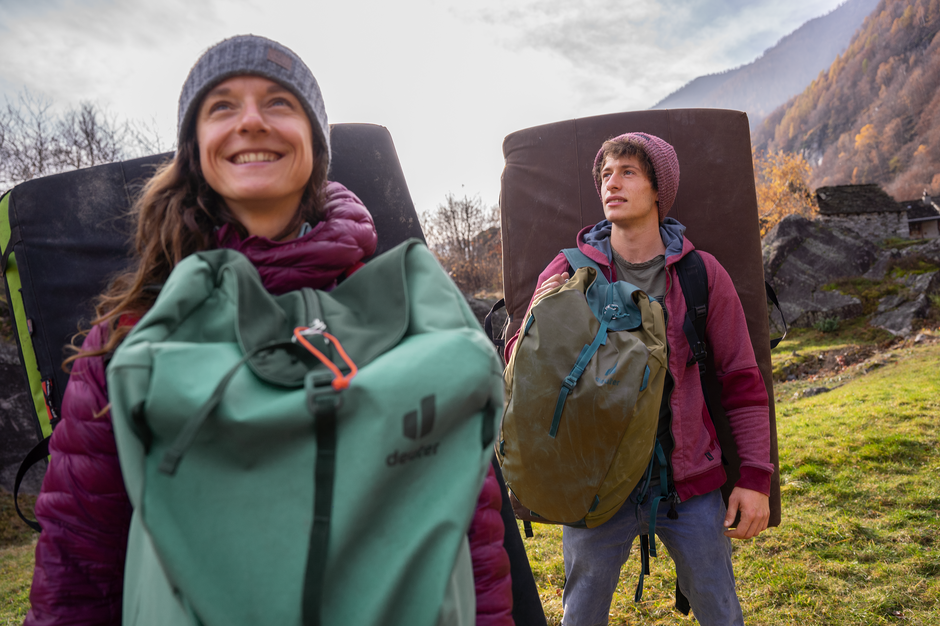
When bouldering on rock, bouldering mats (English: crashpad) ensure a soft landing and are therefore also part of the standard basic kit.
What are the different levels of difficulty in climbing?
Oh dear, that’s a big topic! Because difficulty is very subjective and varies depending on the climbing area. That’s why there are different grading systems for difficulty in free climbing and bouldering. These grading scales are based on many factors and a shared consensus, providing reliable guidelines that make it easier to choose routes and boulders within your own ability range.
Arguably the most widely used difficulty scales are the UIAA scale, the French difficulty scale and the Sierra scale used in America. In addition, there are other regional systems and specific boulder difficulty scales such as the Fb (Fontainebleau) scale and the V (Vermin) scale, which is widely used in the USA.
In the DACH region, grading according to the UIAA (Union Internationale des Associations d’Alpinisme) scale is particularly widespread in alpine climbing. The difficulty increases as the numbers get higher. From difficulty grade V onwards, a further distinction is made between “smooth”, “-” (easy within the specified grade) or “+” (difficult within the specified grade).
Are you looking to kit yourself out for your first climbing adventure?
Then get yourself a free climbing guide when you order a deuter product from the “Gravity” climbing range!