
Sleeping bag materials guide: Down vs Synthetic
For a dreamy night's sleep in a down or synthetic fiber sleeping bag - for every adventure
Our sleeping bags made from synthetic fibers or down combine innovative materials, maximum functionality and responsible manufacturing. Whether ultra-light down with excellent thermal performance or easy-care synthetic fibers for humid conditions - we rely on breathable, durable fabrics that create an optimal sleeping climate. Always with one goal in mind: maximum comfort, minimum pack size and reliable protection - no matter where you spend the night.
Sleeping bag outer fabrics and inner linings
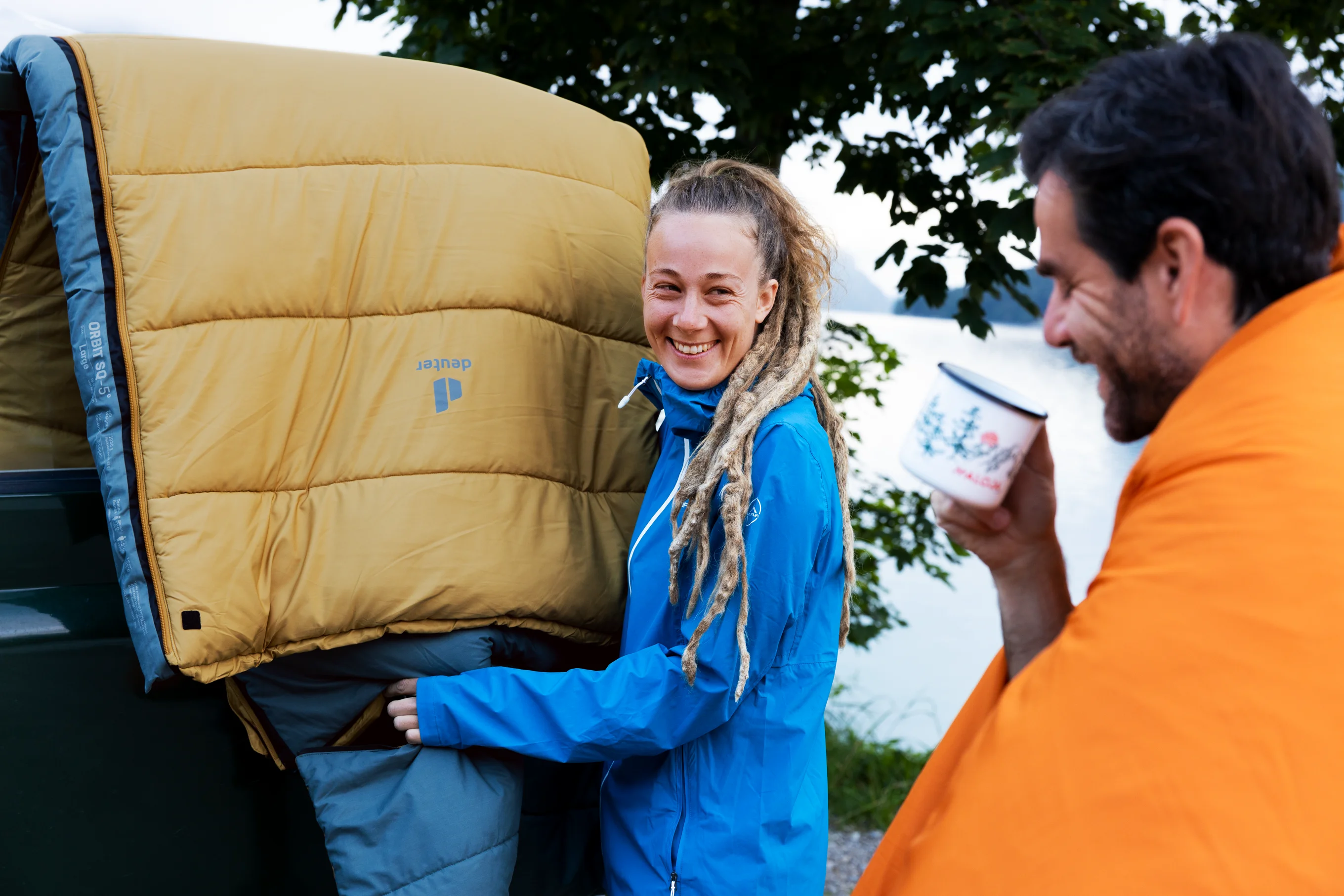
The outer materials and linings for our down sleeping bags or down fiber sleeping bags are largely made of polyamide and polyester. We mainly use textiles with a low denier count. They are usually structured. The fabrics are light and at the same time very stable and always moisture-repellent. Increasingly, textiles with coatings that are produced without PFAS are being used.
Some synthetic fiber and down sleeping bags use roughened materials such as brushed thermal fleece. The lightweight and very high-quality polyester fleece feels soft and comfortable on the skin thanks to its fluffy brushed surface. The material offers an excellent warmth-to-weight ratio. It is also highly breathable, durable, easy to care for and impresses with its short drying times. Its high elasticity supports the freedom of movement of the thermo-stretch comfort construction in the Exosphere SL models and also provides warmth in the Orbit SL models.
- We also take care to use breathable materials to ensure a comfortable sleeping climate.
- Dryzone fabrics are specially processed and offer a high water column. This keeps the down or synthetic fiber sleeping bag pleasantly dry.
- Our linings are also very light and soft to the touch. Good heat conduction properties and breathability are the prerequisites for use in our products.
Down sleeping bags: Pros and Cons
Down sleeping bags: Leightweight and highly packable
If very good insulation values with the lowest possible weight and small pack size are required, the down sleeping bag is the best choice. This is because no synthetic fiber achieves such bulkiness as this natural product and can therefore store warm air perfectly.
When treated with care, down is also more durable than synthetic fibers. It also ensures a pleasantly dry sleeping climate. This is due to its ability to absorb and release moisture. However, there are limits to how much moisture it can absorb. In extremely high humidity, in constant rain or near water, down can clump together and thus lose its insulating effect. Once the down is damp, it takes a very long time to dry again.
This is also a disadvantage on winter tours lasting several days. The moisture from the body condenses in the filling, freezes there and can then no longer dry out. Even with a bivouac sack, some of it will freeze in the sleeping bag and a waterproof sleeping bag liner helps the down, but the sleeping comfort typical of down is then lost.
How to identify down quality: Ratio, fill power & insulation value
Mixing ratio
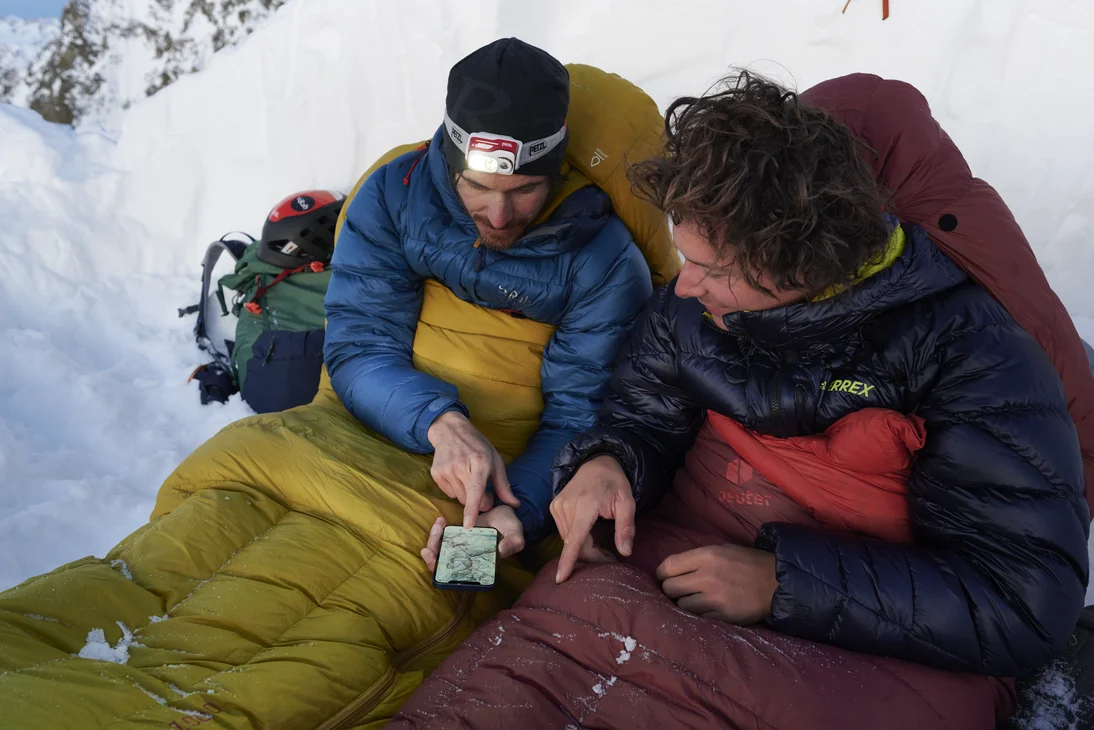
The quality of the down is the decisive criterion for down sleeping bags. This is primarily indicated by the mix ratio of down to small feathers/support feathers. The mixing ratio is given as a percentage by weight, which at 90/10 means that the filling is made up of 90% down and 10% small feathers (mixing ratio).
Fill power
A high-quality sleeping bag should have a fill power of at least 650 cuin (cubic inches). The fill power describes the quality of the fill or carrying capacity of a mixture. 650 cuin means, for example, that 1 ounce (28.3 g) of down of this quality has a volume of 650 cuin. A fill power from 550 inches upwards is good, from 650 top class and 800 hard to beat. Ultimately, the more volume a certain filling quantity produces, the better its insulation value.
100% RDS certified down
Since June 2015, we have only used down that is certified in accordance with the Responsible Down Standard (RDS).
Advantages:
+ no live plucking
+ no fattening
+ traceability in the supply chain
+ inspection by independent certification institutes worldwide
+ animal welfare ensured at all stages
Synthetic sleeping bags: Pros and Cons
Synthetic fibers: Insensitive all-rounders
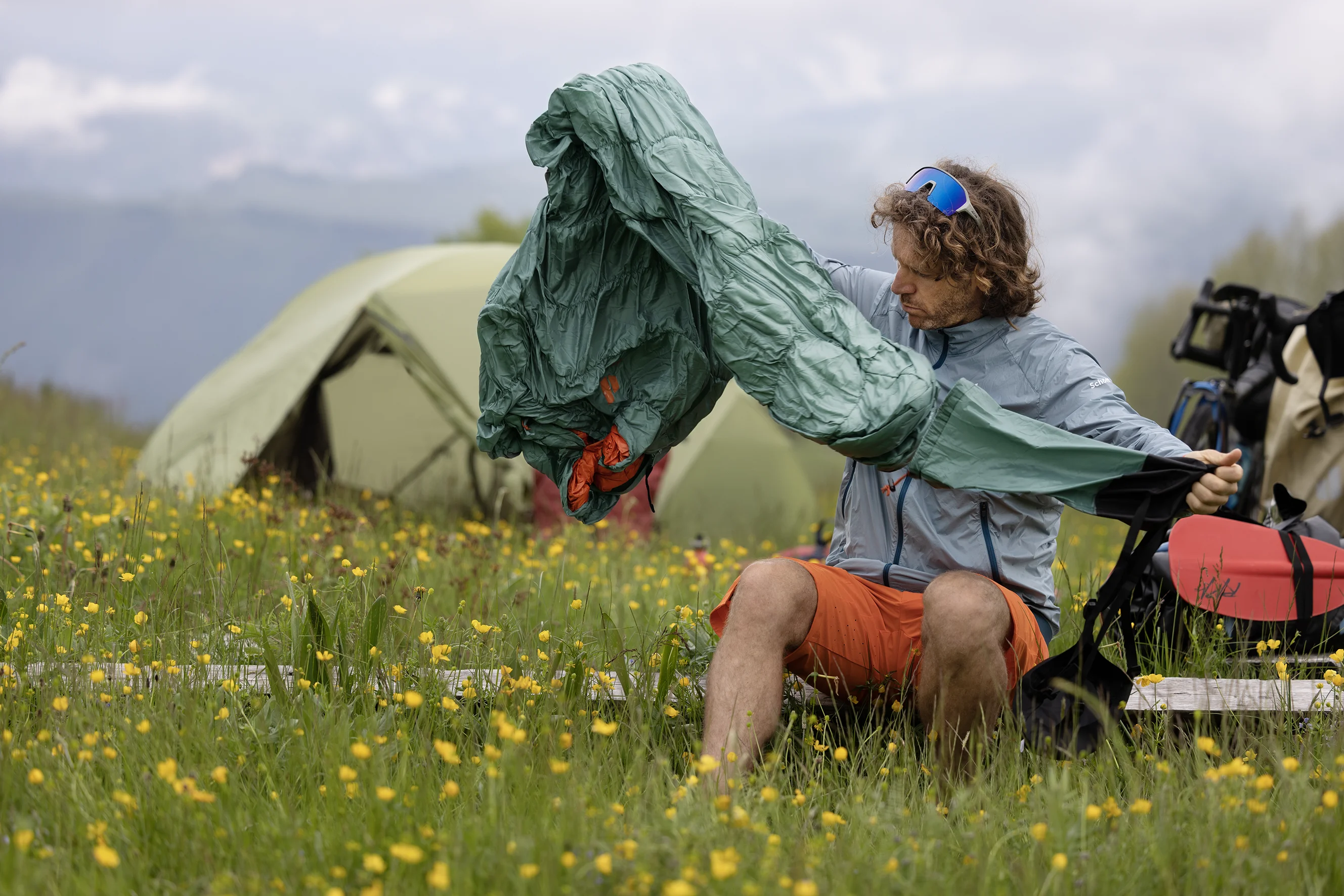
Their disadvantage is also their great advantage: they hardly absorb any moisture and dry much faster than down sleeping bags. If they do get damp, they still keep you comfortably warm. The hollow polyester fibers can continue to store the warm air as they remain stable and do not clump together like damp down. This makes them ideal for areas with permanently high humidity. Synthetic sleeping bags are also the right choice if extremely low temperatures are not expected or the sleeping bag is subject to heavy use and regular washing (children!). They are cheaper than down models and easier to care for.
High-Loft Hollowfiber & Thermo ProLoft®: Modern synthetic insulation
High-Loft Hollowfiber:
Synthetic hollow fibres are processed into a filling fleece (thermally bonded). And additionally siliconized to ensure good compressibility and full loft. Excellent thermal performance, tear-resistant and robust.
Thermo ProLoft®:
In a special thermal process, polyester fibers are processed into the technically high-quality Thermo ProLoft® insulation fleece. The ideal ratio of durability, weight and thermal performance is ensured by the combination of solid and hollow fibers. Their combination creates a fleece that is durable, easy to care for, compressible and offers high-performance thermal insulation at the lowest possible weight. The synthetic fibers also absorb little moisture. Short drying times and excellent loft, and therefore efficient heat retention, even when damp, are among its major advantages. In addition, deuter Thermo ProLoft® is treated with a thin layer of silicone for good bulking properties.