
Principles
The deuter Promise sets out deuter's commitments to people and the planet, with the Principles at its centre providing the structure, governance and processes needed to realise them.
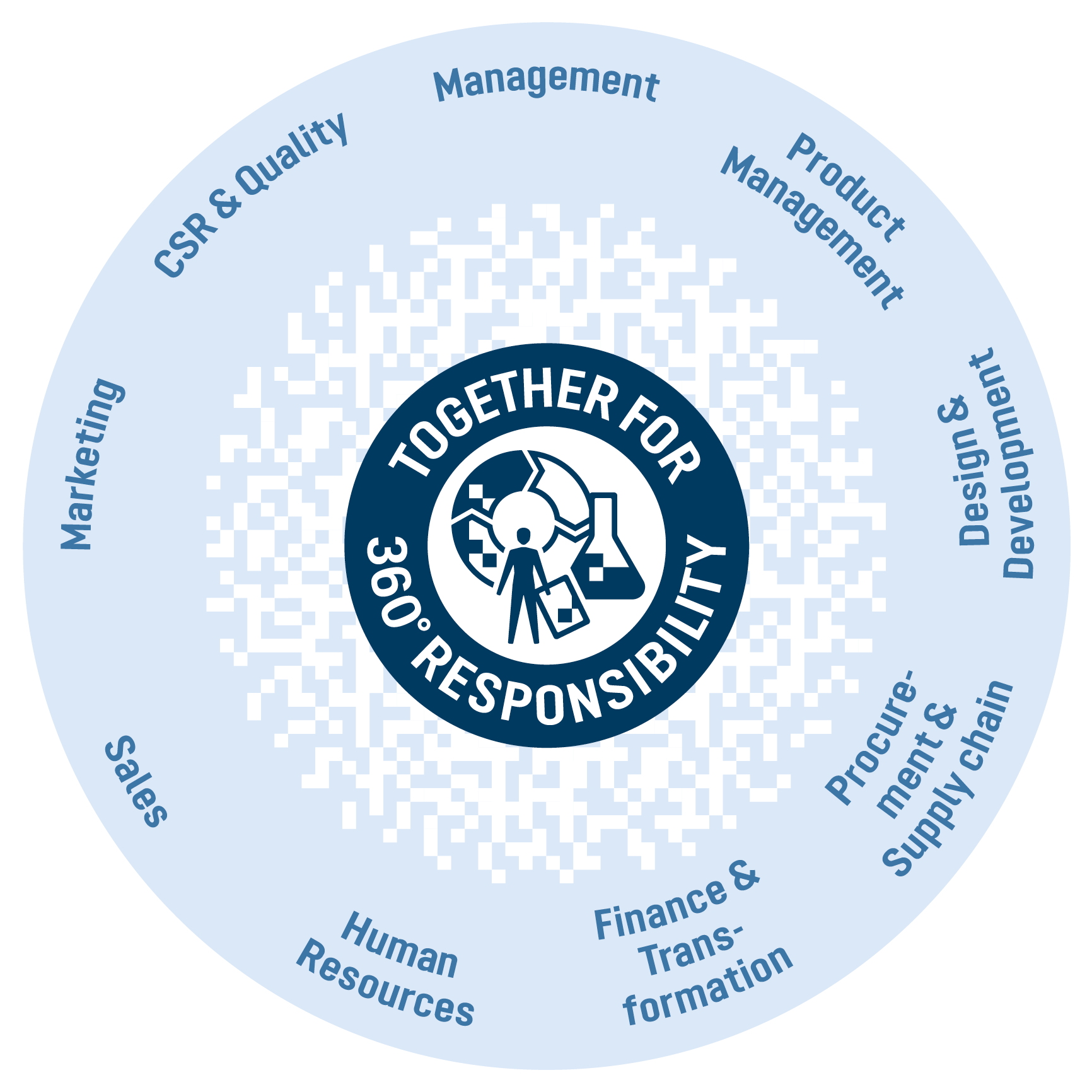
Sustainability is part of all areas of deuter’s business and a regular topic in management meetings. Overall responsibility for human rights and environmental due diligence lies with the CEO and executive management.
The CSR & Quality Management department brings together sustainability managers with expertise in different environmental, social and governance topics. The head of CSR & QM reports directly to the CEO.
Together for 360° Responsibility
“Together for 360° Responsibility” is deuter’s internal vision for a holistic approach to sustainability. It makes clear that fulfilling the deuter Promise involves everyone in the company—not only executive management and the CSR team. It also requires close cooperation with manufacturing partners.
Sustainability goals and measures are integrated into the strategies and daily work of all departments. Cross-functional teams support their implementation. One example is the Emission Reduction Team, which brings together experts from different departments to coordinate climate measures across the company.
Clear rules and guidelines translate the deuter Promise into standards for daily business. They define how deuter and its partners address ethical, social and environmental responsibilities.
Schwan-STABILO Group Code of Conduct
The Code of Conduct applies to all employees and companies within the Schwan-STABILO Group, including deuter. It covers environmental and social responsibility as well as business integrity. This includes fair competition, anti-corruption, prevention of money laundering, conflicts of interest, data protection, information security and the responsible handling of company property.
Read the Schwan-STABILO Group Code of Conduct
deuter Promise Policy
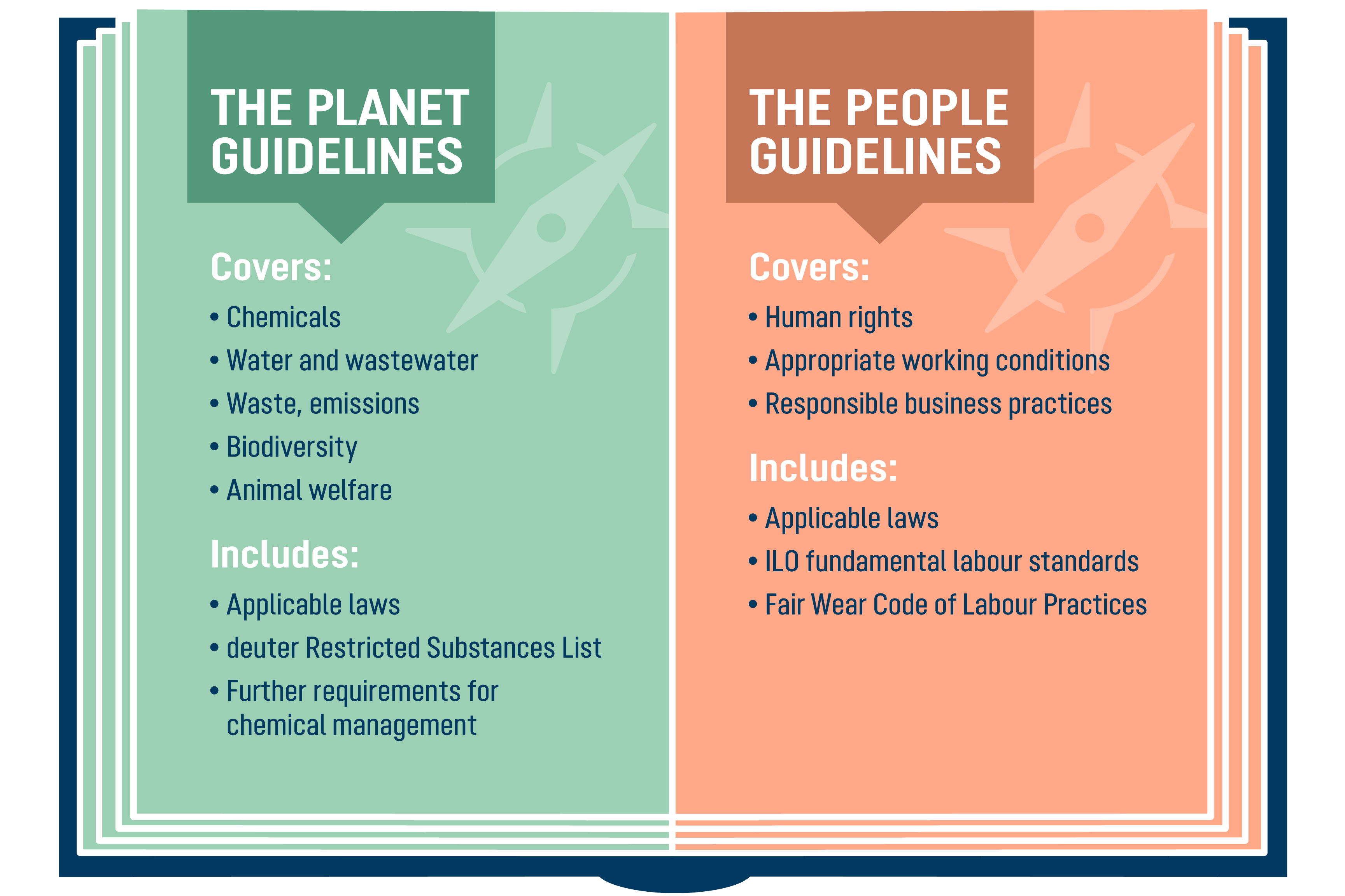
The deuter Promise Policy sets binding requirements for deuter and its manufacturing partners. Two guidelines support its practical implementation:
The People Guideline |
The Planet Guideline |
|---|---|
Covers:
|
Covers:
|
Includes:
|
Includes:
|
Together, these documents integrate the deuter Promise into contracts, supplier requirements and operational processes.
Supplier Handbook
These policies and guidelines are gathered in the deuter Supplier Handbook. It is shared with Tier 1 suppliers and Tier 2 material and fabric suppliers through an e-learning platform. Updates are communicated through the same platform, and suppliers must pass the requirements on to their subcontractors.
The handbook supports due diligence by improving communication along the supply chain and providing guidance for implementation.
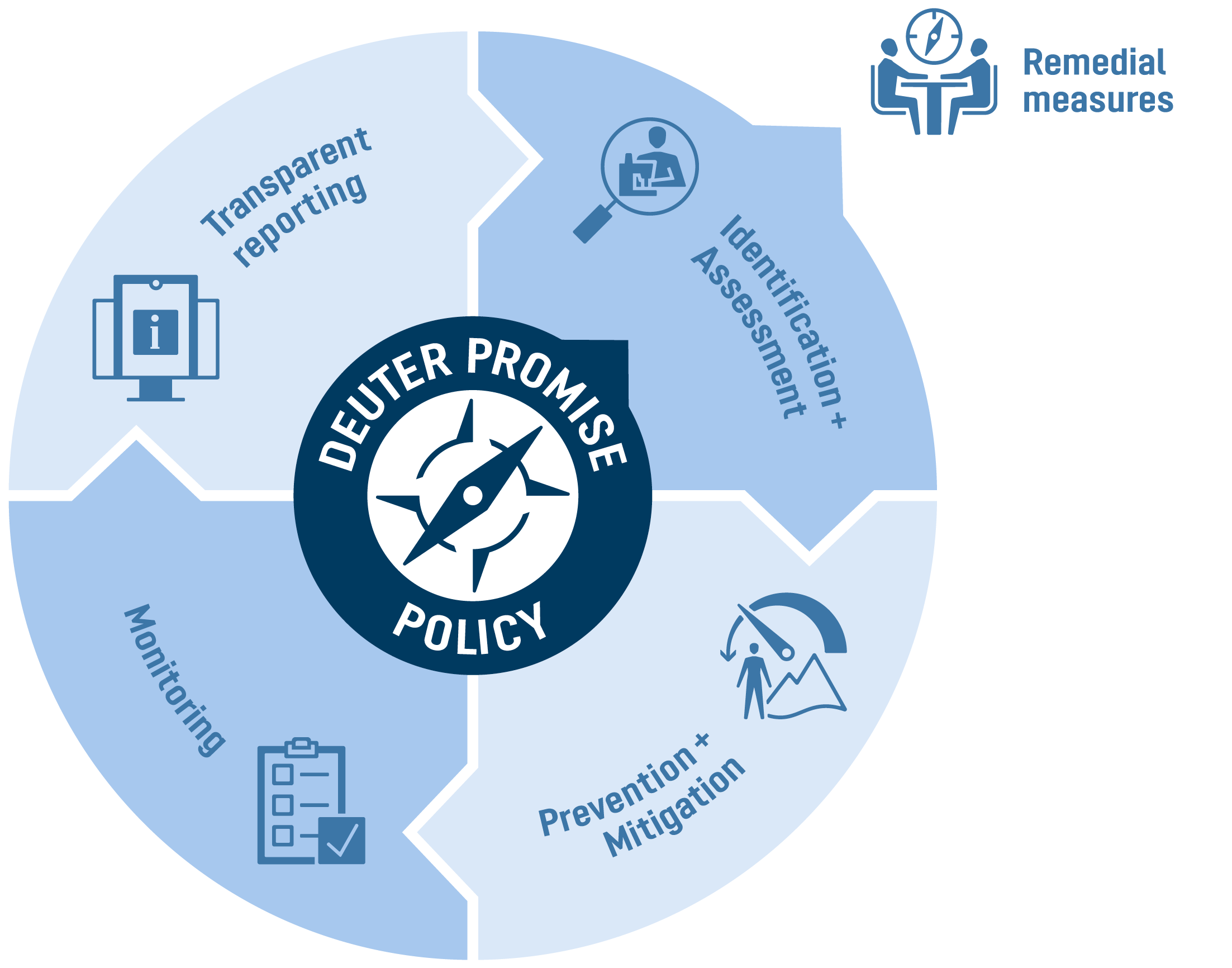
Due diligence connects the deuter Promise with a continuous process for identifying and addressing possible negative impacts on people and the environment. It covers deuter’s own operations, supply chains and business relationships and follows six stages:
- deuter Promise Policy: Policies, guidelines and management systems define the requirements for responsible business conduct.
- Identification and assessment: Potential and actual impacts on human rights, working conditions and the environment are identified and assessed.
- Prevention and mitigation: Measures are taken to prevent negative impacts or reduce their likelihood and severity.
- Monitoring: Implementation and results are reviewed to assess whether the measures are effective.
- Transparent reporting: deuter communicates how risks and impacts are addressed and reports on progress in the deuter Promise Report.
- Remedial measures: Where negative impacts have occurred, deuter works with relevant stakeholders to find appropriate solutions.