Passa al contenuto principale Salta alla ricerca Passa alla navigazione principale

Planet

The outdoors is where we feel at home. Protecting it starts with understanding our impact – and reducing it wherever we can. From climate and resources to chemicals, we set targets and work with our partners to turn them into action.


Promise


Climate change puts growing pressure on the places where we live, work and spend time outdoors.

We will measure greenhouse gas emissions across our company and value chain and work to reduce them.


Race to Zero

deuter joined the UN-backed Race to Zero campaign through the SME Climate Hub.

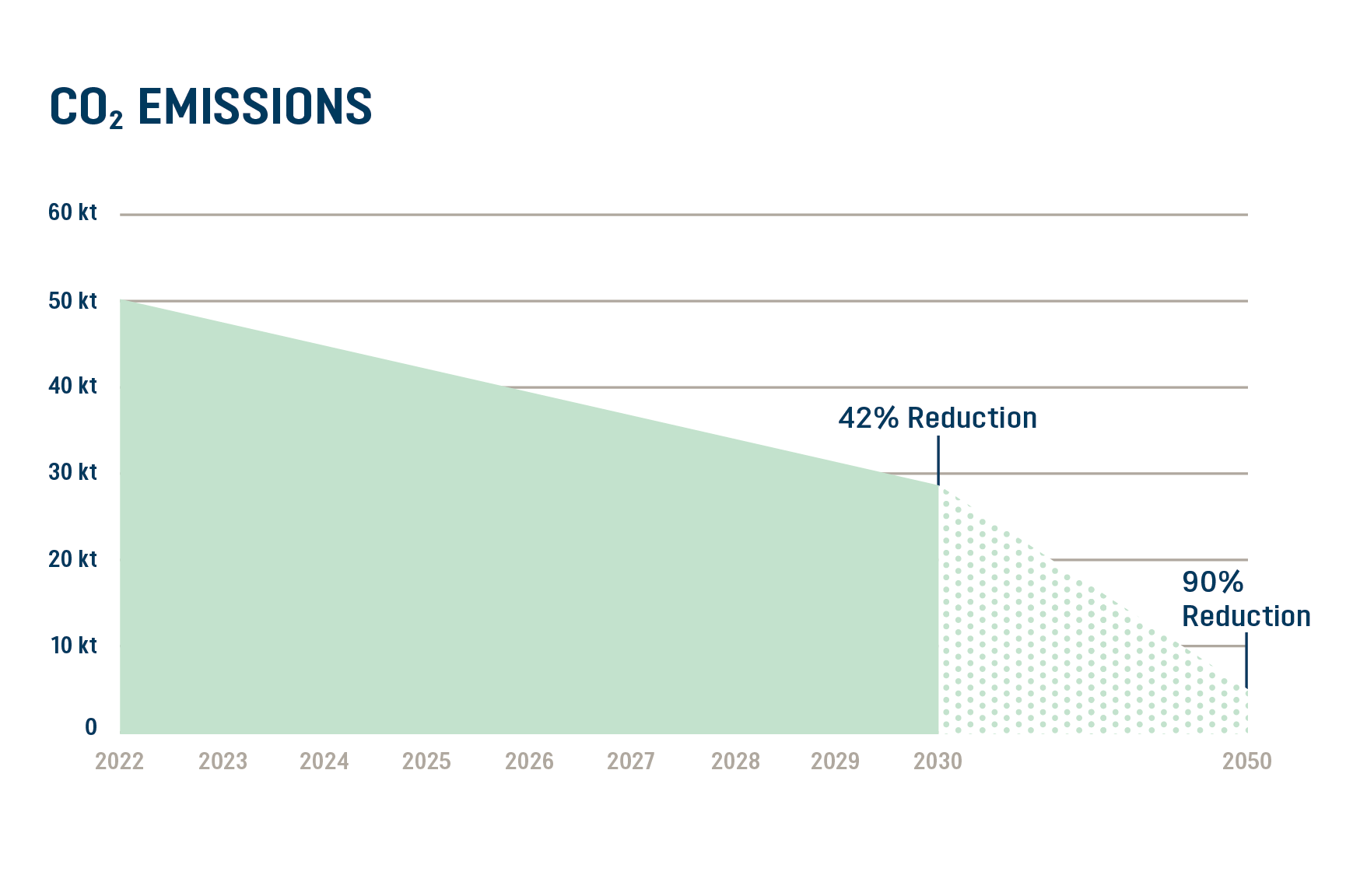
Race to Zero brings together companies, cities and other non-state actors around the goal of halving global emissions by 2030 and reaching net zero by 2050.

The SME Climate Hub provides smaller companies with a framework for measuring emissions, developing reduction plans and reporting progress. deuter publishes the information submitted under this framework.

Together, they provide deuter with a common framework for measuring emissions, planning reductions in line with global climate goals and reporting progress publicly.

About Race to Zero
About the SME Climate Hub
deuter’s reports
graph, CO2, emissions, chart, timeline

Measuring our carbon footprint

MOUNTAINEERING_Expedition_Ultra_Sideshot-7_Thomas_Monsorno

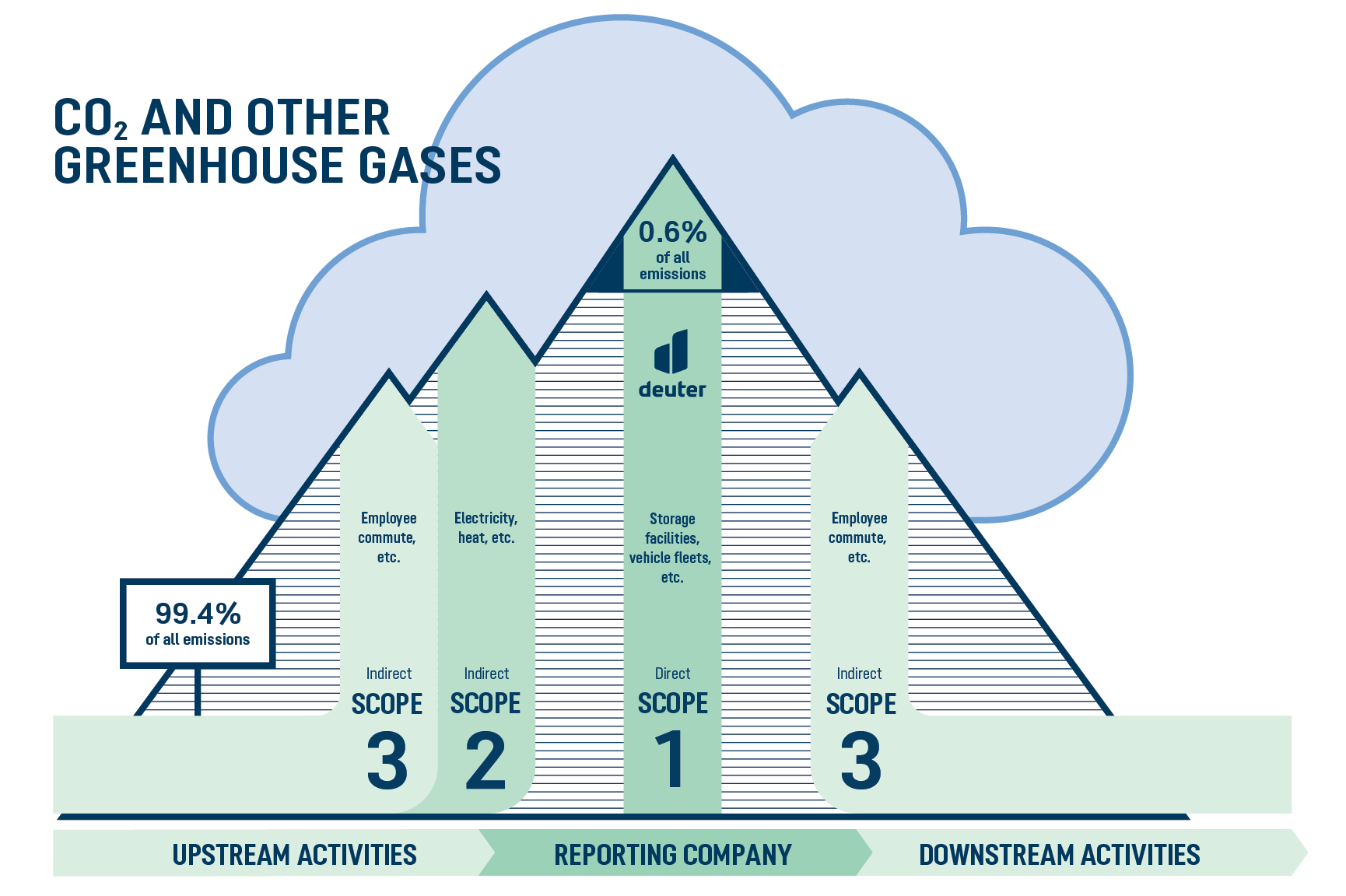
Together with ClimatePartner, we calculate greenhouse gas emissions across our company and value chain. This helps us understand where emissions arise and identify where reductions are needed.

The calculations combine energy and activity data from deuter and its suppliers with estimated emissions from materials, production, transport and other activities. The results are available through our ClimatePartner ID Links:

ClimatePartner ID Company
ClimatePartner ID Products

Within this calculation model, the results indicate that deuter’s total emissions and average emissions per product have decreased since the 2022 baseline. The development in total emissions should be viewed alongside changes in production and sales volumes, which were exceptionally high in 2022.

The calculations also indicate that most emissions arise in the supply chain, particularly from materials and transport. These areas are therefore a central focus of our reduction work.

Our emissions data and calculation methods are being reviewed for 2026/27, including requirements for independent verification. The current results are estimates based on the available data and may change as data quality and calculation methods improve.
co2, greenhouse gases, emissions, pyramid, illustration

Strategy

mountain, rocky, snow, peak, landscape

Our Emissions Reduction Team


Reducing emissions involves decisions across the whole company. deuter has therefore set up an interdisciplinary Emissions Reduction Team (ERT-Team) to coordinate this work as part of the 360° Responsibility approach.

The team brings together colleagues from Product Development, Procurement and Logistics, Marketing, Facility Management, and Sustainability and CSR. Together, they collect data, identify the main sources of emissions and set priorities for reduction.

A monitoring system is being developed to track measures, responsibilities and progress. Initial tracking is already in place.


Promise


Protecting the environment from harmful substances is a priority for deuter as an outdoor brand.

We will track the environmental impact of our products and minimise them by selecting resources carefully, reducing the quantity of resources used and avoiding harmful substances. We will also engage in environmental projects together with partner organisations and NGOs and continue to expand these activities.


Strategy

Clear rules for suppliers

deuter’s Planet Guideline sets clear environmental and safety requirements for all suppliers. They help minimise the risk of harmful substances entering deuter products and define how chemicals, wastewater and hazardous waste must be managed throughout production.

The main requirements include:

  • EU REACH Regulation: REACH (Registration, Evaluation, Authorisation and Restriction of Chemicals) regulates hazardous chemicals in products and supply chains. Suppliers must monitor substances listed as Substances of Very High Concern (SVHC) and provide the required information.
  • deuter Restricted Substances List (RSL): Our RSL limits or bans certain chemicals in materials and finished products. It is based on the bluesign RSL and is updated simultaneously.
  • ZDHC Manufacturing Restricted Substances List (MRSL): The ZDHC (Zero Discharge of Hazardous Chemicals) MRSL restricts hazardous chemicals used during production. It focuses on chemical inputs before they can enter products, wastewater or factory waste. 
Chemical inventories, safety data sheets and targeted laboratory tests help suppliers meet these requirements.

Trekking_AircontactX_Sideshot_15_StefanNeuhauser

Working with the bluesign® system

HIKING_Futura_Sideshot_12_LukasKusstatscher

deuter has been a bluesign® System Partner since 2008.

bluesign® supports textile companies in reducing environmental and social risks across the value chain. Its criteria cover chemicals, resource use, environmental impacts, worker safety and the management systems behind them.

The bluesign® system works on three levels:

  1. Companies: Management systems and processes are assessed against the bluesign® Criteria.
  2. Chemicals and materials: Chemical products, materials and components are assessed before they are used in production.
  3. Finished products: Products can be certified when they and the relevant manufacturing processes meet the required criteria.
For deuter, bluesign® provides a framework for managing chemicals and limiting hazardous substances in the textile supply chain. It helps us assess production processes, chemical use and final products in relation to human safety, environmental protection and resource efficiency.


bluepass certification


From September 2026, deuter will use bluepass, the certification label replacing the previous bluesign® PRODUCT and bluesign® APPROVED designations. It identifies certified chemical products, materials and finished products that meet the relevant bluesign® Criteria.

For consumers, buyers and supply-chain partners, bluepass makes certification easier to recognise and verify. A QR code provides access to product-specific information on a third-party platform, including REACH information, ZDHC wastewater compliance, laboratory test results and chemical-safety documentation.


Fabrics made without intentionally added PFAS

PFAS (per- and polyfluoroalkyl substances), sometimes also referred to as PFCs (per- and polyfluorinated chemicals), have been used in outdoor textile finishes for their water-, dirt-, and grease-repellent properties. Many PFAS are highly persistent and can accumulate in the environment over time.

Since 2020, deuter has exclusively used DWR (Durable Water Repellent) finishes without intentionally added PFAS. These finishes are selected in line with deuter’s chemical management requirements and applicable product safety standards.
Boatpacking_Sideshot_10_MartinBissing

Promise


Using resources efficiently is essential to minimise our climate and environmental impact.

We aim to keep products and materials in use for as long as possible. From material selection and product design to production, use, repair, reuse and recycling – we consider the entire product life cycle to reduce the use of raw materials and energy and make our products more circular.


Our circular approach
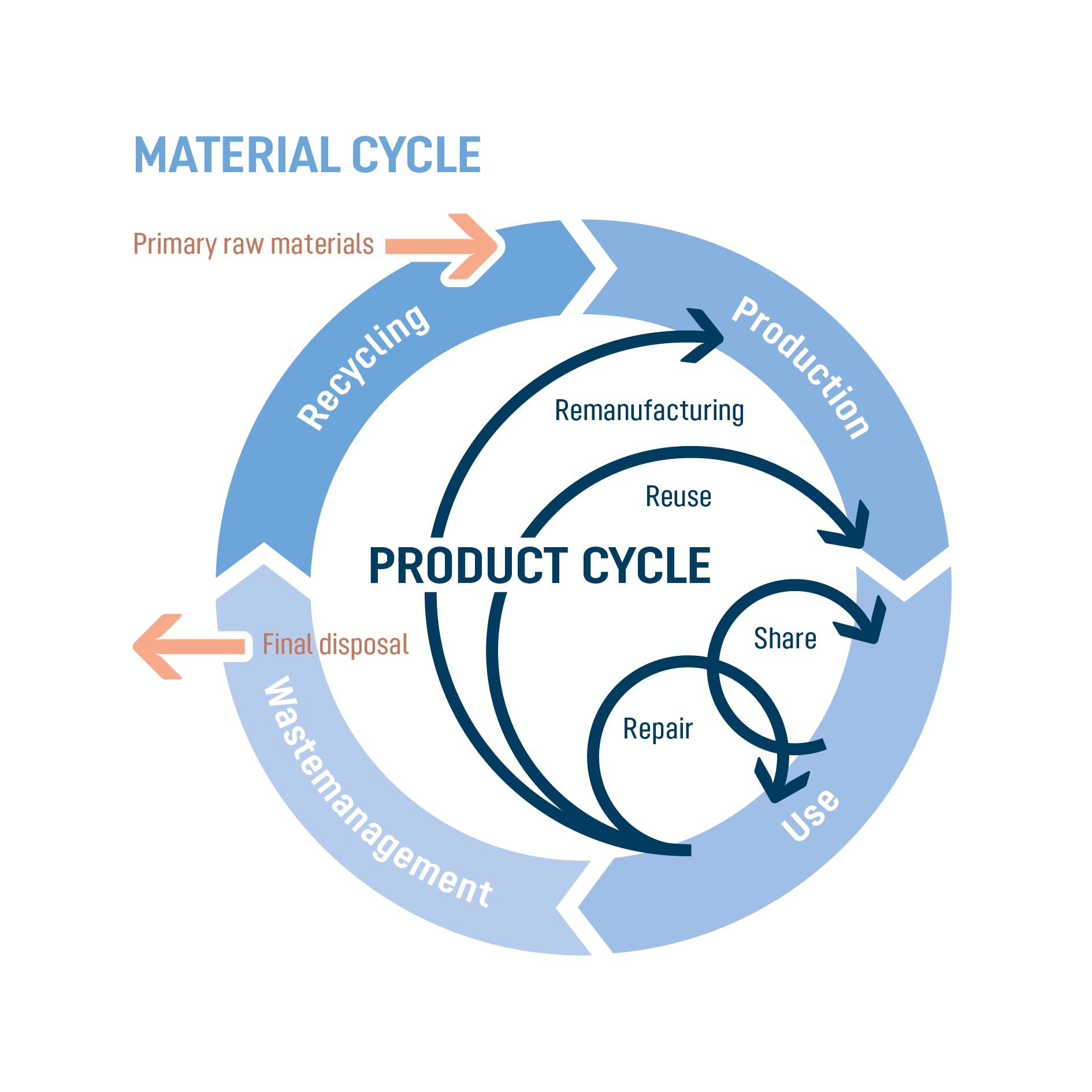
infographic, material cycle, recycling, reuse, production, sticker, logo, chart, diagram, infographic

In practice, our work follows two connected cycles:

  • Product cycle: We focus on durability, repairability and continued use. Care, repairs, spare parts, Second Life and selected rental services can extend product lifetimes and delay replacement.
  • Material cycle: Where new materials are needed, we work to increase recycled content and reduce the use of virgin raw materials. We have also explored more recyclable and mono-material designs through research and pilot projects.

The challenge 

Our backpacks and sleeping bags combine many fabrics, coatings, foams and components to meet requirements for function, safety and durability. These materials are often difficult to separate and recycle. Our pilot projects have not yet produced a scalable closed-loop solution, and we do not currently have a comprehensive system for taking back and recycling our products. Extending product life through durable design and repair therefore remains the main focus of our circular approach.
Recycled materials and certification scope

Based on aggregated information supplied by material manufacturers, recycled raw materials represented 40% of deuter’s total material volume in 2024, compared with 17% in 2021. This information has not been independently verified and relates to company-level material inputs, not the recycled content of individual products.

For materials covered by certification, recycled content is documented and traced through the supply chain using Textile Exchange standards, including the Recycled Claim Standard (RCS) and Global Recycled Standard (GRS). Certification applies only to the materials and supply-chain stages specified in the relevant certificates.

Textile Exchange is replacing RCS and GRS with the Materials Matter Standard (MMS).

Design for Durability

Materials are selected according to their durability and longevity. They must meet deuter’s quality requirements in laboratory tests. Products are also tested under real outdoor conditions to assess their functionality and durability.

Design to Repair

Repairability is integrated into the design process. Product developers and repair specialists examine common damage, weak points and repairs that are currently difficult or impossible. These findings are used to improve future products.

Design to Recycle

A backpack can contain more than 100 parts, making material separation and recycling difficult. deuter uses research and pilot projects to explore how material types and blends can be reduced and difficult-to-recycle components replaced. In a previous collaboration with Iteratif, products were analysed and mono-material concepts explored. 

Life Cycle Assessments

deuter has used Life Cycle Assessments in selected projects to examine environmental impacts across different stages of a product’s life cycle. These assessments are project-specific and do not cover the entire product range.

As part of a previous collaboration with Iteratif, selected products were analysed and workshops investigated approaches to circular design and recyclability. The projects provided insights for product development, but deuter does not currently have a comprehensive take-back and recycling system.

Repair Service

deuter repairs products at its workshop in Gersthofen and through service partners in other markets. Depending on the damage, components are repaired or replaced; usable parts from products that cannot be repaired may be recovered as spare parts. DIY videos, iFixit instructions, care advice and replacement parts also support maintenance and simple repairs at home. 

Second Life 

Returns, samples, factory seconds and products with minor signs of use are inspected, repaired where necessary and resold through the Second Life service in our deuter shop in Gersthofen. The service is currently limited to this location. 

Rental service 

Child carriers can be borrowed free of charge at five cable-car stations in Germany’s Allgäu region. Selected Alpine Club huts also offer deuter backpacks for loan. Further product categories and locations are being considered.

Optimising packaging

  • Reducing product bag impacts: Using thinner, product-specific bags made from recycled low-density polyethylene (LDPE), according to manufacturer information.
  • Improving shipping packaging: Sourcing shipping boxes locally where possible and using boxes containing recycled material, according to manufacturer information. Smaller products and accessories are shipped in bags made from recycled paper.

Infiniti series

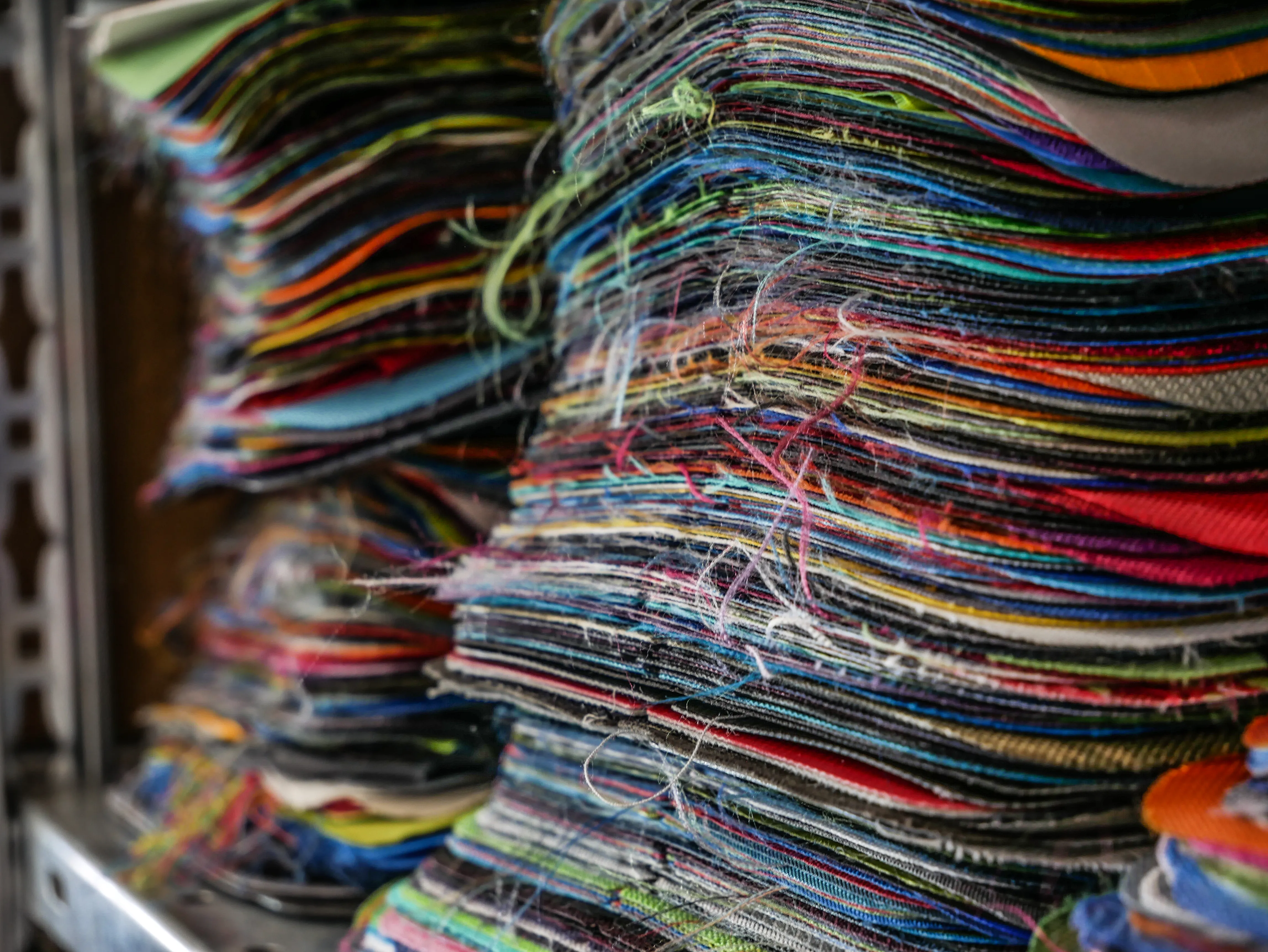
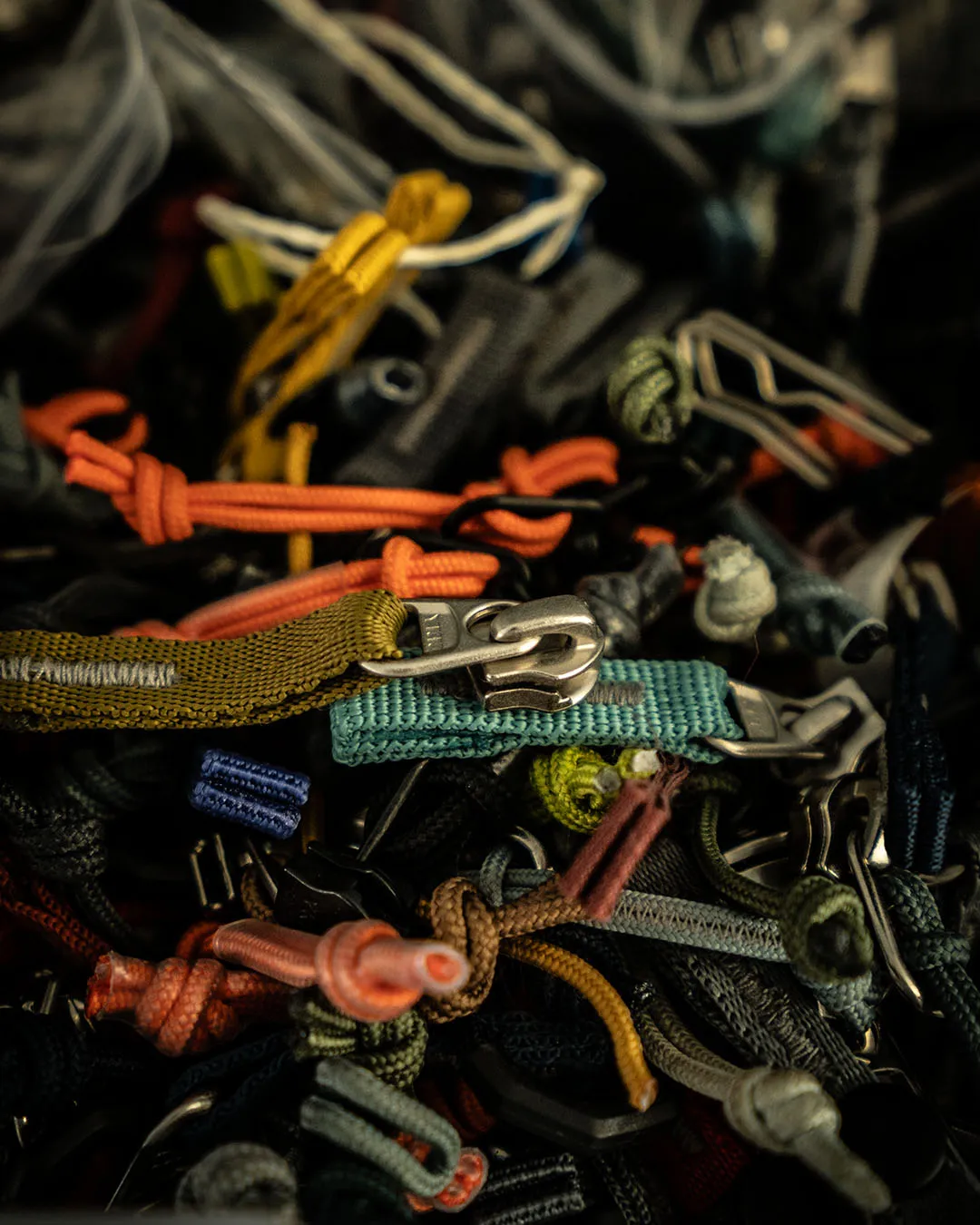
The Infiniti series uses remnants and offcuts from deuter’s main production. This reduces production waste and the need for virgin materials. deuter also contributes 10% of sales from the Infiniti series to the OEOO’s clean-up centre in Kratie that collects and processes waste from the Mekong river. 

3D printing 

The Airstripes back system of the Hiline mountain-bike backpack is produced using 3D printing. Only the material required for the padding is printed, limiting surplus material. The project tests how new production technologies can reduce waste while maintaining product performance.

Recycled materials and certification scope

Based on aggregated information supplied by material manufacturers, recycled raw materials represented 40% of deuter’s total material volume in 2024, compared with 17% in 2021. This information has not been independently verified and relates to company-level material inputs, not the recycled content of individual products.

For materials covered by certification, recycled content is documented and traced through the supply chain using Textile Exchange standards, including the Recycled Claim Standard (RCS) and Global Recycled Standard (GRS). Certification applies only to the materials and supply-chain stages specified in the relevant certificates.

Textile Exchange is replacing RCS and GRS with the Materials Matter Standard (MMS).

Design for Durability

Materials are selected according to their durability and longevity. They must meet deuter’s quality requirements in laboratory tests. Products are also tested under real outdoor conditions to assess their functionality and durability.

Life Cycle Assessment

Design to Repair

Repairability is integrated into the design process. Product developers and repair specialists examine common damage, weak points and repairs that are currently difficult or impossible. These findings are used to improve future products.

Design to Repair

Design to Recycle

A backpack can contain more than 100 parts, making material separation and recycling difficult. deuter uses research and pilot projects to explore how material types and blends can be reduced and difficult-to-recycle components replaced. In a previous collaboration with Iteratif, products were analysed and mono-material concepts explored.

Design to Recycle

Life Cycle Assessments

deuter has used Life Cycle Assessments in selected projects to examine environmental impacts across different stages of a product’s life cycle. These assessments are project-specific and do not cover the entire product range.

As part of a previous collaboration with Iteratif, selected products were analysed and workshops investigated approaches to circular design and recyclability. The projects provided insights for product development, but deuter does not currently have a comprehensive take-back and recycling system.

Life Cycle Assessment

Repair Service

deuter repairs products at its workshop in Gersthofen and through service partners in other markets. Depending on the damage, components are repaired or replaced; usable parts from products that cannot be repaired may be recovered as spare parts. DIY videos, iFixit instructions, care advice and replacement parts also support maintenance and simple repairs at home.

Repair Service

Second Life

Returns, samples, factory seconds and products with minor signs of use are inspected, repaired where necessary and resold through the Second Life service in our deuter shop in Gersthofen. The service is currently limited to this location.

Second Life

Rental service

Child carriers can be borrowed free of charge at five cable-car stations in Germany’s Allgäu region. Selected Alpine Club huts also offer deuter backpacks for loan. Further product categories and locations are being considered.

Rental service

Reducing product bag impacts

Using thinner, product-specific bags made from recycled low-density polyethylene (LDPE), according to manufacturer information.

Product bags

Improving shipping packaging

Sourcing shipping boxes locally where possible and using boxes containing recycled material, according to manufacturer information. Smaller products and accessories are shipped in bags made from recycled paper.

Shipping packaging

Infiniti series

The Infiniti series uses remnants and offcuts from deuter’s main production. This reduces production waste and the need for virgin materials. deuter also contributes 10% of sales from the Infiniti series to the OEOO’s clean-up centre in Kratie that collects and processes waste from the Mekong river.

3D printing

The Airstripes back system of the Hiline mountain-bike backpack is produced using 3D printing. Only the material required for the padding is printed, limiting surplus material. The project tests how new production technologies can reduce waste while maintaining product performance.