
Sleeping bags
Sleeping under the stars – thanks to dDeuter sleeping bags for camping, trekking, outdoor overnight stays and hikes, you can enjoy your weekend in a mountain hut, your festival, your long-distance hike or your family holiday at a campsite at any time of year. You won’t have to freeze – instead, you can snuggle up in comfortable sleeping bags filled with synthetic fibres or down. Find out which sleeping bag is right for your trip here in the online shop. Find out more!
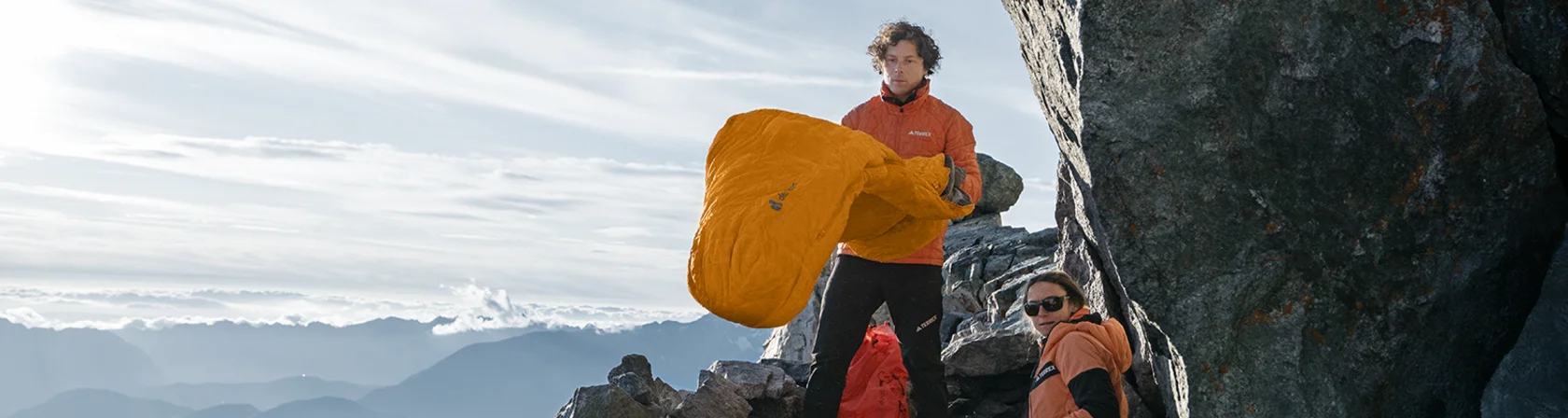
deuter sleeping bags - your warm outdoor bed for any time of year
When you’ve spent all day on the move, you look forward to having a good night’s rest and recuperation. But even if you’re far from the comfort of your own bed, with the right gear, you can still get a good night’s sleep. A deuter sleeping bag is your trusty companion for nights spent in a tent, at a hut, in the car, or even under the stars. We have a wide selection of different sleeping bag types and styles to suit a range of activities and environments. Find out which sleeping bag is best suited to your needs:
Down-filled sleeping bags: Lightweight & insulating
Lightweight, a comfortable sleeping environment and a short warm-up time – down sleeping bags offer many advantages. Down is the underfeather of ducks and geese and has a core from which small, finely branched fibres emerge. This structure traps a lot of air and ensures a good warmth-to-weight ratio.
Choose a down sleeping bag for:
- you need to watch every gram: sleeping bags with down filling are smaller and lighter than comparable synthetic sleeping bags.
- you’re travelling in a dry, continental European climate, where temperatures can get quite cool.
Find out more about the benefits of down sleeping bags:
Astro
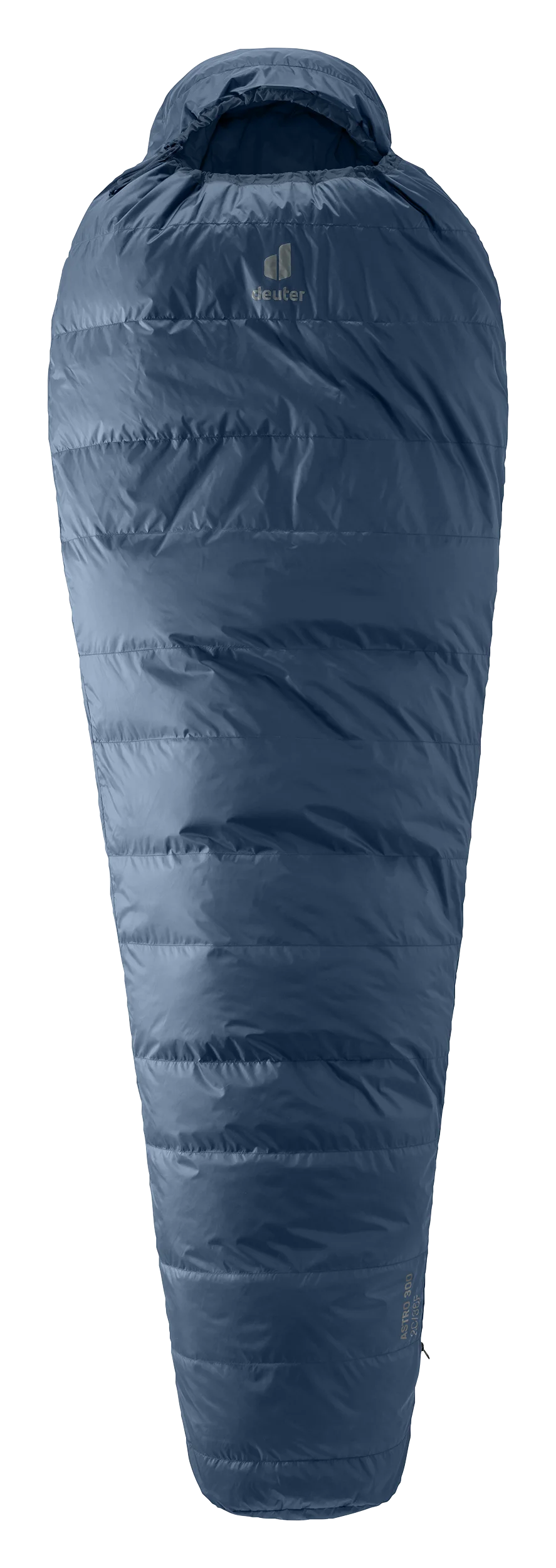
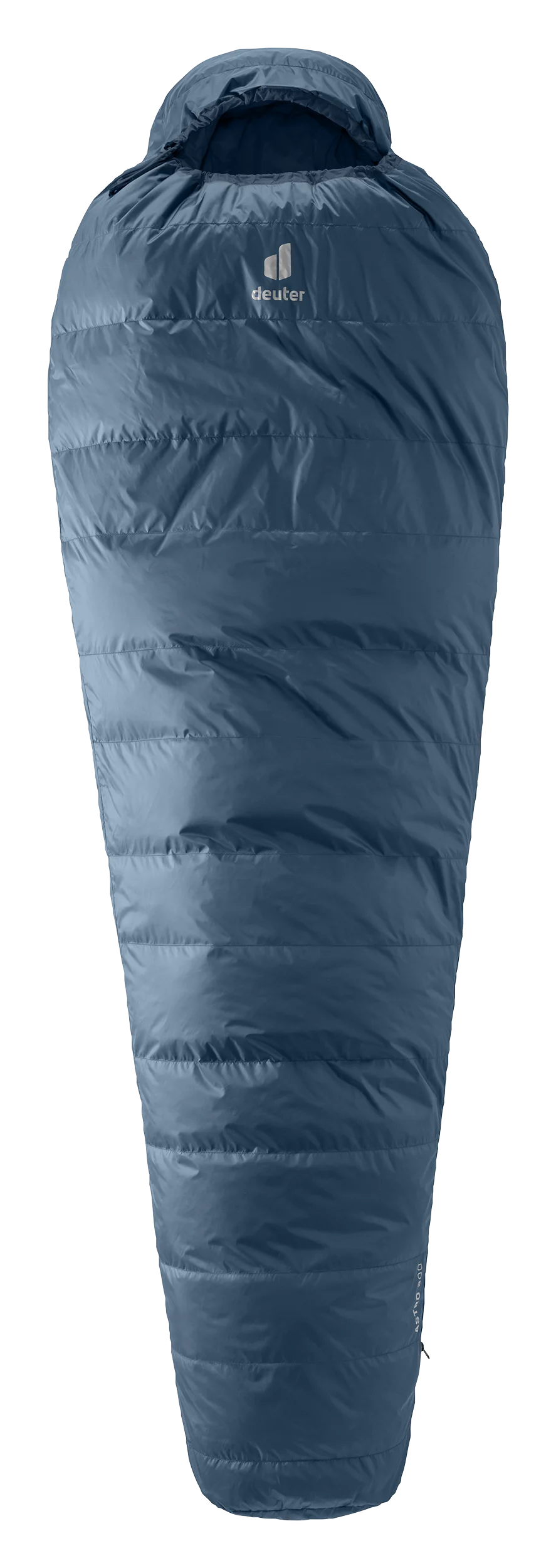
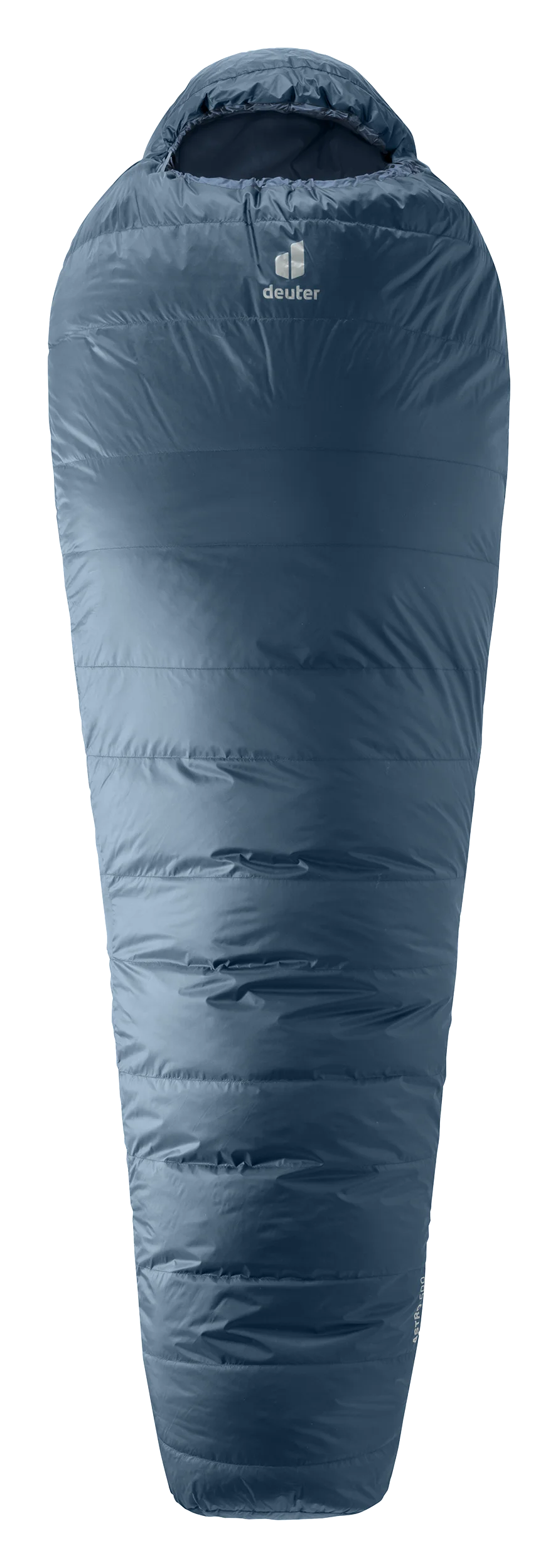
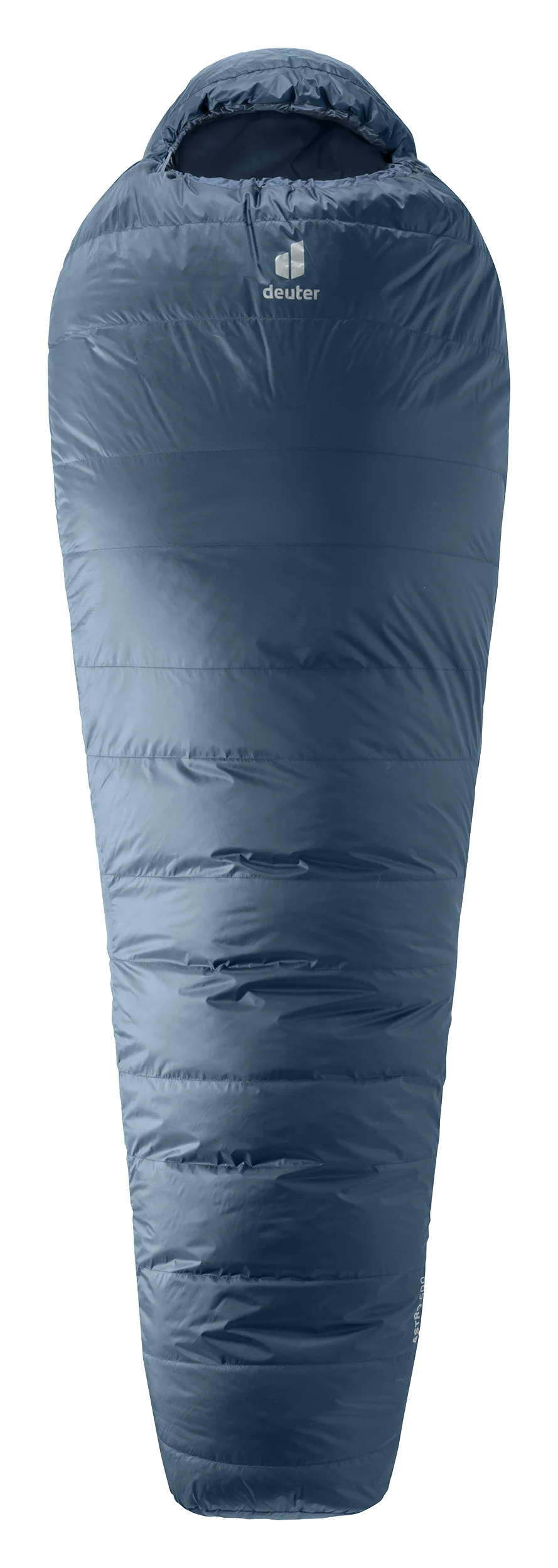
The Astro down sleeping bag is not only feather-light but also particularly robust thanks to its high weave density. As it’s also highly compressible, you can take the sleeping bag with you on multi-day trips without any worries. You can look forward to a comfortable night’s sleep: the moisture you sweat out at night is quickly wicked away. Do your feet get cold easily? The down sleeping bag has extra-thick filling in the foot area, so your feet stay warm. What’s more, the raised ergonomic foot section adapts to your natural foot position. The Astro is available in two warmth ratings: the Astro 300 +2°C/36°F has a limit temperature of +2 °C, whilst the warmer Astro 500 -2°C/28°F is rated down to -2 °C.
Astro Pro
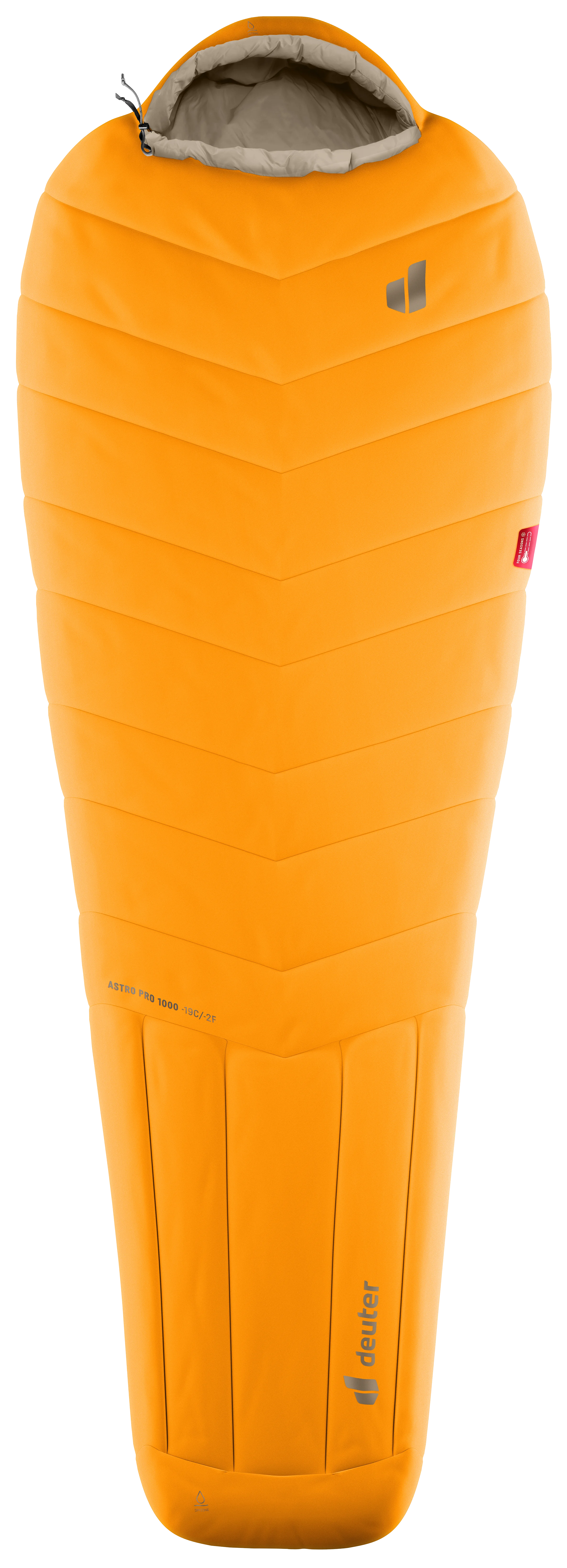
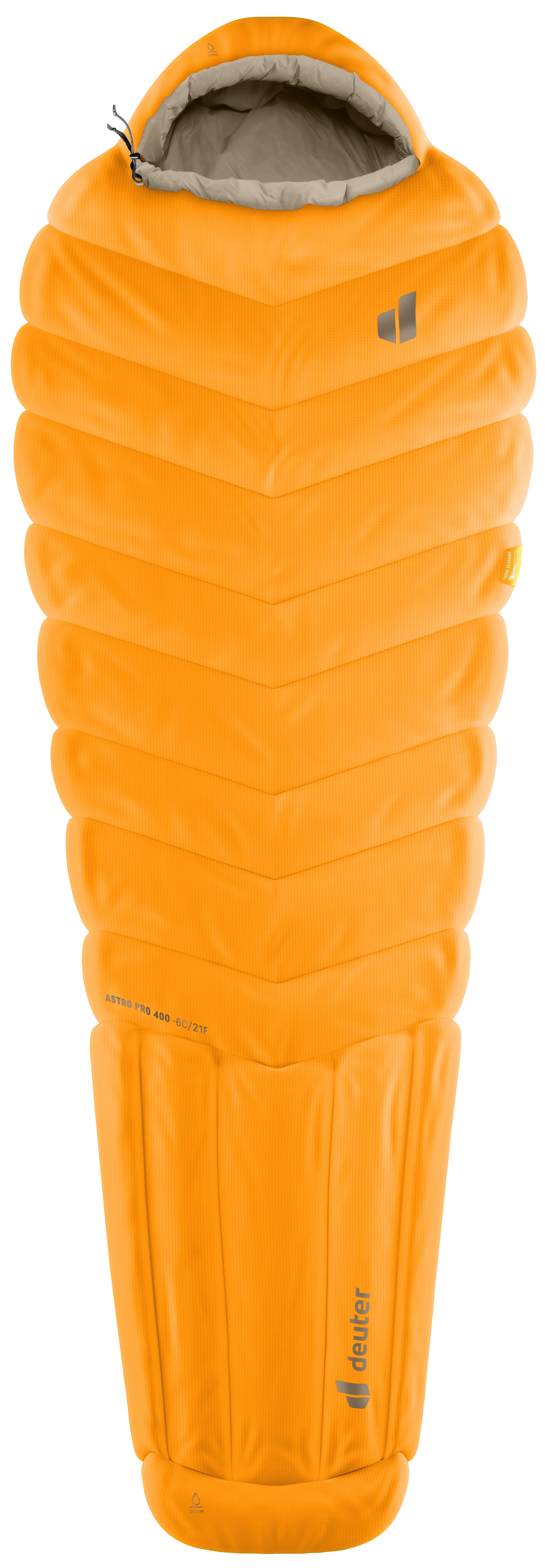
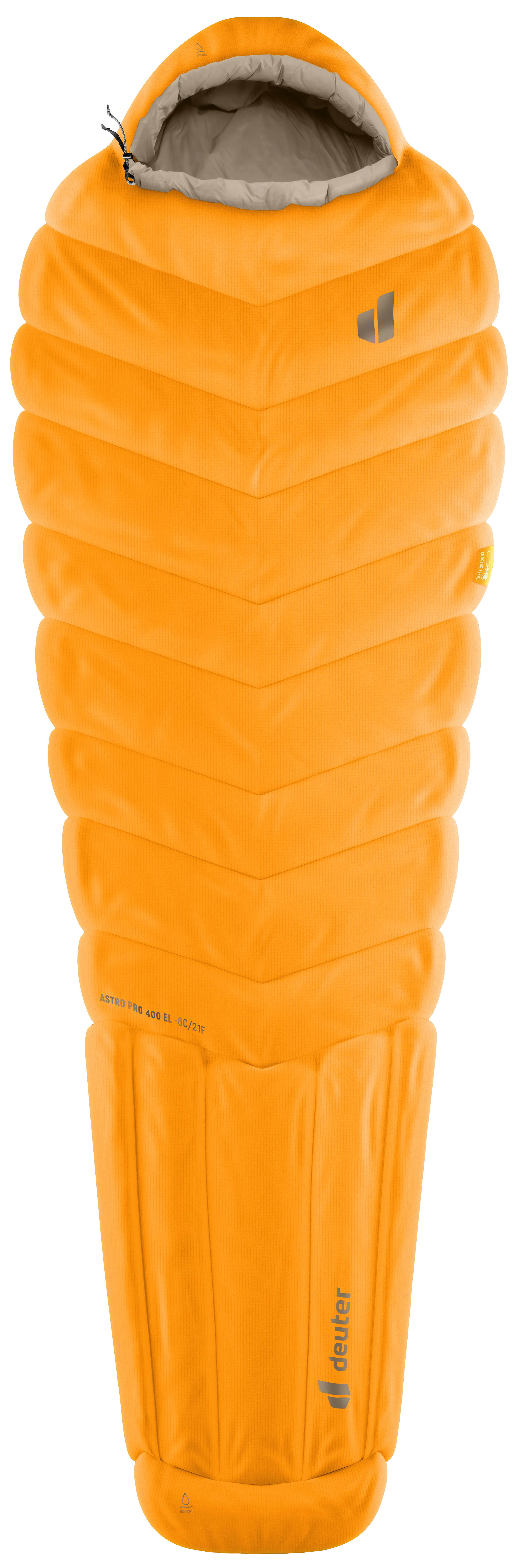
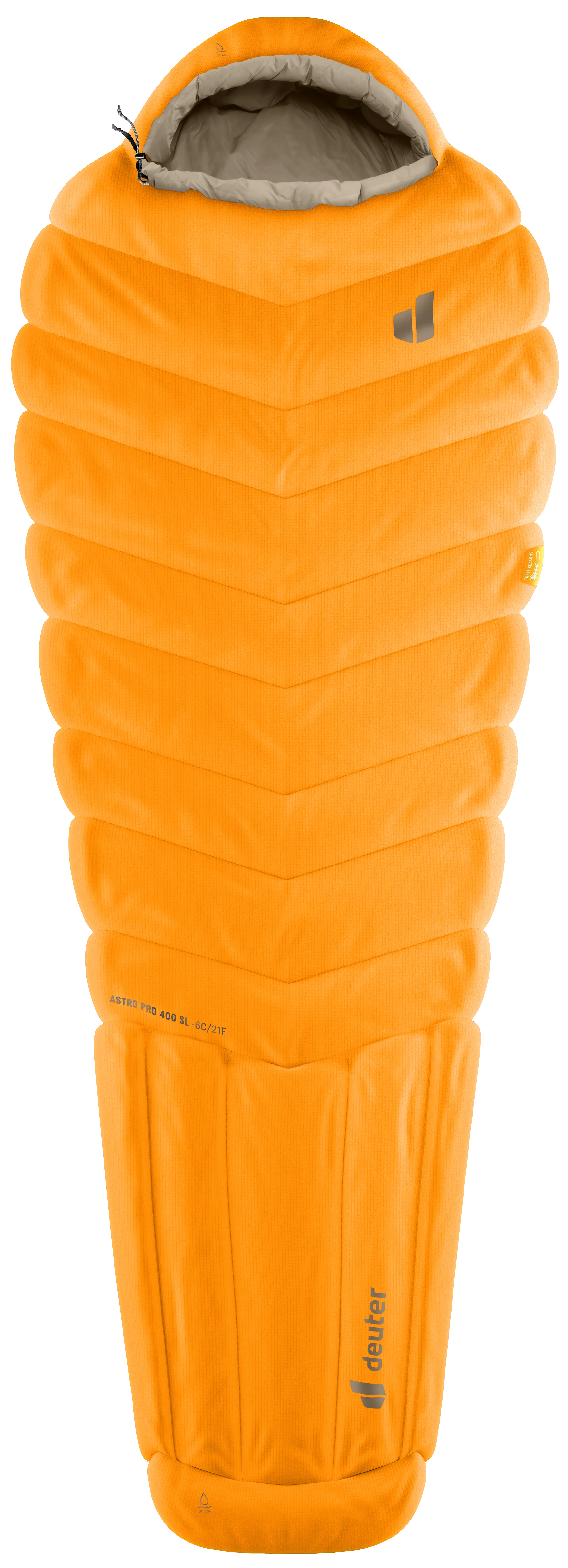
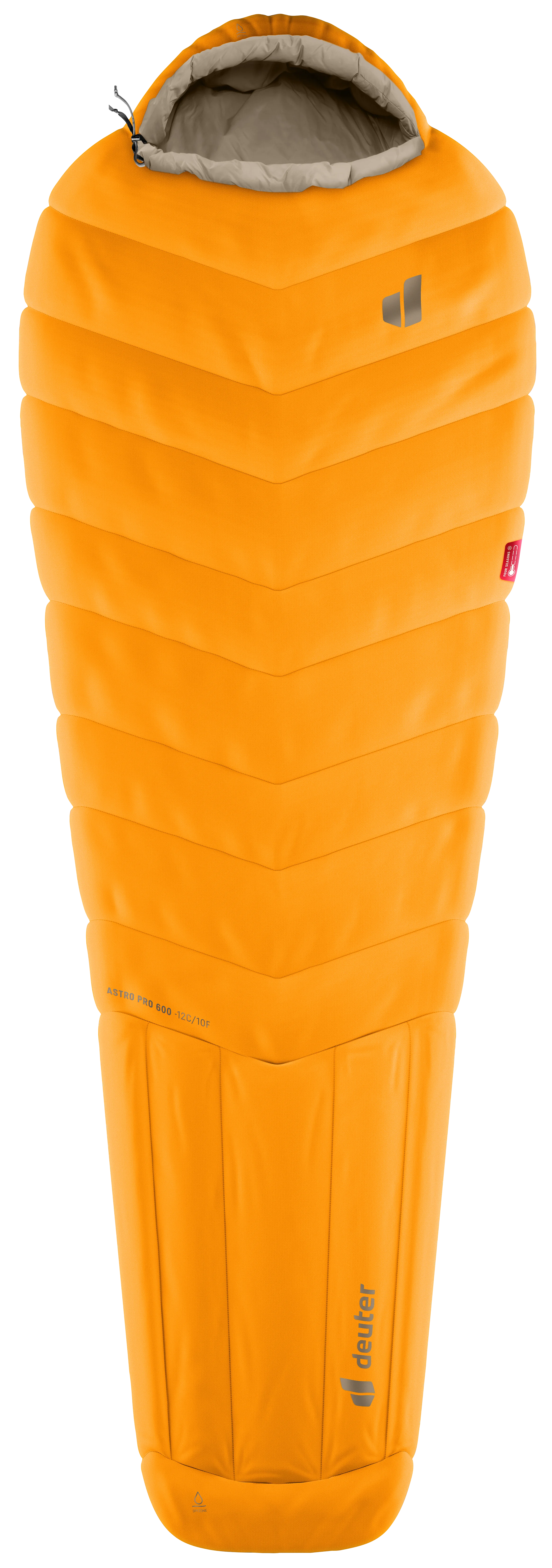
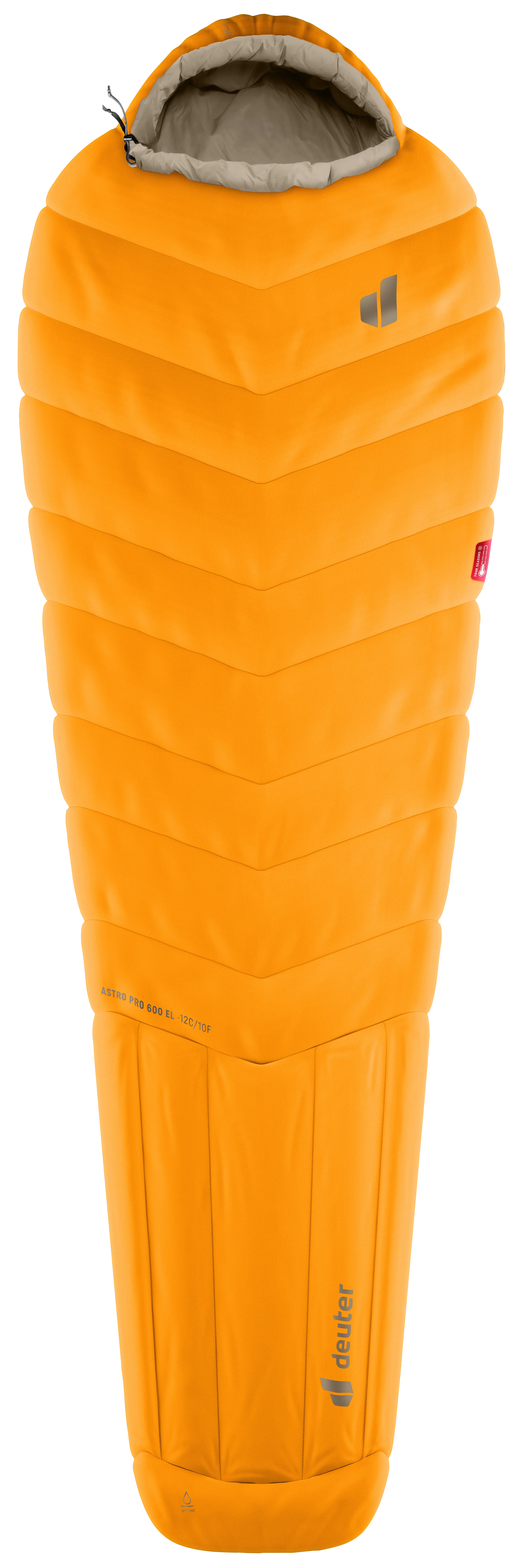
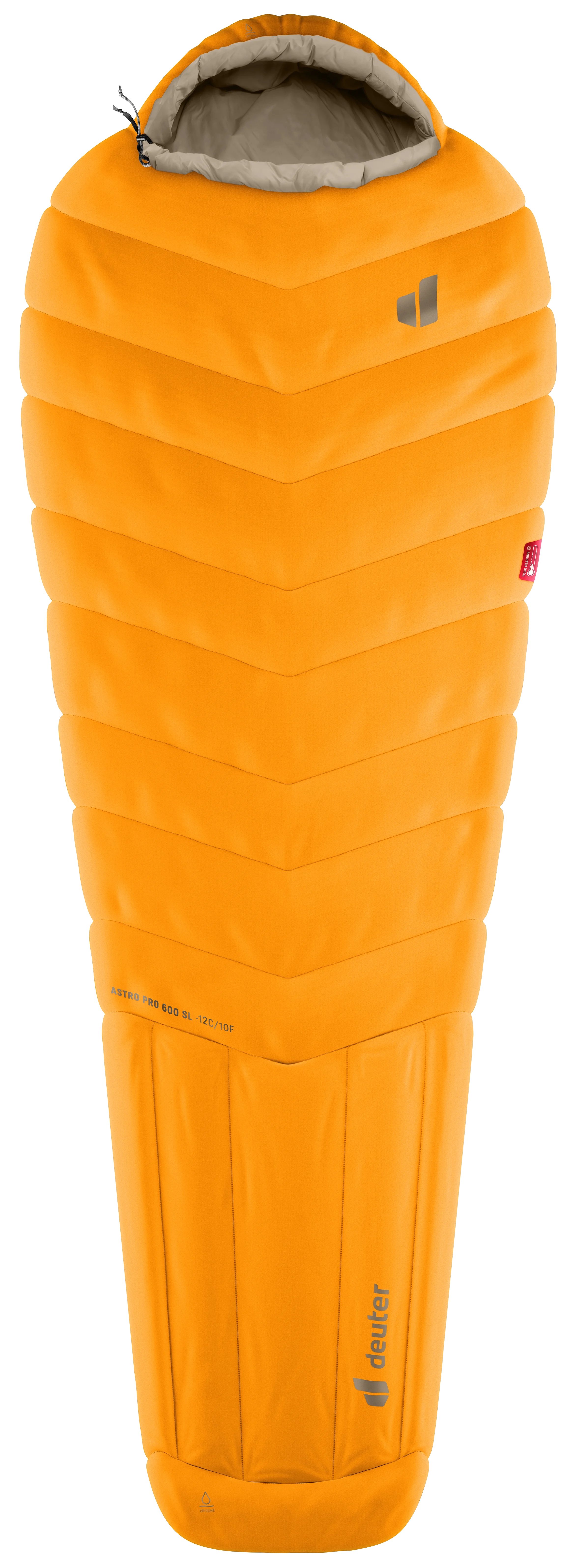
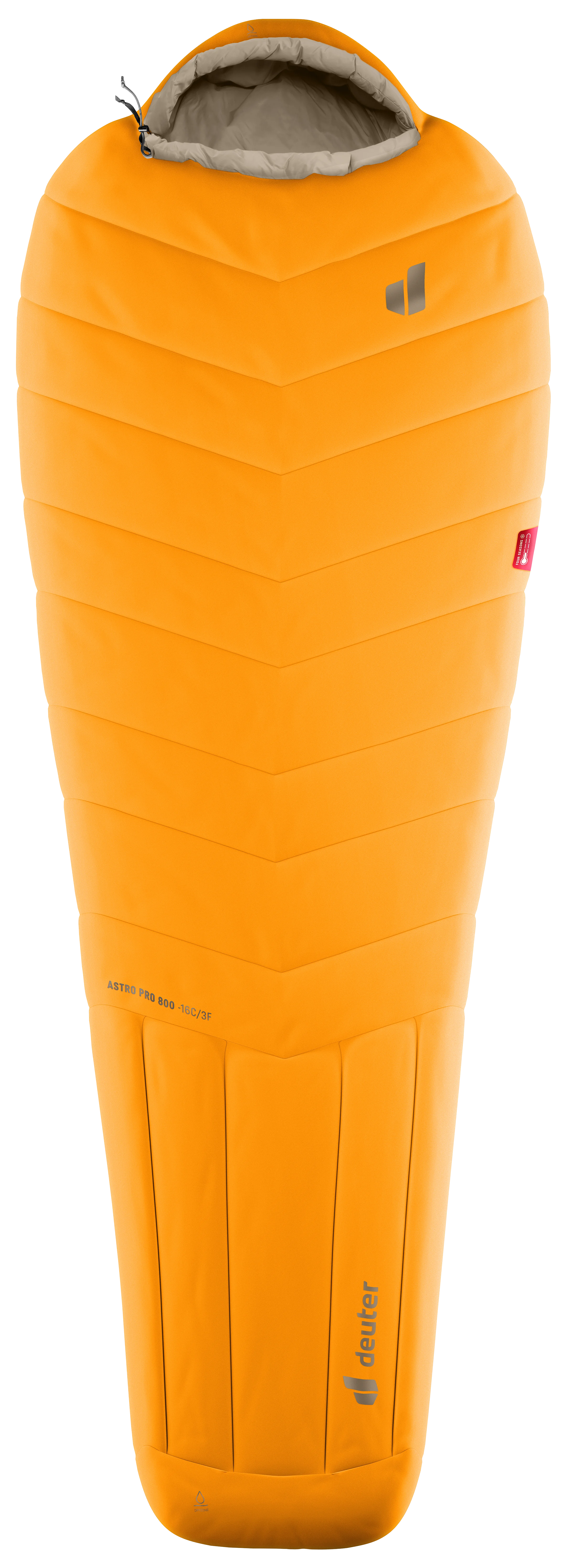
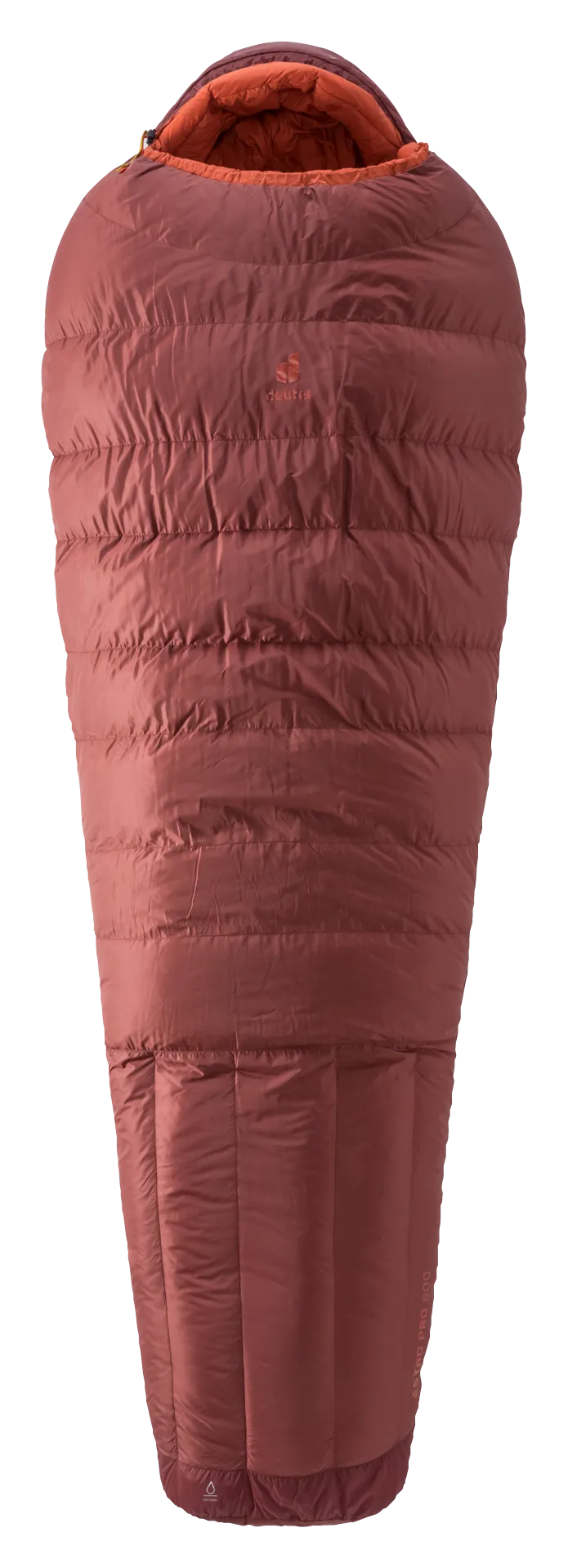
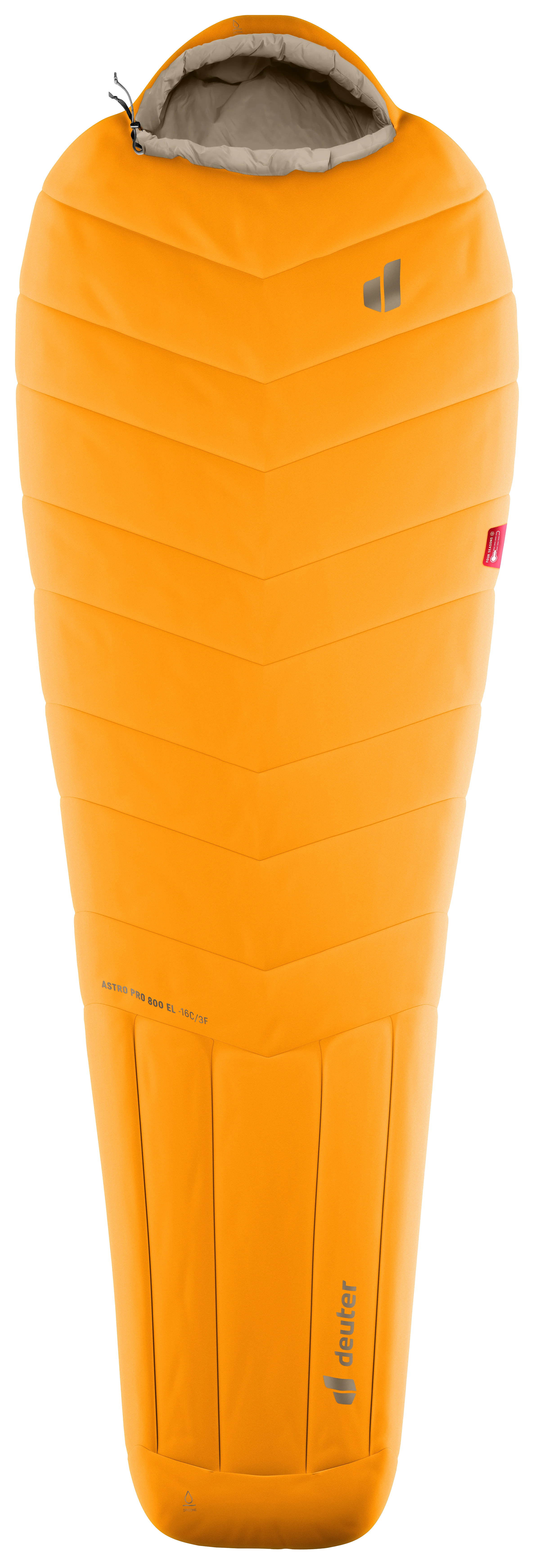
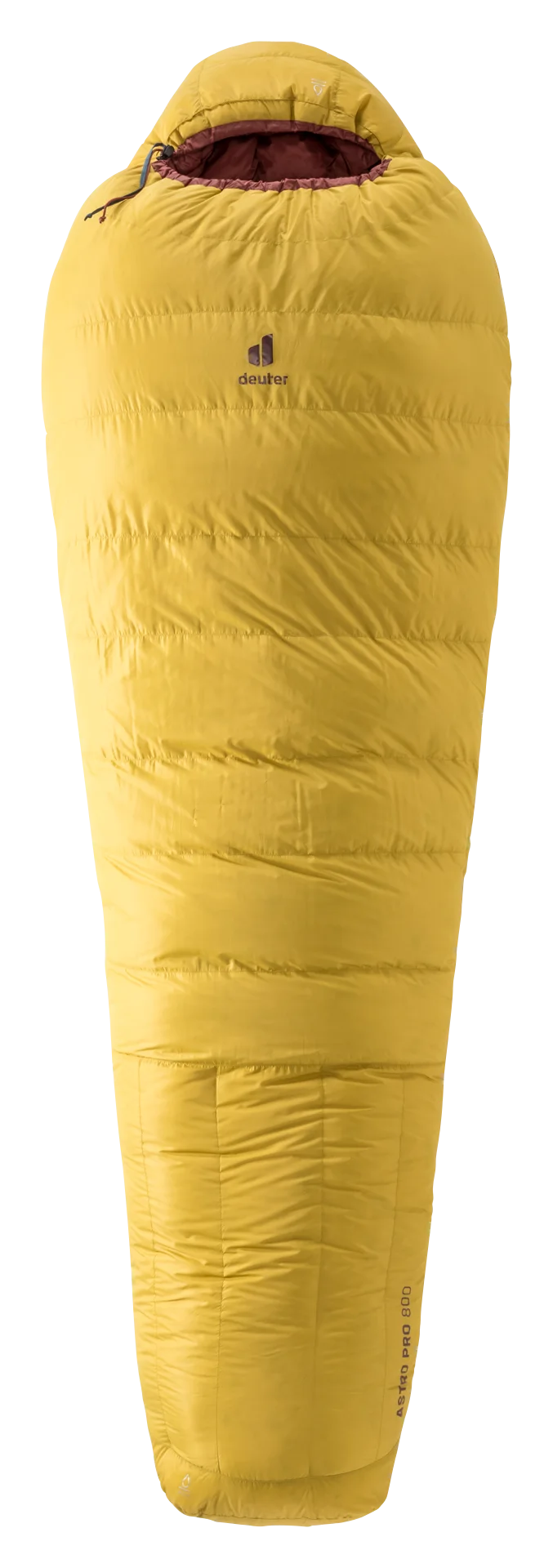
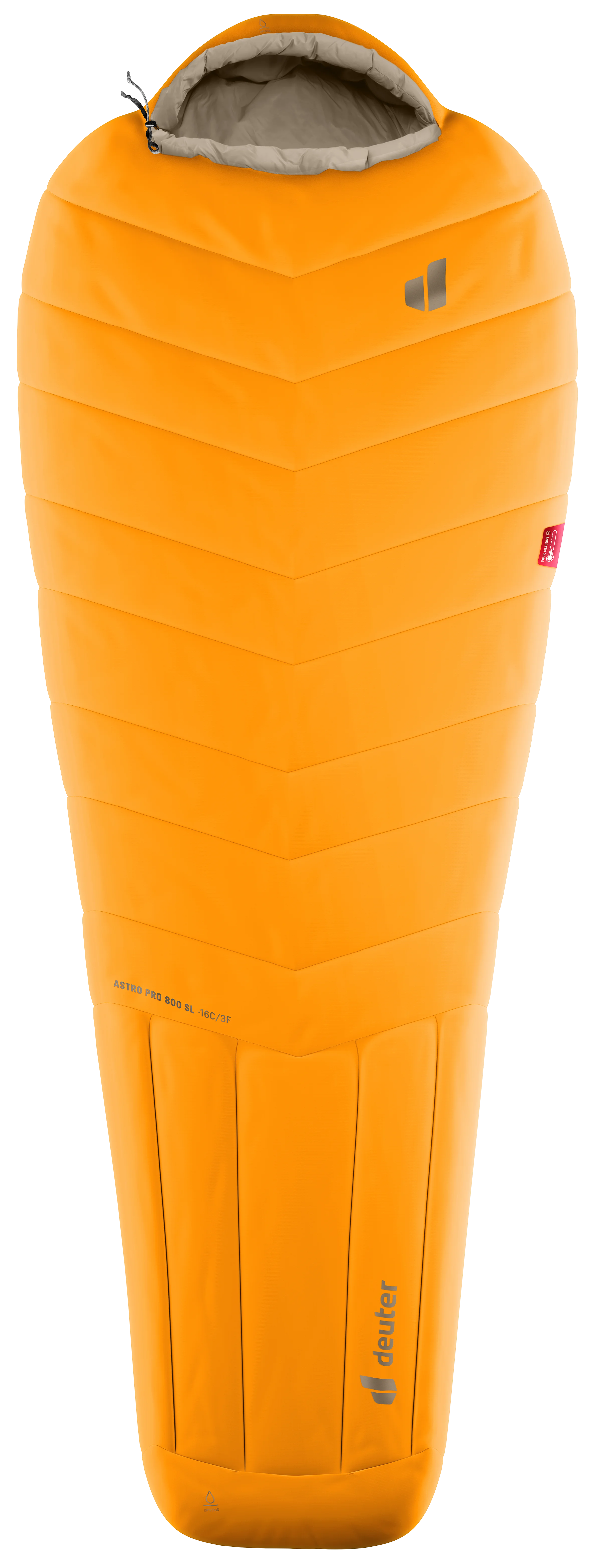
Another down sleeping bag is the Astro Pro model, which offers a host of benefits. It provides a high level of sleeping comfort, thanks to its excellent moisture-wicking properties and the soft, snug inner lining. The sleeping bag features a trapezoidal chamber construction that prevents cold spots. When camping, you tend to feel the cold most in your feet and head. That is why there are additional chambers in the head, foot and leg sections. Another highlight of this down sleeping bag is the thermal collar, which prevents cold air from entering.
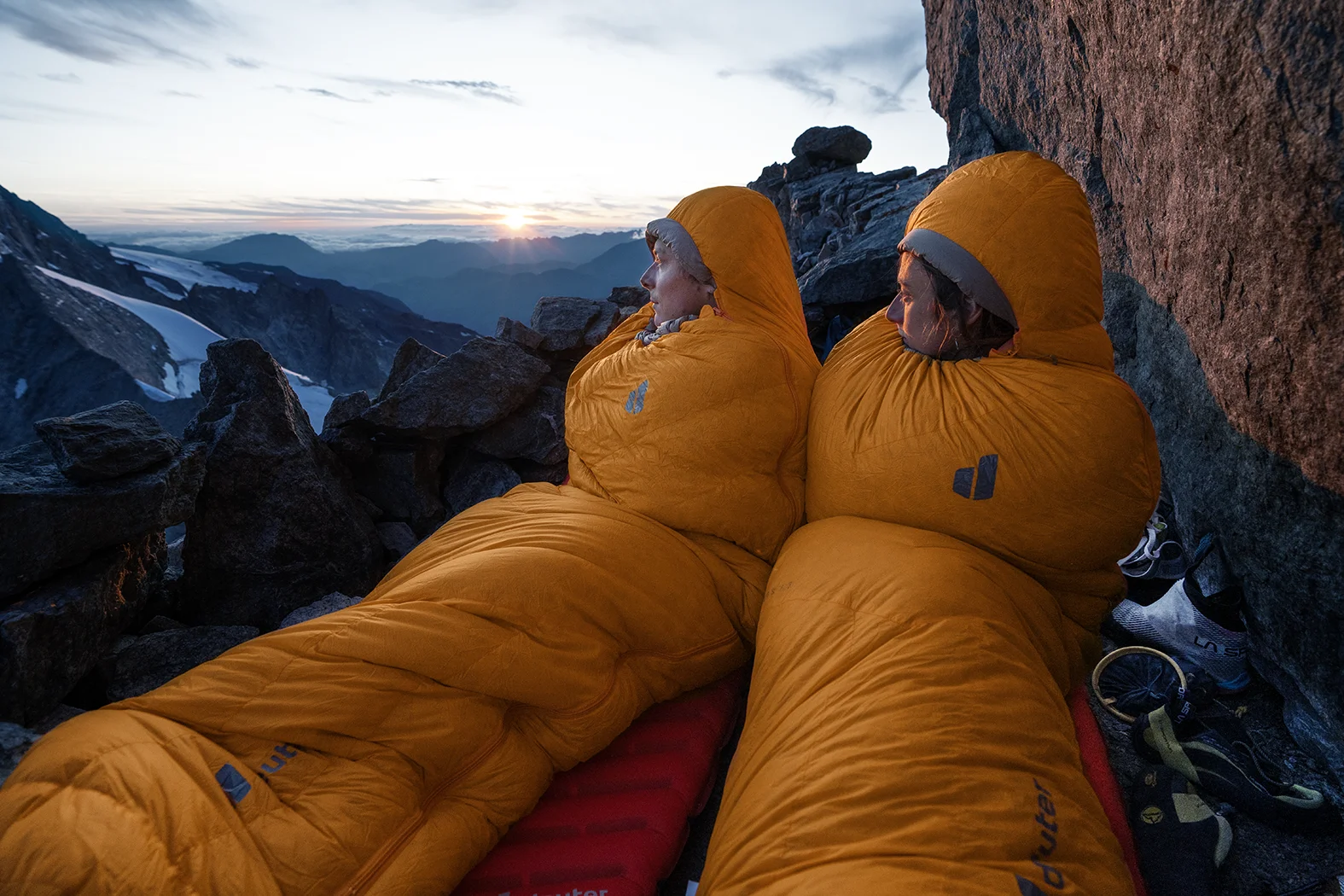
Synthetic-filled sleeping bags: Easy-care & Fast drying
For our synthetic sleeping bags, we use smooth, partly hollow synthetic fibers that insulate perfectly and keep the warmth inside the sleeping bag. These fibers are derived from polyester which is both water resistant and quick drying.
Choose a synthetic sleeping bag for:
- you’re travelling in a very humid climate: synthetic-fibre sleeping bags provide insulation even at high humidity levels of up to 70 per cent and also dry more quickly. you’re looking for a low-maintenance sleeping bag.
- you’re looking for a low-maintenance sleeping bag.
deuter has the following synthetic sleeping bags:
Dreamlite
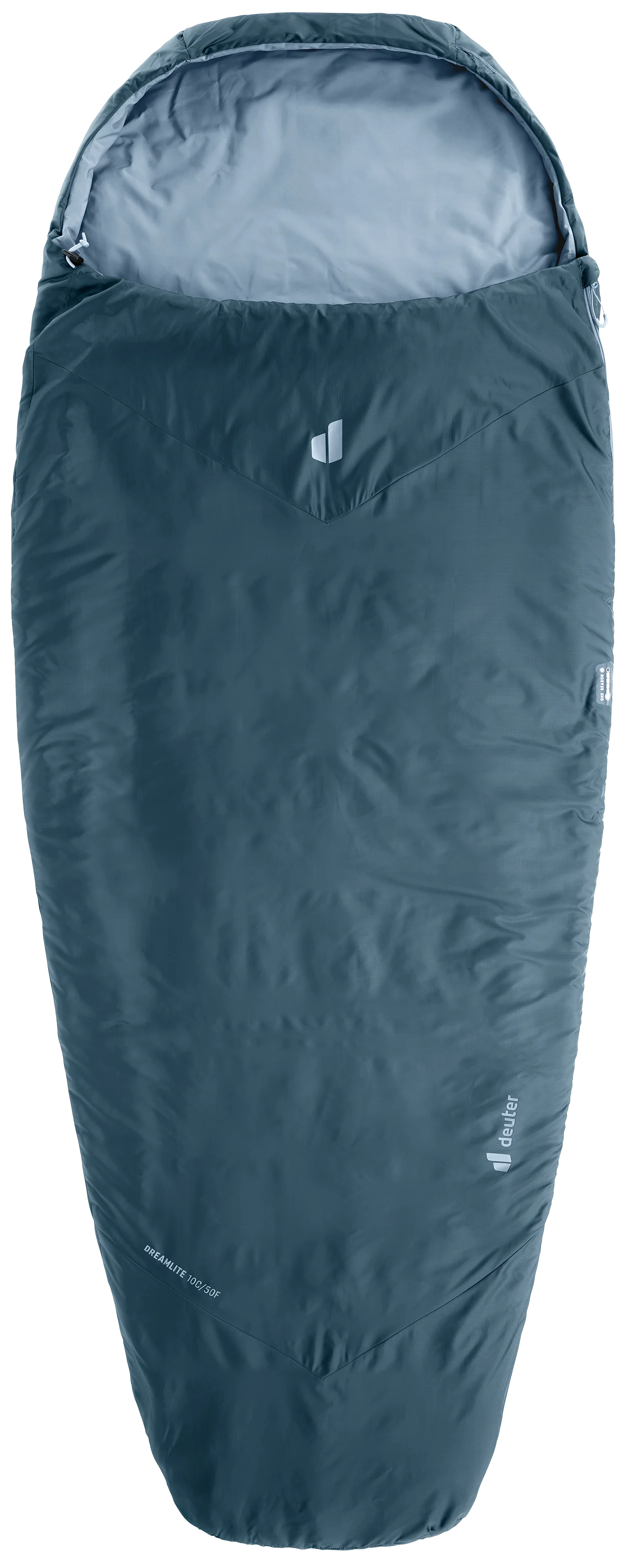
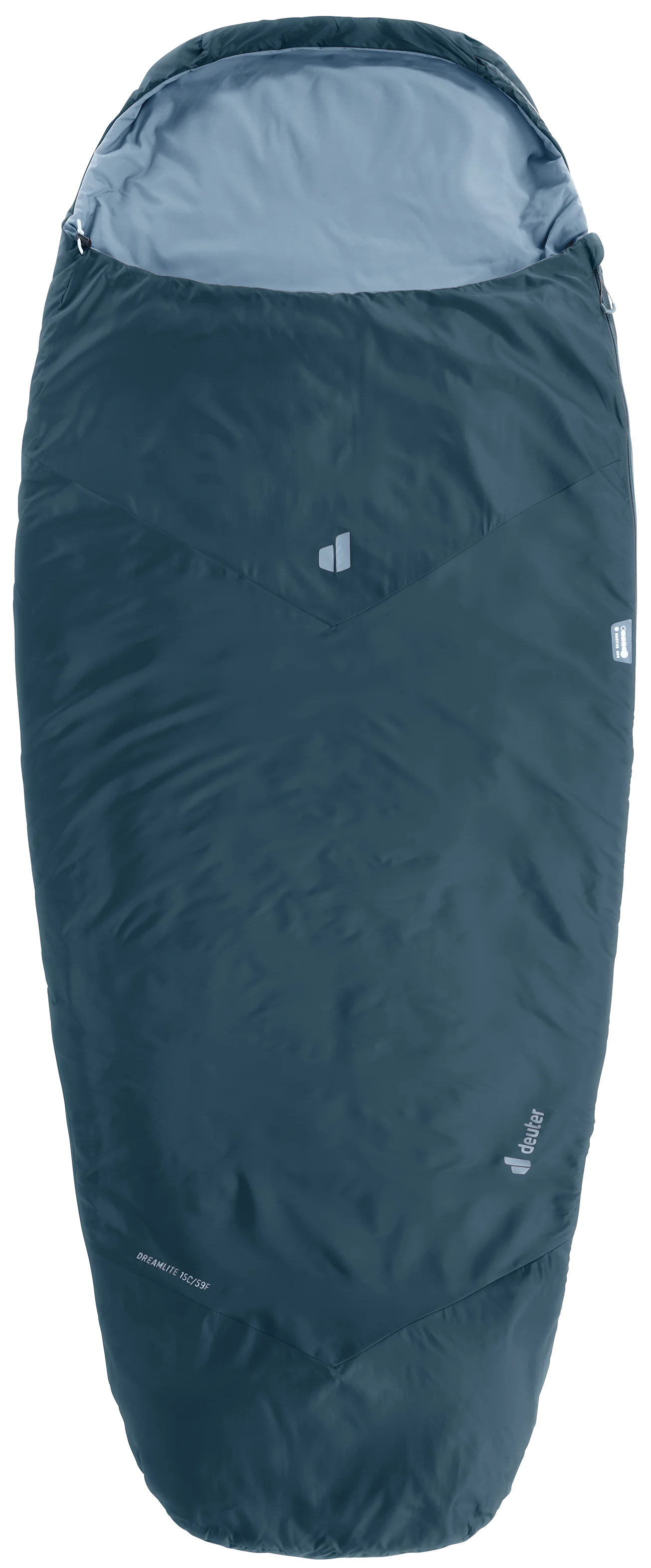
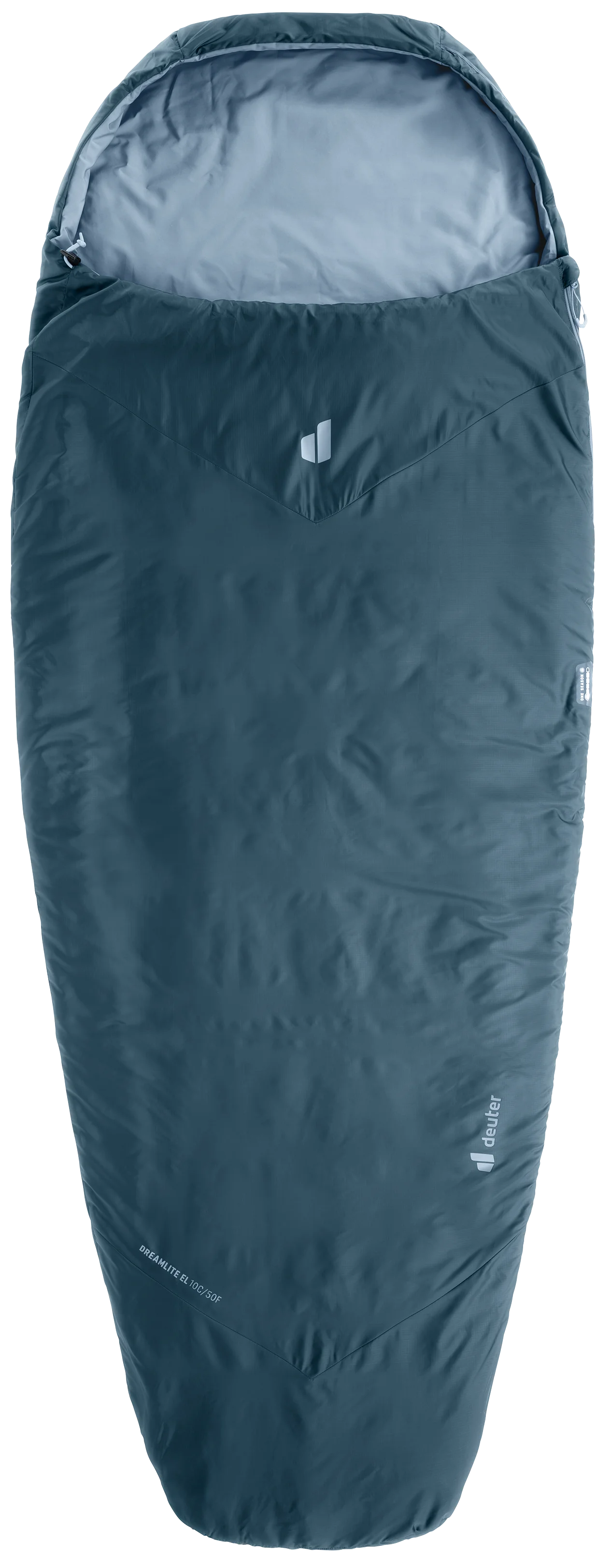
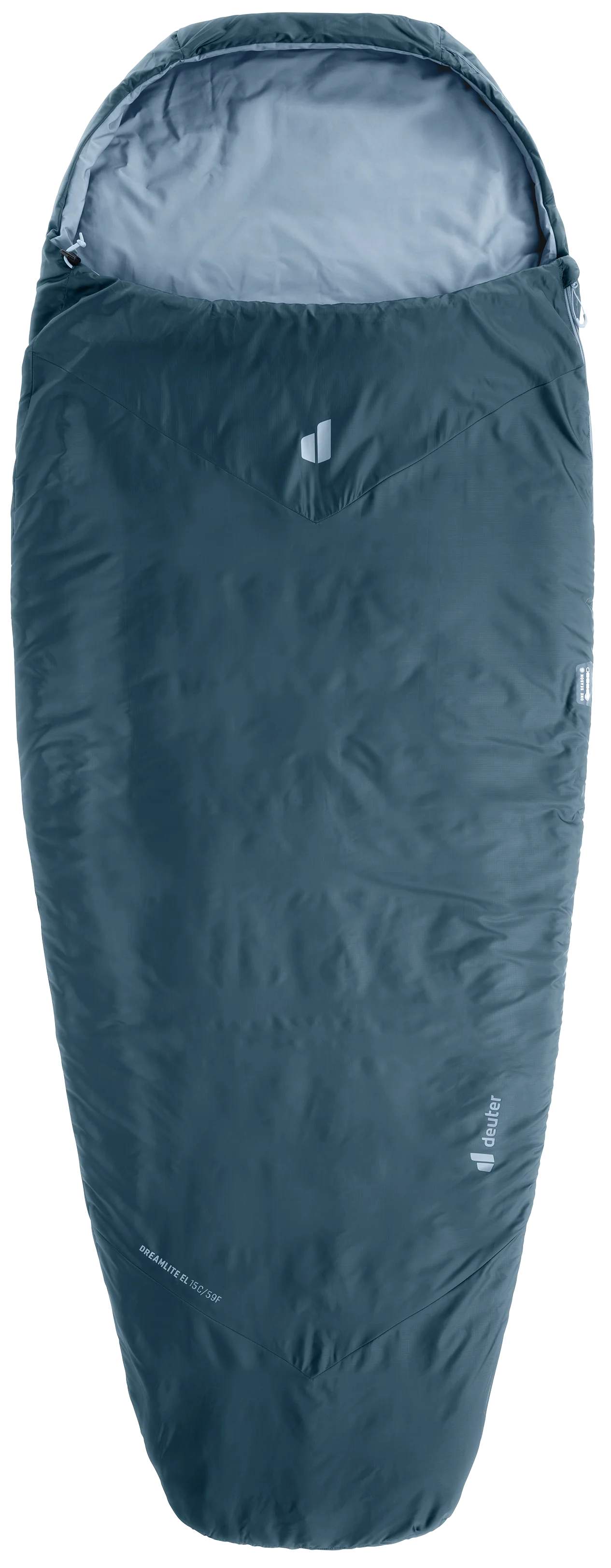
Thanks to their light weight, the Dreamlite range from deuter is ideal for long mountain treks. These synthetic sleeping bags are made from a polyamide fabric, making them very robust. The hollow staple fibres ensure your Dreamlite provides good thermal insulation. This effect is enhanced by the mummy-style comfort fit, which doesn’t restrict your freedom of movement, so you can sleep in your favourite position without any problems. The range is available in two warmth ratings: the Dreamlite 15C/59F has a limit temperature of 15 °C, whilst the slightly warmer Dreamlite 10C/50F is suitable down to 10 °C. Do you find many sleeping bags too short? For taller people, the model is also available in an extra-long version: the deuter Dreamlite EL measures 220 cm in length, making it 15 cm longer than the standard sleeping bag in this range.
Orbit
The body loses most heat through the head – which is why the Orbit sleeping bag features a contoured hood. This moulds perfectly around your head and keeps you warm at night. The synthetic sleeping bag also has an ergonomic foot section that adapts to the position of your feet. This prevents pressure being exerted on the filling. Your feet are kept perfectly warm in the narrow leg section, whilst you enjoy freedom of movement in the upper section. To avoid air pockets, the sleeping bag should be chosen to suit your height.
Exosphere
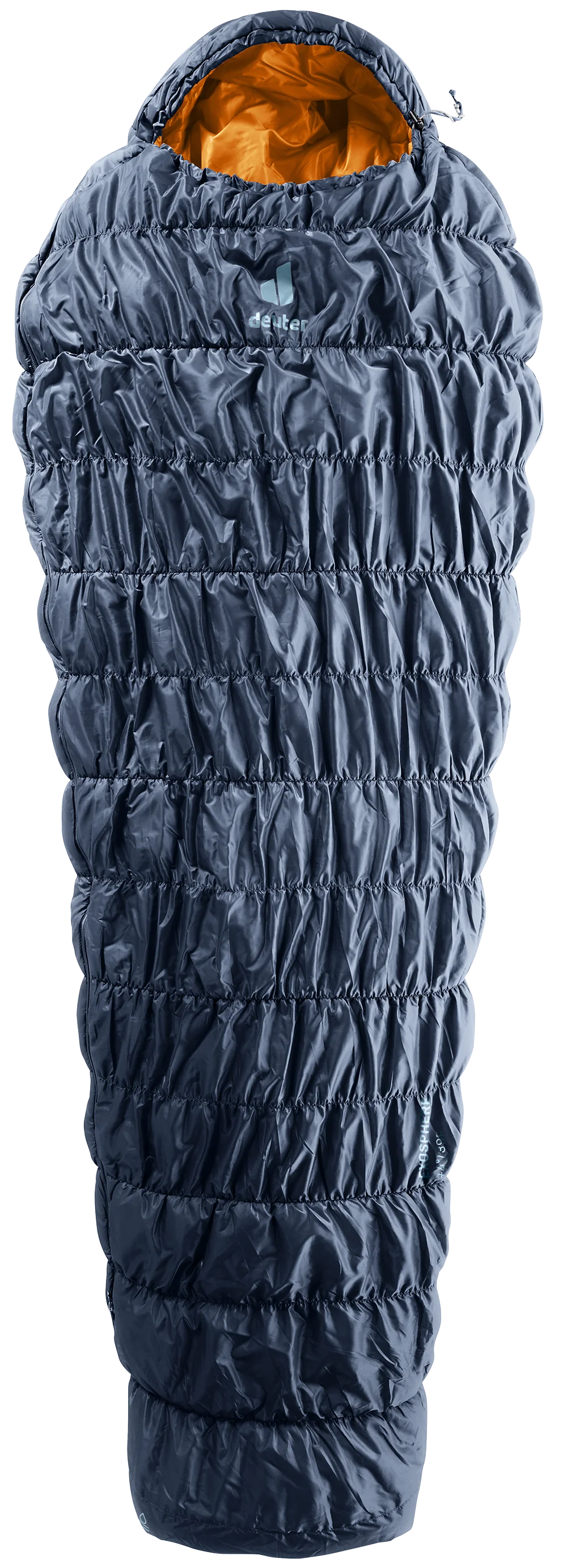
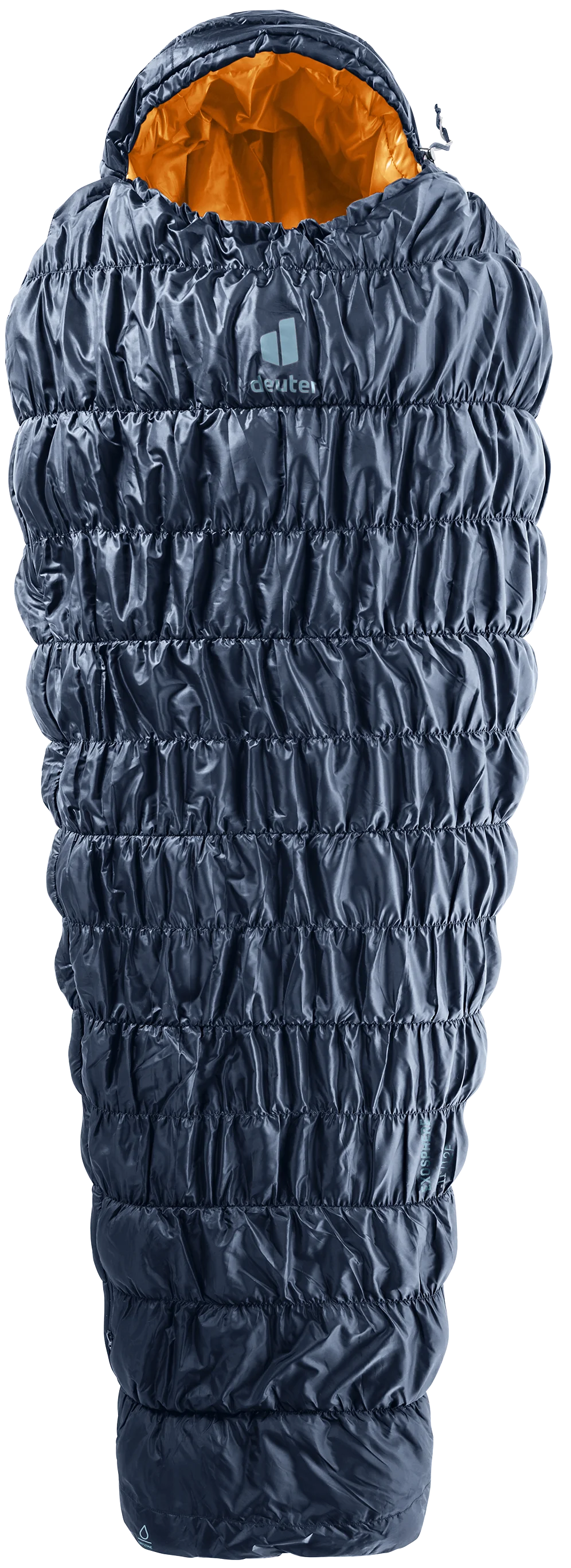
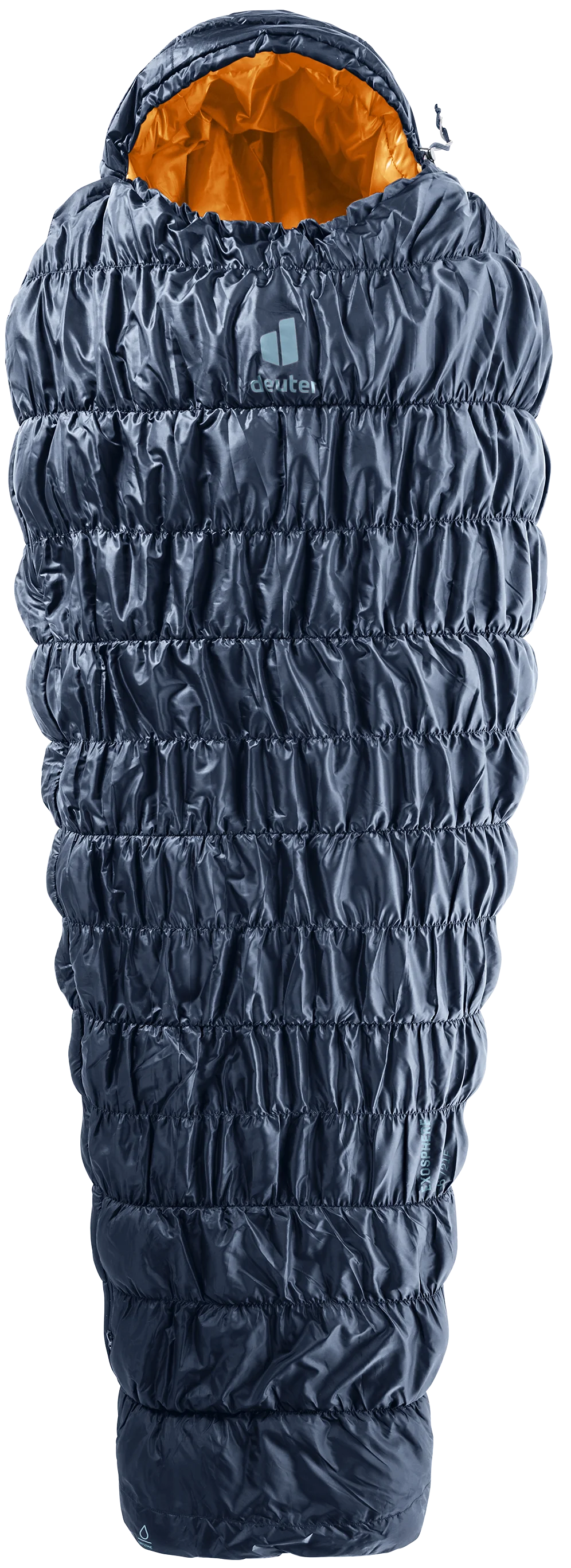
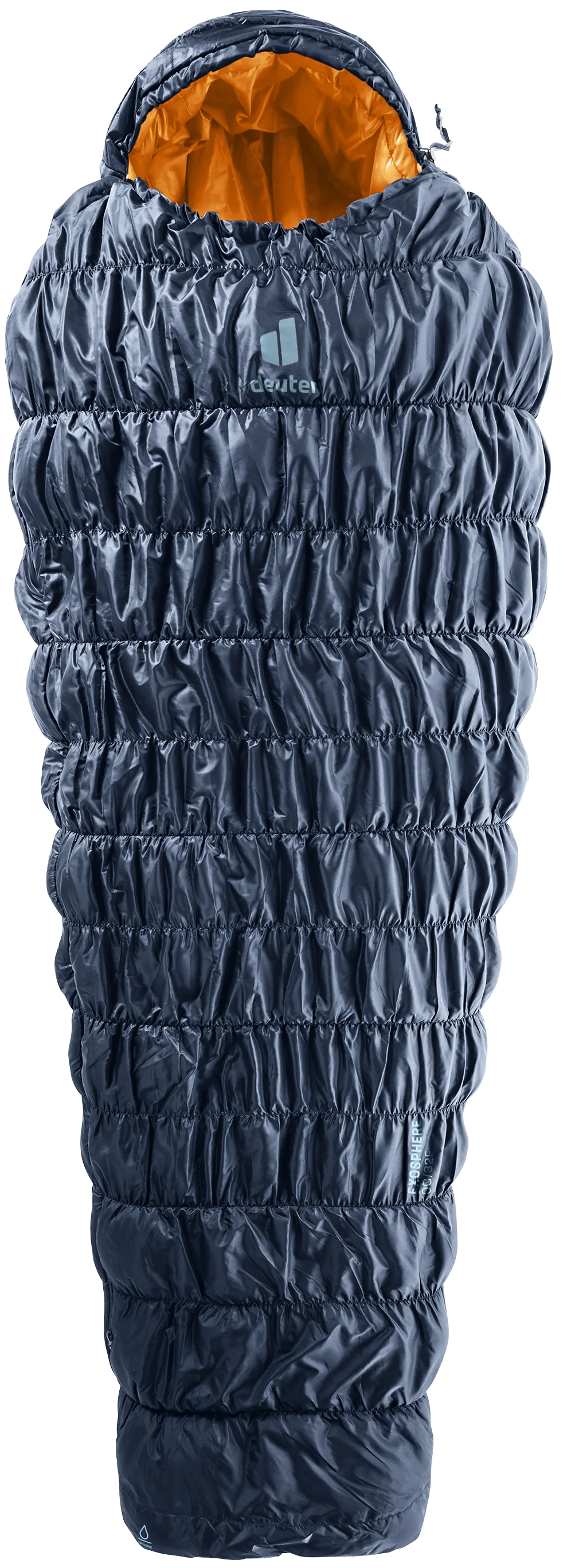
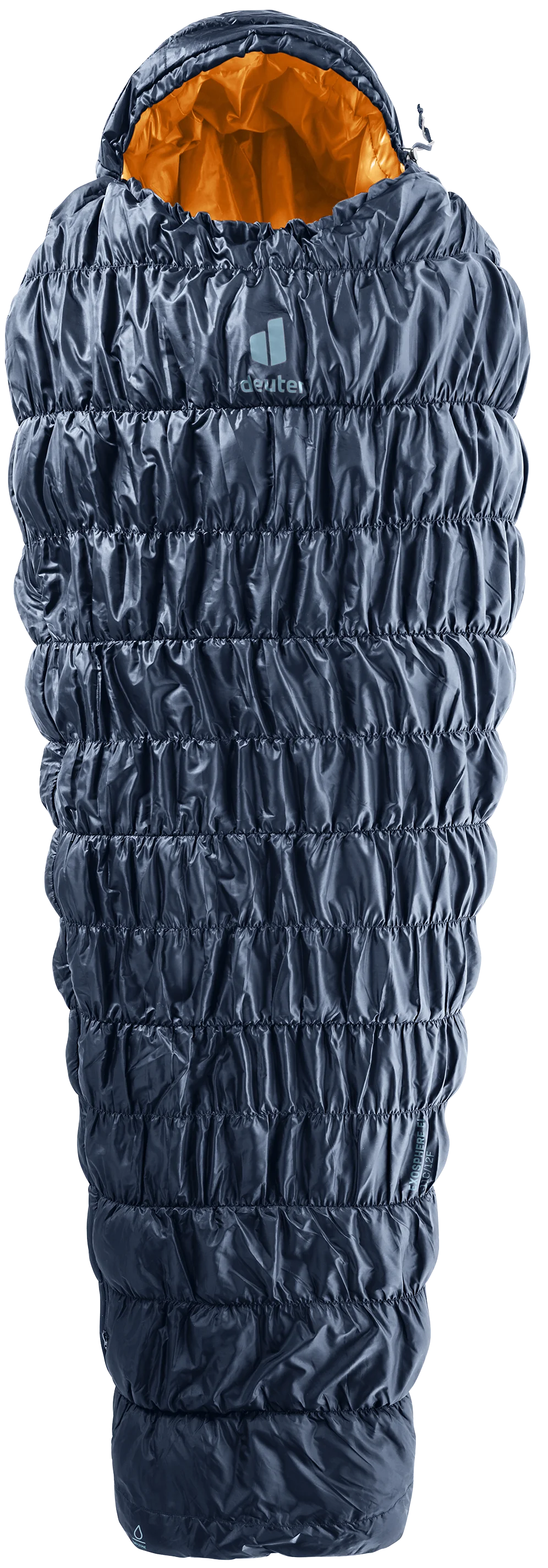
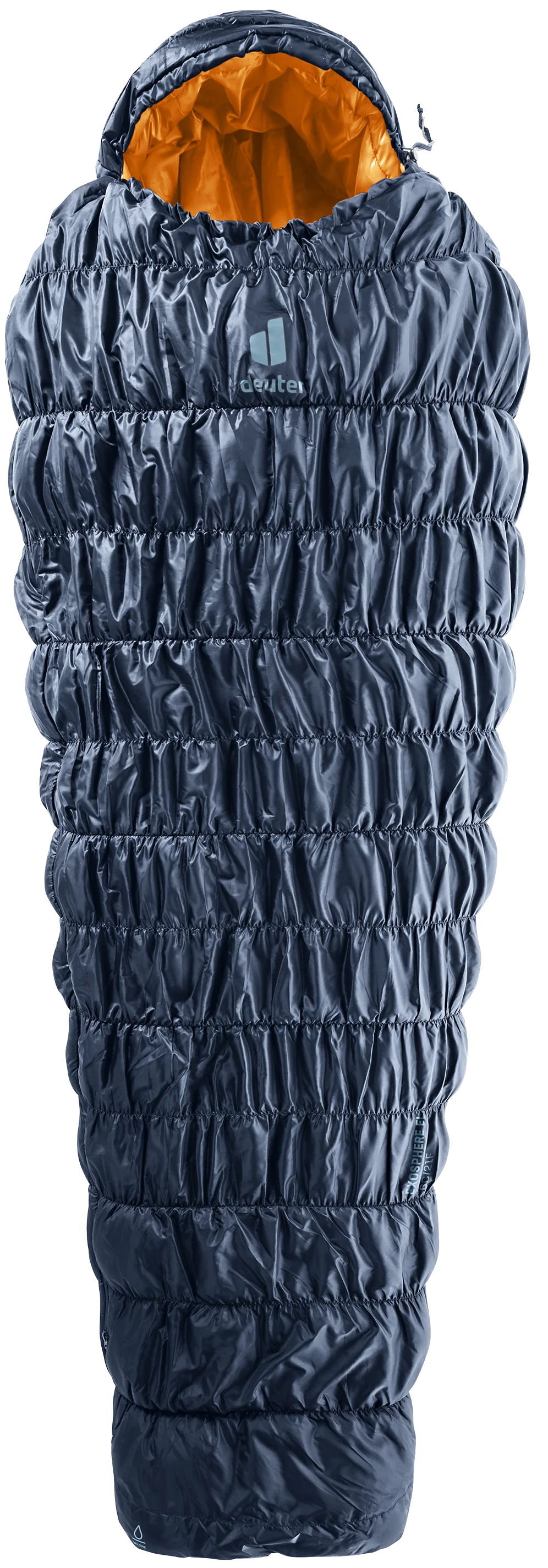
The Exosphere synthetic sleeping bag is also ideal for winter hikes. Thanks to its overlapping layer construction, this model offers excellent heat retention. Your feet are further warmed by additional insulation. The range is available in four warmth ratings, from summer models to winter sleeping bags, with limit temperatures of +4 °C, 0 °C, -6 °C and -11 °C, depending on the thickness of the layers.
Whether you’re lying on your side with your legs tucked in or on your back with your legs stretched out – the stretchy mummy shape of the sleeping bag gives you the freedom of movement you need whilst sleeping. When you’ve packed up camp and are moving on, the Exosphere’s lightweight fibres mean it compresses very well and can be transported to save space.
Mummy shape & rectangular sleeping bags from deuter
At deuter, there are two choices of insulation fill for your sleeping bag, as well as two different cuts: Mummy shaped or rectangular sleeping bags. As a general rule, the more snug a sleeping bag fits, the better it will keep you warm. This is where the mummy sleeping bag comes in. But make sure it’s not too small as this will restrict your movements. It’s one of the reasons rectangular sleeping bags are so popular, and because they can also be opened out like a quilt. Ultimately, your sleeping bag needs to fit the dimensions of your body. So, whether you decide on a rectangular sleeping bag, a mummy shape sleeping bag, or a stretchy mummy shape with Thermo Stretch seams, it’s essentially down to your own preferences.
The right sleeping bag to suit different body shapes
A sleeping bag must fit well to ensure a restful night’s sleep – not only because it is more comfortable, but also because pressure on the filling reduces its insulating performance. If it fits correctly, your body won’t have to warm unnecessary air. Furthermore, the size of a sleeping bag affects its weight and pack size.
That’s why deuter offers three different sizes of sleeping bag: The Regular models are for people who are up to approx. 185 cm (6’) tall. At deuter, there are also EL and SL models: The EL (Extra Long) models are for people up to 200 cm (6’6”) tall. And the SL (Slim Line) women’s fit of sleeping bags for women is for those up to 175 cm tall (5’8”). Compared to sleeping bags for men, the SL models are designed with cold-sensitive areas in mind and have extra insulation in the kidney and foot zones. deuter has also developed sleeping bags for children, with all the technical qualities of the grown-up models, plus, the same quality materials. These are designed for children up to 170 cm tall (or 5’6”). Our kids’ sleeping bags have a zip extension in the foot section, that grows with your child.
Our top tip: Big feet? Then add an extra 5 cm (2”) to your measurement to find the right size sleeping bag for you.
FAQs: Sleeping Bags
That depends on where, when and how you use your sleeping bag. Four questions will help you choose:
- Climate: Do you often travel to regions with heavy rain or high humidity, or do you tend to stay in dry climates and at mountain huts?
- Activity: Do you carry the sleeping bag in your backpack, or do you stay in one place, such as at a campsite?
- Space requirements: Do you like it snug and cosy (mummy-style) or do you need plenty of freedom of movement (blanket-style)?
- Wear and tear: How often do you pack it in and out? Frequent stuffing puts strain on the filling.
This leads to the most important buying criteria: the temperature range (comfort and limit temperatures), the filling (down or synthetic fibre), the design (mummy or blanket) and the right size (Regular, SL or EL). With deuter, the limit temperature is stated directly in the product name, for example Orbit 0°C/32°F or Astro Pro 600 -12°C/10°F.
As a guide to what the individual ranges are designed for:
- Dreamlite: lightweight synthetic fibre sleeping bag for warm summer nights, hut-to-hut hikes and travelling light
- Orbit: easy-care synthetic fibre sleeping bag for camping and moderate temperatures
- Exosphere: synthetic fibre sleeping bag with stretchy chamber seams for trekking; the warmer versions are also suitable for sub-zero temperatures
- Astro: three-season down sleeping bag
- Astro Pro: a down sleeping bag for demanding trips, ranging from the 3-season Astro Pro 400 model to the winter models Astro Pro 600, 800 and 1000
- Little Star and Starlight: children’s sleeping bags that grow with your child
You can find out more about this topic in our sleeping bag guide.
Neither type of filling is inherently better. They have different strengths, and the choice depends on where you’re heading.
- Down offers an excellent warmth-to-weight ratio, packs down small, provides instant warmth and wicks moisture away effectively. With proper care, it generally lasts longer than synthetic fibre. The downside is that if down gets wet, it clumps together, provides hardly any insulation and dries very slowly. It also requires more maintenance.
- Synthetic fibre absorbs hardly any moisture, still provides warmth even when damp, dries quickly and is easy to care for. On the other hand, it is heavier, less compressible, has a shorter lifespan and takes a little longer to warm up. Synthetic sleeping bags are generally cheaper.
- Down is the right choice for you if weight and pack size are important, for example when mountaineering, trekking in dry to moderately humid climates, or bike-packing with minimal luggage. Synthetic fibre is the more robust choice in changeable weather and high humidity, on canoe trips, when camping and at festivals, for children (frequent washing) and on multi-day winter tours where body moisture can condense and freeze in the filling.
You can find out how to wash and store your sleeping bag properly in our guide ‘How to wash your sleeping bag properly’.
The size affects how warm your sleeping bag is. If it’s too long or too wide, your body has to warm an unnecessary amount of air. If it’s too tight, you’ll compress the filling, creating cold spots. The size also affects the weight and pack size.
deuter offers sleeping bags for adults in three fits:
- Regular: for people up to around 185 cm in height
- SL (Women’s Fit): a shorter and slimmer cut, for women and slender people up to 175 cm
- EL (Extra Long): for people up to 200 cm
For children, there is the Little Star (95 to 130 cm) and the Starlight series (130 to 170 cm). The children’s sleeping bags grow with them: a zip extension at the foot end allows the length to be adjusted by up to 30 cm, depending on the model.
On each product page, under ‘Suitable for heights up to’, you’ll find the maximum height as well as the length, shoulder width and foot width of the model. This allows you to check whether the sleeping bag is suitable for you before you buy.
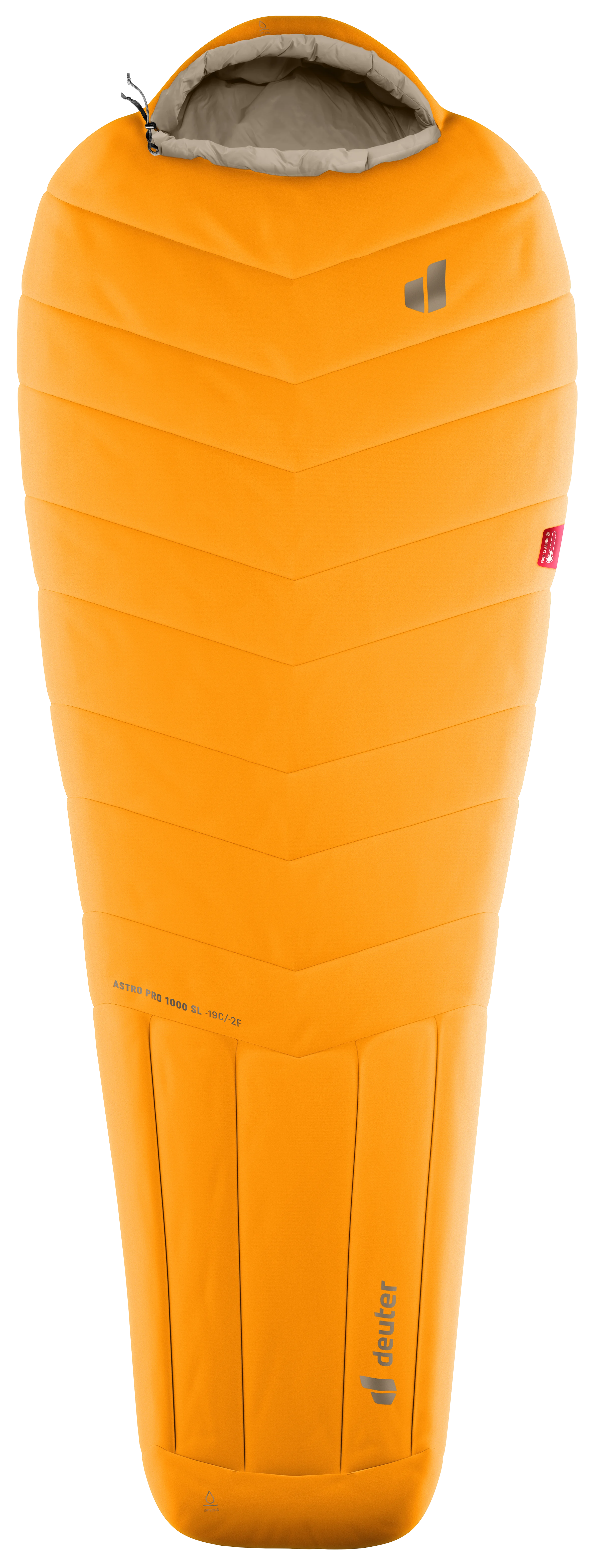
SL stands for Slim Line and refers to deuter’s Women’s Fit models. They have a shorter cut (for heights up to 175 cm), are narrower at the chest and feet, and have more filling relative to their size.
The advantage: less air inside that your body has to warm up, and more insulation in the areas where many women tend to feel the cold more quickly. SL models are therefore suitable for women, for slender people with narrow shoulders, and for anyone who feels the cold easily at night.
SL variants are available in the Orbit, Exosphere and Astro Pro ranges. You can recognise them by the ‘SL’ suffix in the product name and the ‘Women’s Fit’ label.
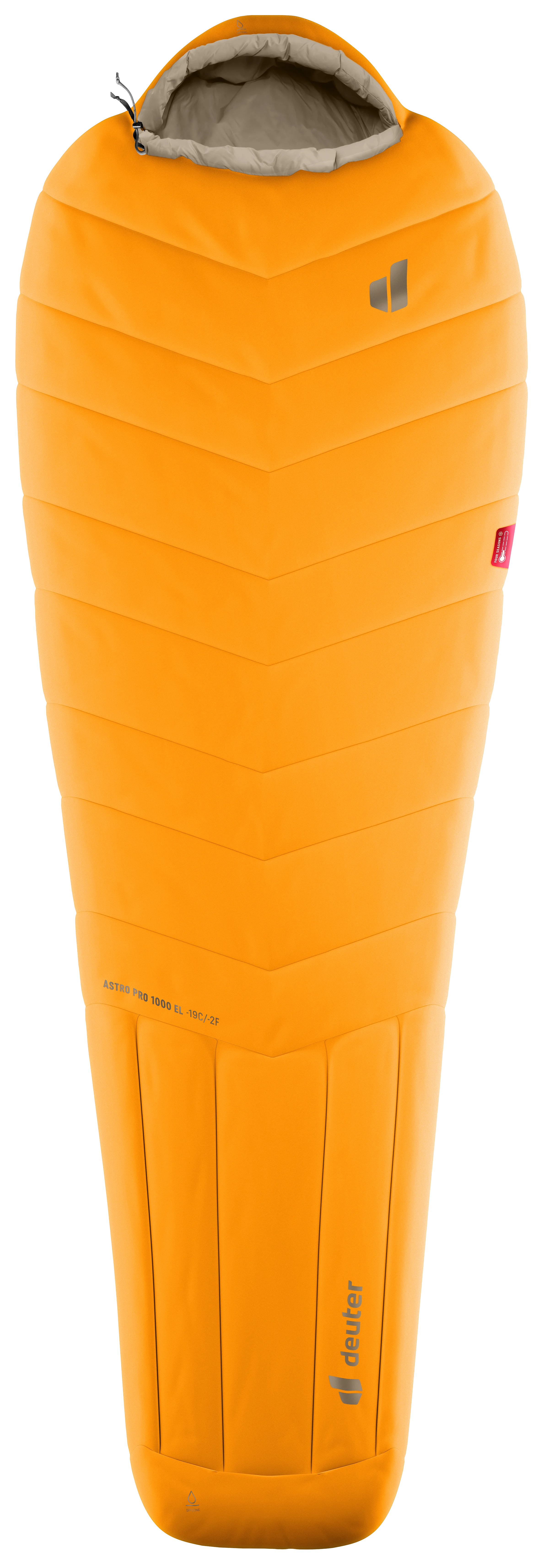
EL stands for Extra Long. EL models are designed for people up to 200 cm tall, whilst the Regular models are suitable for heights of up to around 185 cm. The features and construction are identical; only the cut is longer.
This is important because a sleeping bag that is too short compresses the filling at the foot end and in the hood. That is precisely where heat is lost. At the same time, the sleeping bag should not be unnecessarily long, as every extra centimetre of air needs to be warmed and adds to the weight.
EL versions are available in all adult ranges: Dreamlite, Orbit, Exosphere, Astro and Astro Pro. In older Dreamlite models, the long version is called ‘L’. In the shop, you can identify the long models by the ‘EL’ suffix in the product name.
These three values are derived from a standardised laboratory test (EN ISO 23537, formerly EN 13537). In this test, a heated manikin lies in the sleeping bag inside a climate chamber, whilst sensors measure heat loss over several hours. This allows the specifications of different manufacturers to be compared.
- Comfort temperature: the lowest temperature at which an average woman (aged 25, 60 kg, 1.60 m) can sleep soundly through the night. Beginners will also feel comfortable within this range.
- Limit temperature: the lowest temperature at which an average man (aged 25, 70 kg, 1.73 m) can still sleep comfortably. At this temperature, you’ll need to adjust your clothing and behaviour to stay warm.
- Extreme temperature: the temperature that an average woman can withstand for six hours in very cold conditions. Sleep is out of the question; there is a risk of hypothermia. This value is not a purchasing criterion.
Use the comfort or limit temperature as a guide, depending on whether you feel the cold easily or not. At deuter, the limit temperature is included in the product name; you’ll find all three values on the product page. An example: The Astro 500 SQ -1C/30F has a comfort temperature of 4 °C, a limit temperature of -1 °C and an extreme temperature of -17 °C.
Bear in mind that these are laboratory figures. How warm you actually feel whilst sleeping also depends on your physical constitution, your level of fatigue, your sleeping mat, wind protection and dry clothing.
For warm summer nights, a sleeping bag with a limit temperature of around +5 °C is generally sufficient. The lighter and more compact it packs, the more convenient it is for hut-to-hut hikes, cycle tours or as hand luggage.
Suitable models from deuter:
- Dreamlite 10C/50F and 15C/59F: very lightweight, highly compressible synthetic fibre sleeping bag for warm nights, overnight stays in huts and travel, also available as an EL
- Orbit +5C/41F: easy-care synthetic fibre sleeping bag for camping and festivals, also available as an EL
- Exosphere +4C/39F: a lightweight synthetic fibre sleeping bag with stretchy chamber seams for summer trekking, also available as SL and EL
- Astro 300 +2C/36F: a lightweight down sleeping bag with a small pack size for summer nights under the stars and hut-to-hut tours, also available as EL
A tip: in the mountains, it cools down significantly at night, even in summer. If you’re camping there, a 3-season sleeping bag with a limit temperature around 0 °C will give you more flexibility. Many deuter models feature a 2-way zip, allowing you to open the sleeping bag at the foot end on warm nights.
In winter, the limit temperature is the most important factor: it should be at or below the lowest night-time temperature you expect. If you feel the cold easily, base your choice on the comfort temperature.
The down sleeping bags in the Astro Pro series are designed for cold, dry conditions, such as when camping in the snow, on ski tours or on expeditions:
- Astro Pro 600 -12°C/10°F
- Astro Pro 800 -16°C/3°F
- Astro Pro 1000 -19°C/-2°F
All three are also available in SL and EL versions.
If you wish to avoid animal-based materials or are expecting damp, cold conditions, synthetic fibre sleeping bags are the right choice: the Exosphere -11C/12F (also available as SL and EL), the Exosphere -6C/21F or the Orbit -5C/23F, which is also available as the Orbit SQ -5C/23F blanket sleeping bag. Synthetic fibres continue to provide warmth even when body moisture condenses in the filling during multi-day trips.
However, a sleeping bag alone is not enough in winter: a well-insulated sleeping mat, dry technical base layers, a hat, sufficient food and drink, and a wind-protected place to sleep make all the difference. You can read more about this in our sleeping bag guide.
The difference lies in the cut, which determines how warm, how light and how spacious a sleeping bag is.
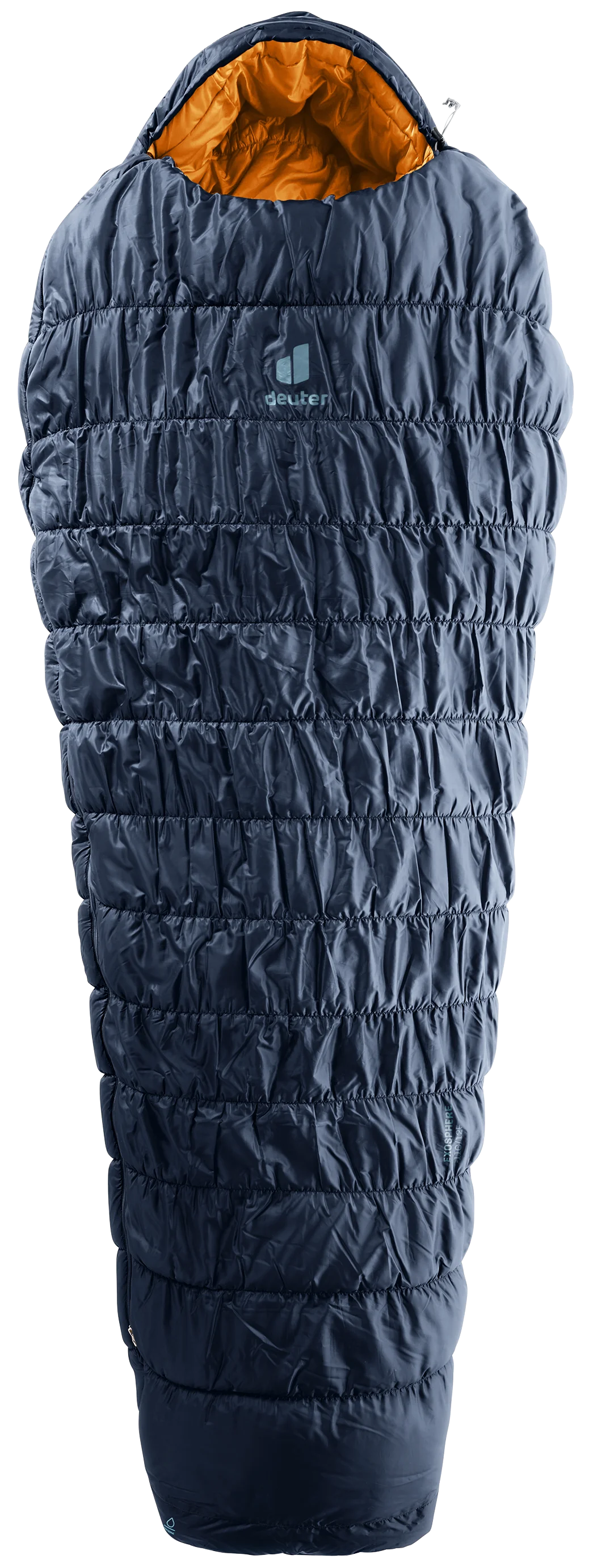
Mummy-style sleeping bag: It is shaped to fit the body, wider at the shoulders and narrower towards the feet, with a hood and, depending on the model, a thermal collar. Because there is less air inside, it warms up more quickly and keeps you warmer for the same weight. It is lighter and packs down smaller. To ensure it doesn’t feel cramped, the Exosphere and Astro Pro ranges feature stretchy chamber seams that adapt to your movements. The mummy shape is the right choice for trekking, mountaineering and cold nights.
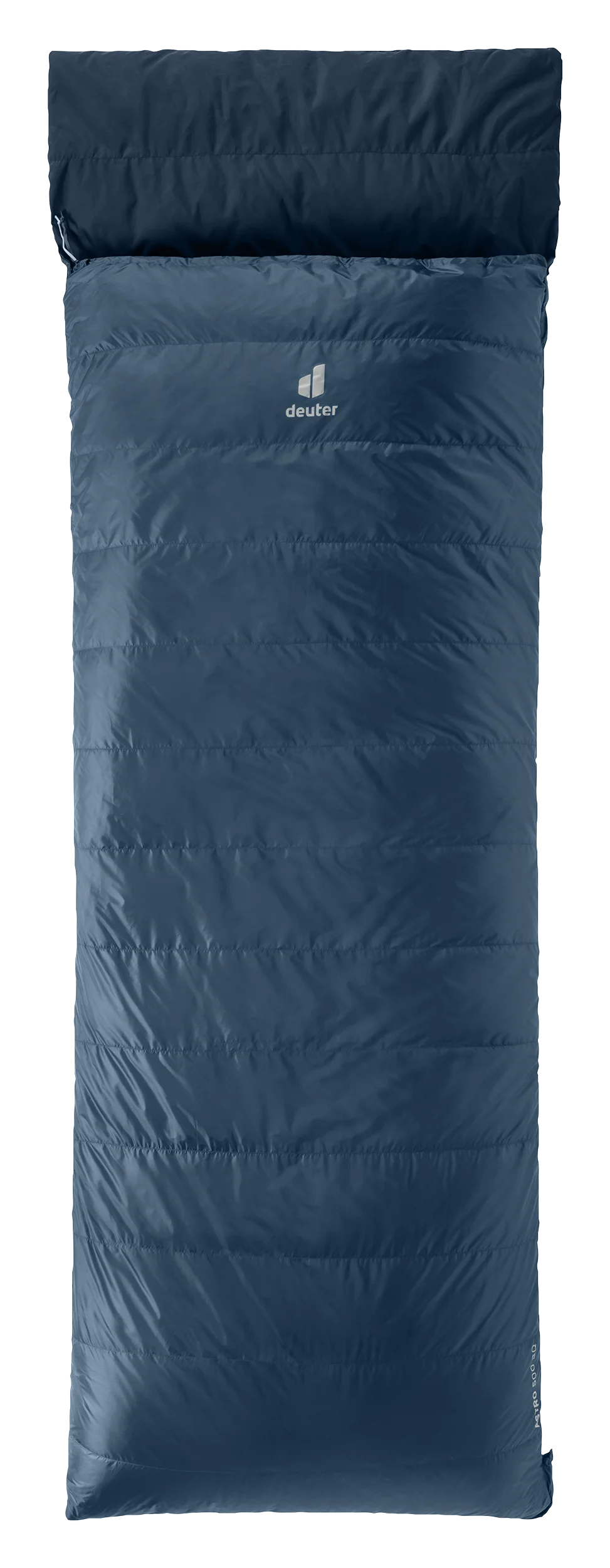
Blanket-style sleeping bag: With deuter, you can recognise it by the ‘SQ’ suffix in the name, for example Astro 500 SQ or Orbit SQ. It has a straight cut and offers plenty of legroom and freedom of movement. The full-length zip allows it to be opened completely and used as a blanket; you can also link two SQ sleeping bags together to form a double sleeping bag. The Astro 500 SQ also features a detachable pillow. However, a blanket-style sleeping bag is heavier and takes up more space when packed. It’s the right choice for you if, when camping, travelling in a van or at a festival, space and comfort are more important to you than weight.
For children, there’s the Starlight SQ blanket-style sleeping bag, which can be transformed into a cosy blanket using a zip. You’ll find all models in the children’s sleeping bags section.