
deuter is made without PFAS

Away from PFAS – towards more environmentally friendly waterproofing
But what exactly are PFAS?
PFAS (per- and polyfluoroalkyl substances) are a group of industrially produced chemicals that have been used in industry and the consumer goods sector since the 1940s due to their useful properties. Their water-, grease- and dirt-repellent properties are mostly used in the surface treatment of everyday products such as dirt- and water-repellent textiles, non-stick cookware, household electrical appliances and in the paper finishing of food and drink packaging. However, PFAS can also be found in beauty products, cleaning agents, fire-fighting foams, cable sheathing and hydraulic fluids. These highly useful substances are, however, extremely toxic. They can enter the environment during manufacture, use and disposal, thereby harming humans, animals and nature. Once they enter the environment, they spread quickly and widely. These harmful fluorocarbons degrade only very slowly – over several hundred years – or, in some cases, not at all.
PFAS – PFC: What is the difference?
The term PFC has previously been used to describe the broad class of harmful yet extremely useful chemicals used, amongst other things, for water-, dirt- and grease-repellent surface treatments, e.g. on textiles, and for the manufacture of waterproof and breathable PTFE membranes.
In the specialist literature, the term ‘PFAS’ (per- and polyfluoroalkyl substances) is now predominantly used. The two terms ‘PFC’ and ‘PFAS’ can generally be used interchangeably.
Why are PFAS so harmful?
PFAS are characterised by a chemical structure consisting of fluorinated carbon chains. The chemical bond between carbon and fluorine is one of the strongest, meaning that PFAS are extremely difficult to break down. Treated products release PFAS substances at every stage of their life cycle: during production, during use and during disposal.
The logical consequence of this is that the chemicals can enter the environment – and thus our bodies – at any time, where they remain for a very long time. Furthermore, PFAS substances can be transported over long distances by water and wind.
It is therefore not surprising that researchers have already found high concentrations of PFAS in drinking water, the air, blood, breast milk, snow on Mount Everest and in the bodies of Arctic polar bears.
The health consequences have not yet been sufficiently researched. However, many adverse symptoms have been observed in humans and animals exposed to PFAS. These include impaired immune function, impaired brain development and damage to the reproductive system. PFAS have also been linked to various forms of cancer.
So why are PFAS still used?
In the sporting goods sector, PFAS are used for surface treatment and impregnation of textiles, tents and footwear, amongst other things, and for the manufacture of water-repellent and breathable membranes, due to their water-, dirt- and grease-repellent properties.
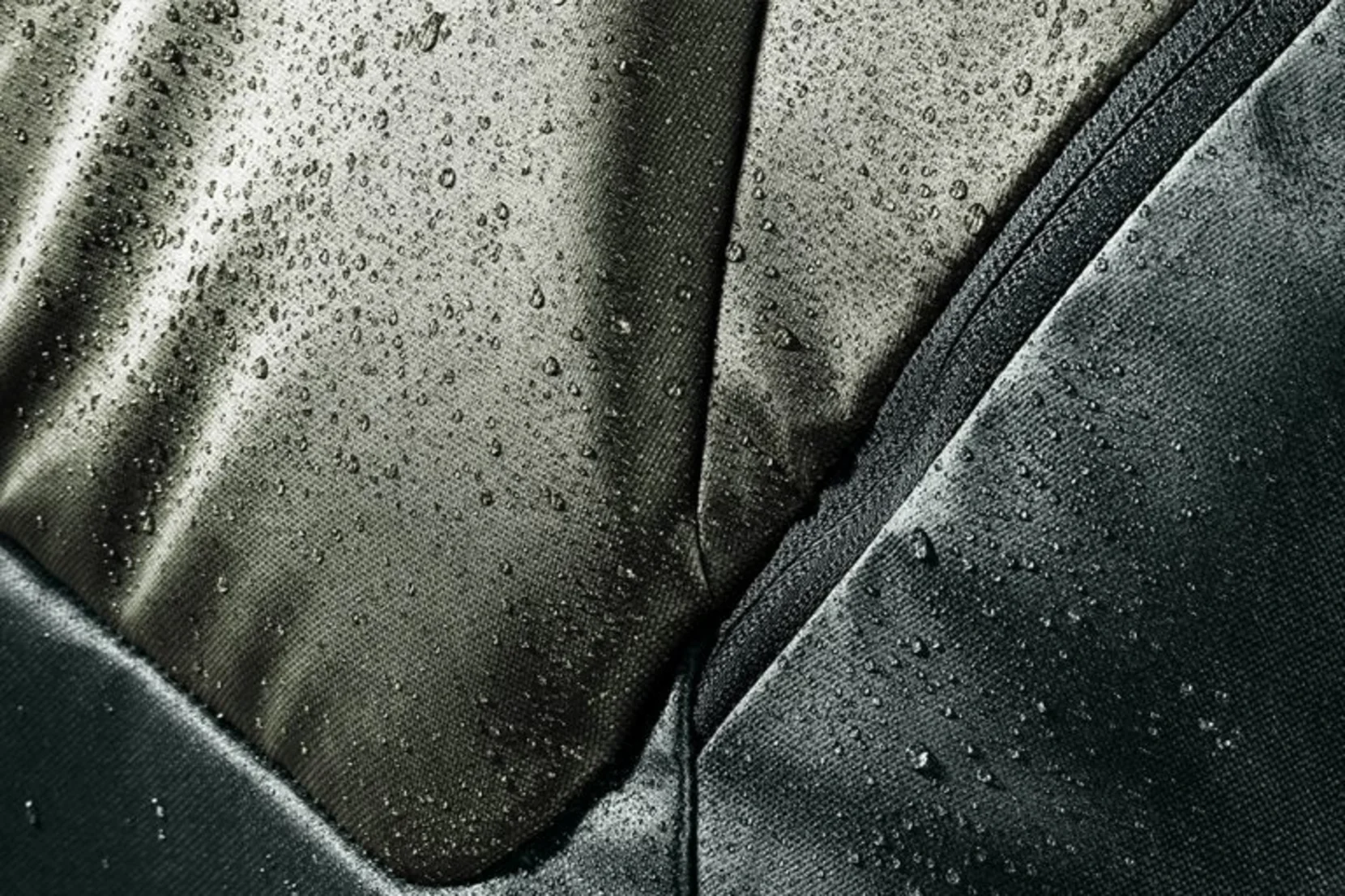
This coating is known in the industry as DWR, short for durable water repellent. It makes products dirt-repellent and ensures that water beads up and rolls off, preventing the material from becoming saturated and heavy.
PFAS can also be found in ski wax and bicycle oil.
PFAS
- for non-stick coatings
- for easy-care clothing
- stain resistant carpets
- gives pizza cartons a grease-resistant coating
- makes rain jackets waterproof
deuter waterproofs its products in an environmentally friendly way…
Since 2019, deuter has managed to produce all its products free of environmentally harmful PFAS. But the road to this goal was not an easy one, because for a long time there was no comparable alternative to the harmful chemicals. It wasn't until Greenpeace launched the "Detoxifying Our Clothes" campaign in 2012 that suppliers and the chemical industry began to develop environmentally friendly methods for impregnating textiles.
To ensure water- and dirt-repellent properties, deuter now uses a DWR (Durable Water Repellency) impregnation that is harmless to health and the environment and does not use PFAS at all. This special surface treatment causes water to bead up on the outside of the textiles and keeps the product dry. This method marked the breakthrough for deuter in environmentally friendly impregnation: