
Planning a trail run in alpine terrain
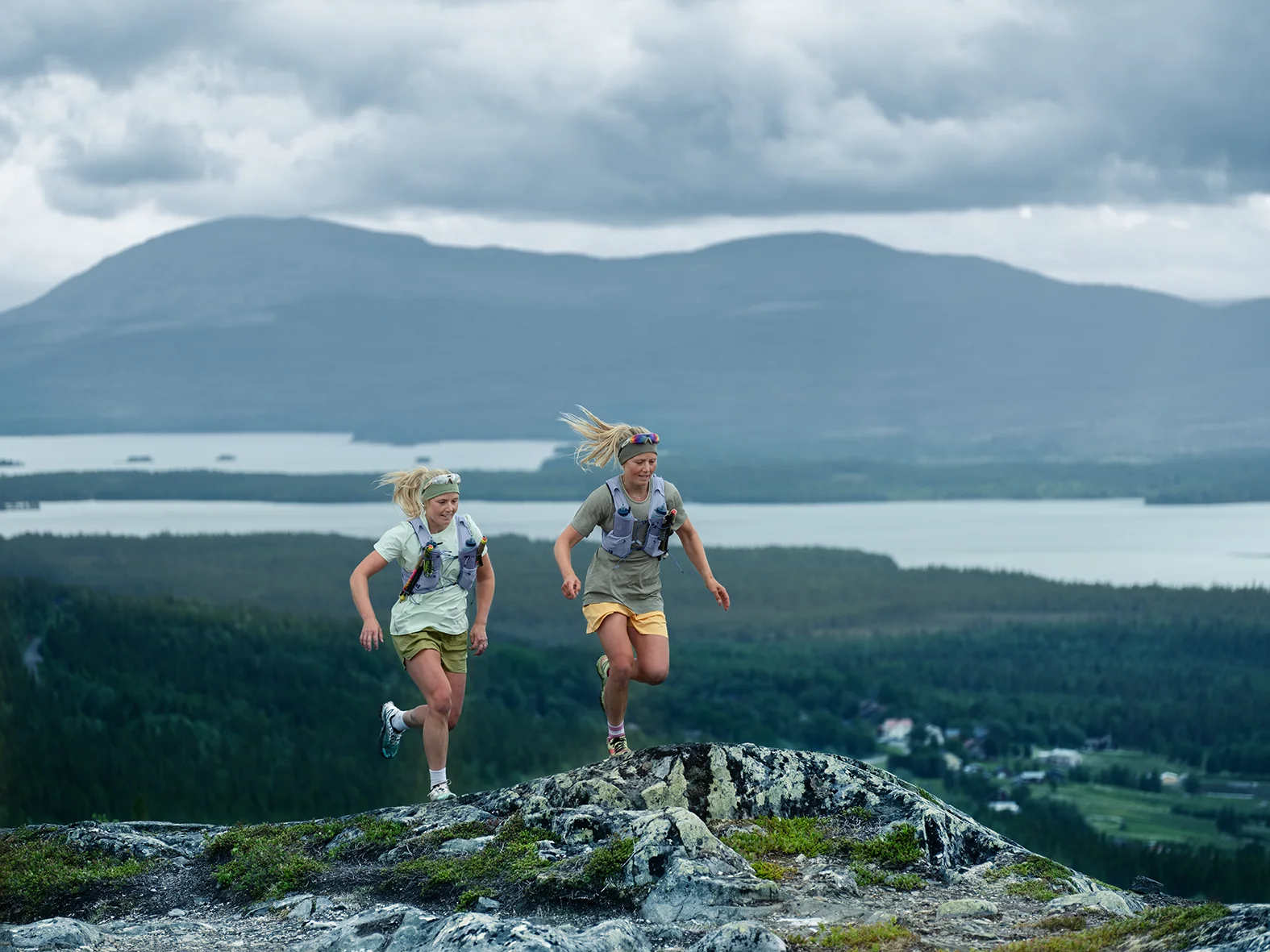
Trail running in the mountains is much more than a challenging form of running. It’s about immersing yourself in nature in a unique way – and, more often than not, the journey is as much about what happens within as where the trail takes you. Careful planning ahead of time and being well-versed in how to move across stony terrain will make the whole experience much better. From fitness levels, navigation, route selection and gear, to running technique and emergency protocols, the deuter Basecamp Trail Running pages offer comprehensive information and handy checklists. So whether you’ll be running solo, or with a group of people, we’ve got tons of information to help you make the best of it.
Planning is essential for having a good trail running experience. And it’s a good idea to stick to an established routine for this: from targeted training to route selection and checking the weather or safety measures on the trail. This will help you avoid any nasty surprises and minimize risks — both for you and others. We’ve compiled the most important elements for planning a trail run.
The 3x3 planning model for trail runners
If you’re familiar with ski touring, then you’ve probably heard of Werner Munter’s 3x3 model. It divides the whole planning process into three distinct steps with three factors. This strategy can also be used for trail running. Because just like ski touring, or mountain biking, trail running is a dynamic activity.
The factors that influence your choices are constantly changing: the terrain switches from smooth, flowing paths, to steep scree or root-strewn trails; the weather changes; your fellow runners get tired; a section of trail is blocked/closed — to name just a few. Effective planning takes all of these eventualities into consideration before you even start and makes allowances and adjustments to suit changes in circumstances and conditions.
The 3x3 method helps you assess each of the following three factors: :
- PEOPLE: the members of the group
- EQUIPMENT: suitable gear, the equipment carried by each participant, first-aid tips
- CONDITIONS: weather, trails and route planning
Each of these three factors is assessed during the following three phases:
- PLANNING when preparing for the tour at home
- LOCAL ASSESSMENT immediately before setting off
- DECISION-MAKING DURING THE RUN by continuously monitoring the conditions and the group
This systematic approach helps you plan your trail running tours effectively and responsibly, leaving you better prepared to deal with challenging situations.



Factor 1: People

- Number
- Expectations
- Conditions/ability
- Health Fitness

- Group meeting / Check-in
- Fitness check/Warm-up
- Agree expectations
- Conditions

- Motivation
- Performance
- Rest breaks
- Attitude to risk
- Type of day
Personal requirements and shared responsibility
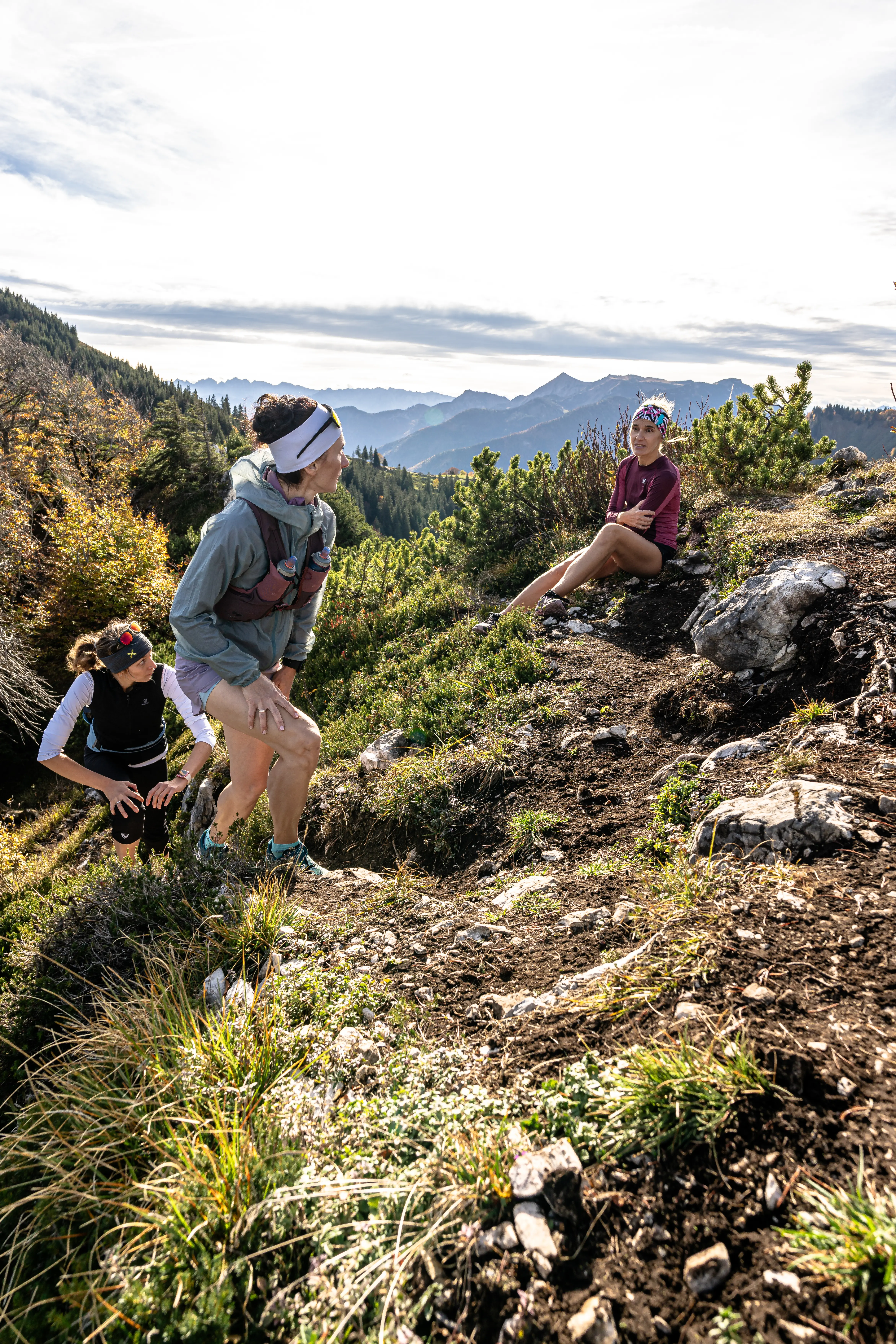
Whether you rock the trails in a team of two with your partner, or friend, or in a larger group, people tend to have individual requirements, hopes, and goals. And their physical and mental needs will vary from one person to the next. If expectations are too disparate, then conflicts of interest are bound to arise. Unplanned incidents such as injuries or a dip in performance can create added tensions within the group dynamics.
Balancing everyone’s interests might not seem easy to achieve at first glance. But the solution is easier than you might think. It’s all down to running together and communicating together. Clear communication and shared consensus before and during the run ensure that everyone reaches the finish line happy, safe, and satisfied, and looking forward to the next run.
Tip:
Together beats being alone. Regularly meeting up with friends for training is fantastic for your motivation. Everyone can share the routes they know. People can alternate being the guide each week and the one to plan a route. It’s great practice for when it comes to planning bigger undertakings, and also keeps your training varied.

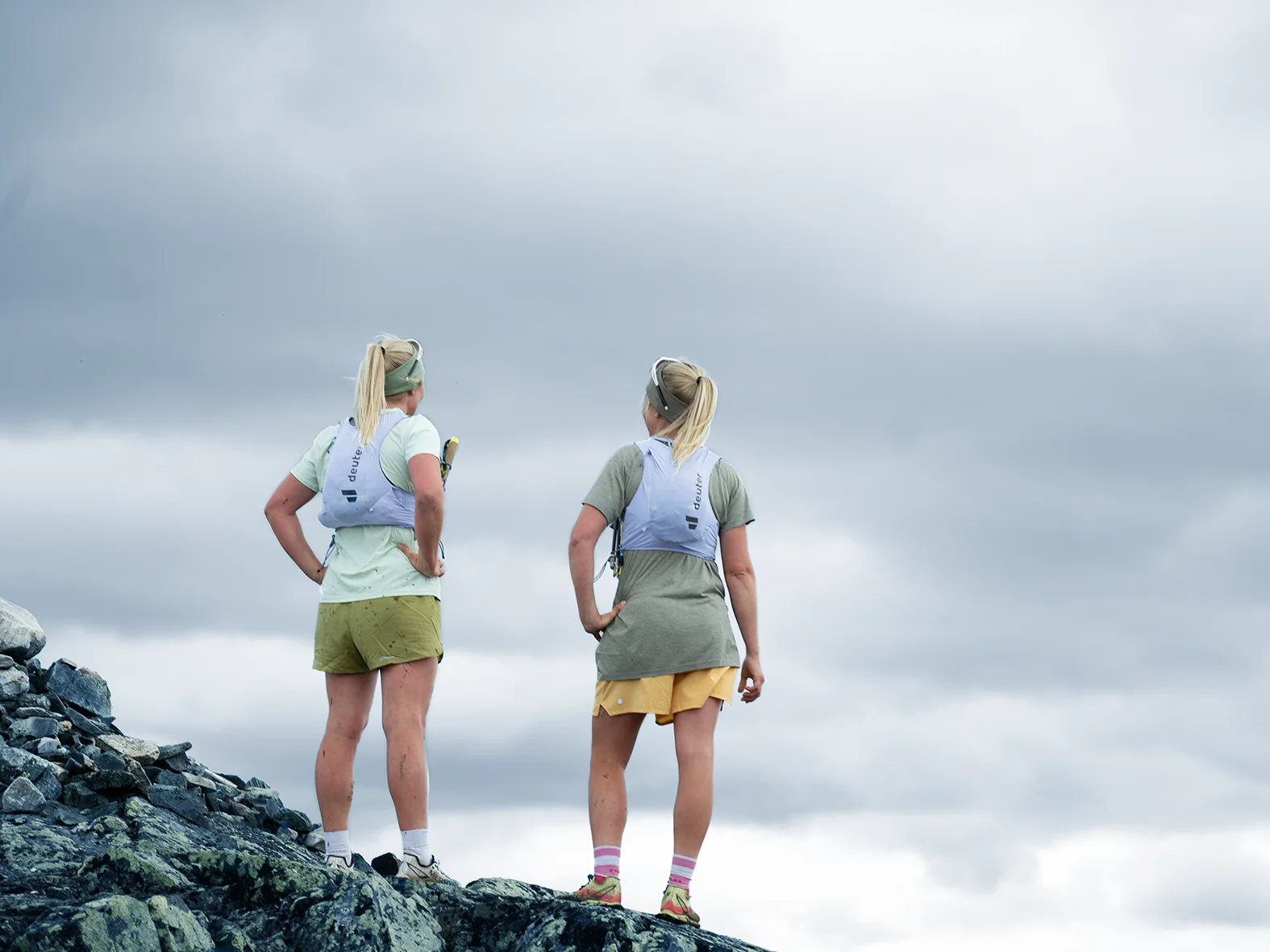
Important rules of conduct for a harmonious cooperation on the trail
- Waiting: at forks in the trail and when the group becomes too spread out, those at the front should wait for those at the back. Don’t set off again as soon as the last one catches up. Even though the ones in front may have waited already 15-30 minutes and are fully rested, the ones at the back of the group are in just as much need of a rest, if not more!
- Remember that taking fewer longer rest breaks is better than several short breaks. Short breaks disrupt your running/walking rhythm and don’t usually result in any lasting recovery benefits.
- If some of the weaker members of the team are repeatedly stopping for short breaks to rest, they should slow their pace.
- Take time to regularly check your trail buddies (steadiness, breathing, color in their face, sweat levels, in winter signs of hypothermia) and look out for signs of exhaustion.
- In higher-risk sections of trail (e.g. old snow fields across exposed alpine terrain) discuss how you’re going to negotiate it with the whole group. Then pass through the dangerous sections, one at a time.
- In thick fog, during a night run or on a more severe alpine route it’s best to divide the group up into pairs and have a buddy system.
- Trail buddies keep tabs on changes in each other’s health, such as exhaustion, dehydration, low blood sugars or hypothermia – symptoms which often go unnoticed by those experiencing them – and can raise the alarm if somebody goes missing in the dark or fog.
TIP:
If you want to find out more about trail running best practice there’s a detailed overview of the general mountain code of conduct here.
Group checklist
- How long do I want to run?
- What’s the ability level of the group? Does it vary or is it pretty similar?
- Do we have the right level of fitness, stamina, and running technique for the planned route? What kind of training is necessary?
- What kind of trails do I want to run on?
- What kind of difficulties can I cope with? Am I sure-footed, can I negotiate short scrambling sections? Am I scared of heights?
- What does the average pace need to be?
- Do I need longer rest breaks? Have we scheduled in breaks like that?
- Am I prepared to drop back and help any struggling group members?
- Agree on the expectations of the group once again
- Discuss the schedule and route
- Discuss crux sections and possible weather-related changes to the plan
- Are all group members healthy? Is there someone in the group who is less fit than expected? How can any differences in fitness and running technique be reasonably balanced out in the group?
- Are the difficult sections (uphill & downhill) on the route appropriate for the actual running technique and fitness level of the group?
- Regularly check motivation levels and mood within the group and react accordingly
- How about energy reserves? Are any of the group showing signs of exhaustion or having difficulty concentrating? Does anyone have cramps? (magnesium tablets)
- Dehydration and hunger pangs: on longer runs, check that everyone is drinking fluids regularly and eating appropriately (intervals depending on weather conditions and pace)
- Is the level of difficulty of the trail appropriate for the group? What are the potential consequences? Is a change of route called for?
- Are extra rest breaks needed?
- How can the stronger members of the group support the weaker ones?
Running technique and fitness
What you need to be capable of
The success of a trail run is based on a combination of good running technique and fitness (coordination, stability, strength, balance). The better your running technique, the more energy you save, and the more relaxed and safer you’ll run. It will allow you to recover even on gentle uphill or downhill sections and bring down your heart rate. Poor running technique or insufficient experience on the other hand, can quickly lead to exhaustion and lack of confidence. Which in turn substantially increases the risk of injury.
TIP:
Aside from running technique, the ability to focus and stamina are also key. The length and duration of your chosen route should therefore be adapted with these in mind. Ideally, group members will largely have similar levels of fitness. This requires a good, realistic self-assessment on the part of the group members – and well before the start of the run.
If the group members don’t know each other, then it’s a good idea to ask them about their fitness levels:
- What’s your usual time for running 10 km on the flat?
- How many vertical metres do you cover in one hour when you’re hiking or speed hiking?
If the group proves to have a wide range of performance levels, the faster runners will have to be prepared to adjust their pace to suit the slower runners in the group.
TIP:
If you’re worried you might not be able to work off enough energy, you can do some interval training at the end or on the last climb. That way everyone is happy – and equally sweaty.
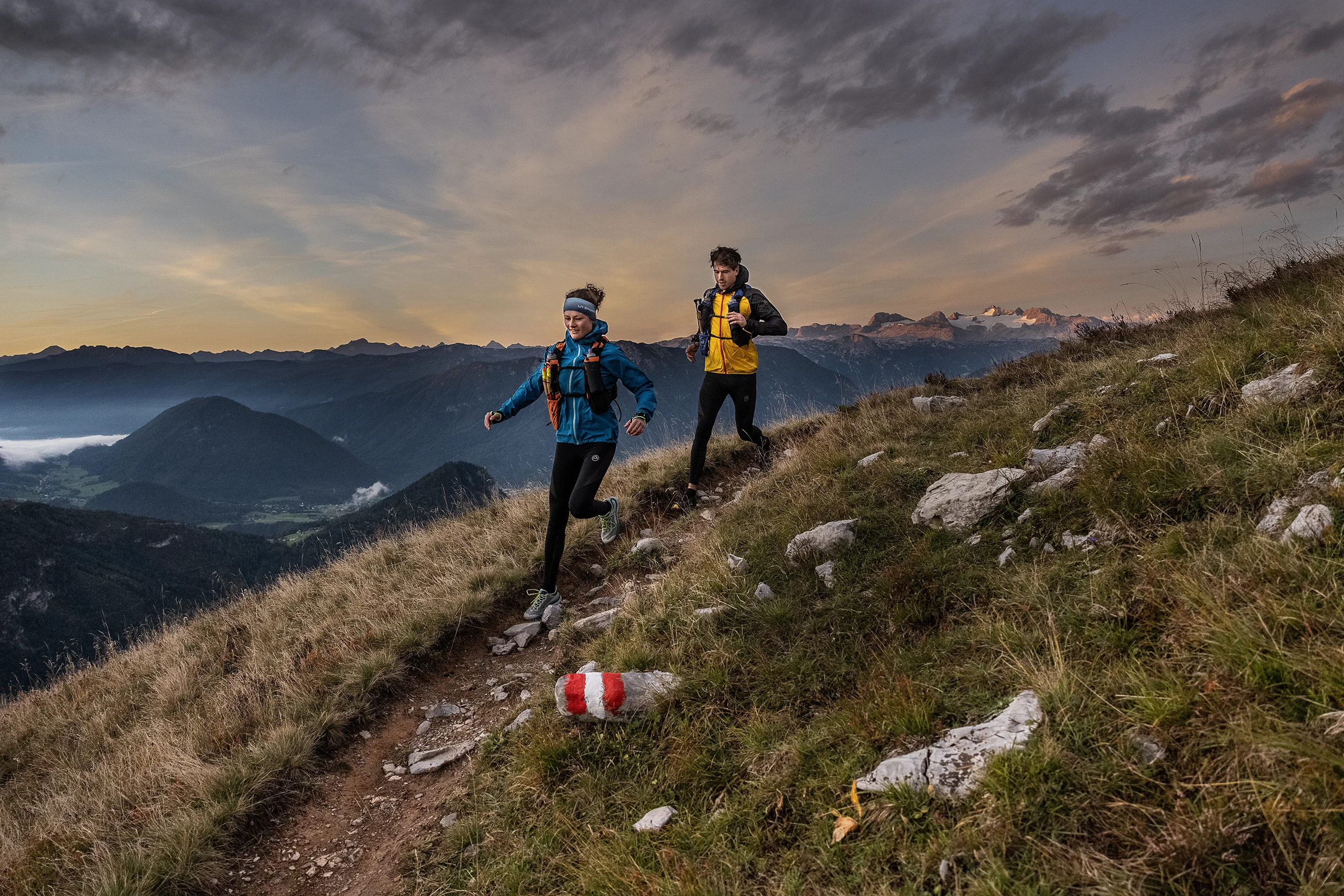
Running technique checklist
- Check your fitness, stamina and running technique are up to the planned route
- Practice your running technique, specifically for the level of difficulty or terrain you can expect on the route
- Train for fitness, bearing in mind the length of the route and height gain you can expect
- Or book onto a trail running technique course
- Check that all group members have sufficient levels of running technique and experience
- Check that all group members are fit enough for the route
- How can group members with varying performance levels best work together?
- Check the difficult route sections (uphill & downhill) are well matched with the running technique and fitness levels of the group?
- What are the possible consequences? Is a change of route called for?
- Should the group split up for some of the sections?
- How can the stronger group members support the weaker ones?
The demands of trail running
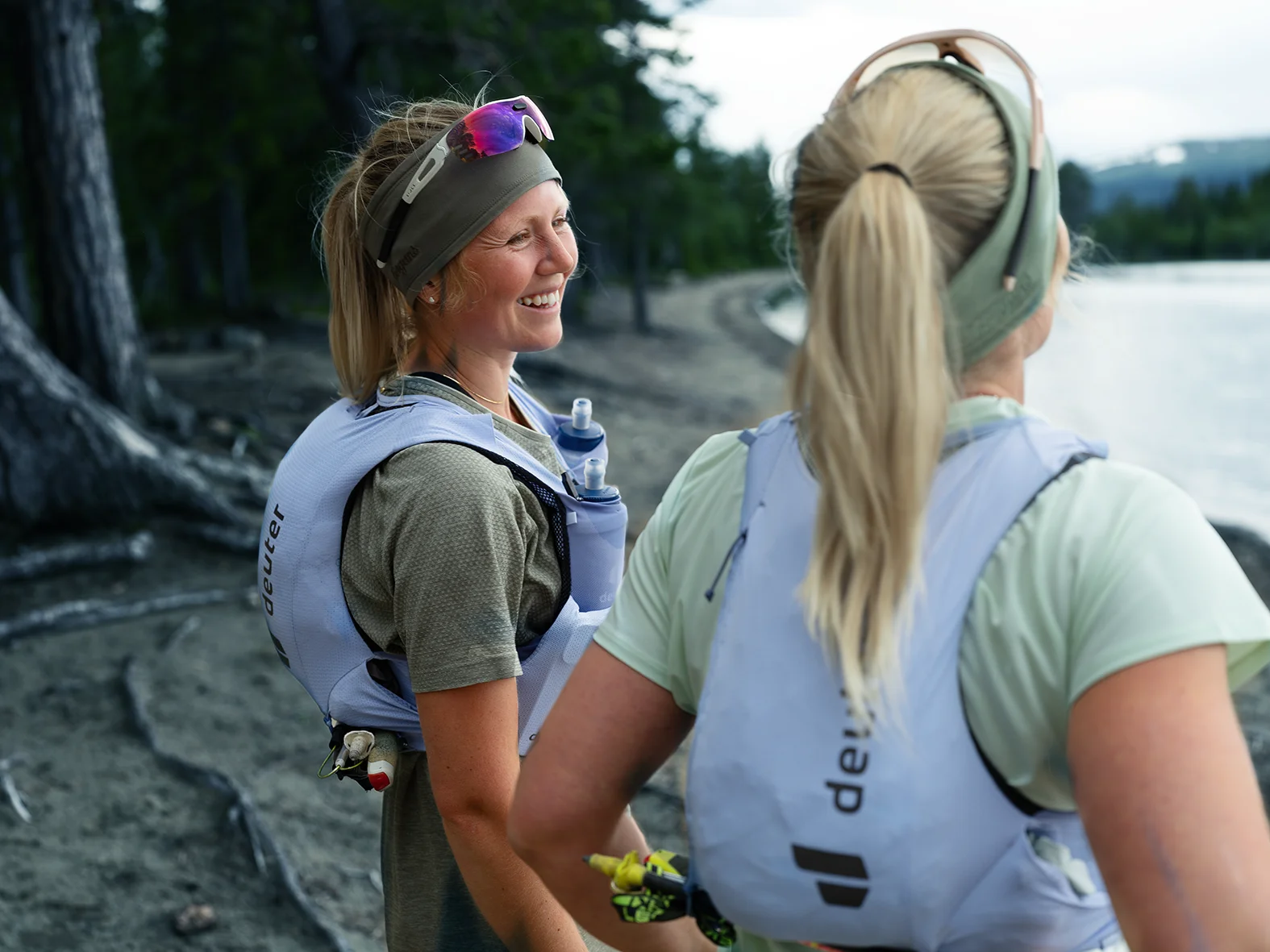
What you need to be capable of
Even if you consider yourself an experienced road runner, trail running presents a whole new set of demands on your body. So give it time to get used to all the uphill and downhill action. Running uphill puts a lots more strain on your cardiovascular system. And running downhill places more stress on your muscles and joints than running on the flat. Which is why it’s wise to build up your strength steadily. Not least because you need greater coordination, especially on narrow, root-strewn or rocky trails. If you try to push too hard too fast, your body will pay the price. Which isn’t healthy and won’t help your overall progress.Basic tips for trail runners
- Start slow and let your body find its rhythm. Gradually increasing intensity and distance helps you build strength safely (a good rule of thumb is about 10% more per week — but trust what feels right for you).
- Work on your running technique: good coordination is particularly important when you’re running off-road. Taking a guide or trainer with you occasionally is a good idea. After all, fixing any bad habits is much harder once they’re ingrained. And you’ll avoid putting undue strain on your body, which can lead to pain or even injury in the long run.
- Invest in good gear. It might seem obvious, but having shoes with good grip and cushioning makes such a difference! Insoles that are moulded to your foot will give you better support too. Using a backpack or vest that’s built for trail running will keep your gear nice and compact against your body.
- Take your time: the condition of the trail and the weather will dictate your pace. Distance and speed are less relevant off-road. Running 10 km through tough mountain terrain can often take twice as long as it would running 10 km on roads.
- Hone your reflexes: train responsiveness, coordination, stability, and balance so that you can master the challenges of off-road terrain.
- Stretch regularly and recover sufficiently: warm up, stretch, and don’t forget to warm down. Get enough sleep and eat a nutritious diet. Take time to recover adequately.
- Watch for signs of fatigue: when energy levels, concentration or coordination start to drop, you’re at increased risk of injury. Slow the pace and walk some sections. And make sure you take in plenty of fluids and calories.
- Keep motivating one another: ideally have a training buddy to spur you on. It’s more fun running with others, and you can help each other with feedback and support.
Conclusion:
Being in tune with your body and with the needs of others is not only good practice in life, but in trail running too. There’s little point in trying to achieve too much in too short a period. The key is to slowly, steadily adjust to the demands of running in the mountains.
Master the ups and downs with the correct technique
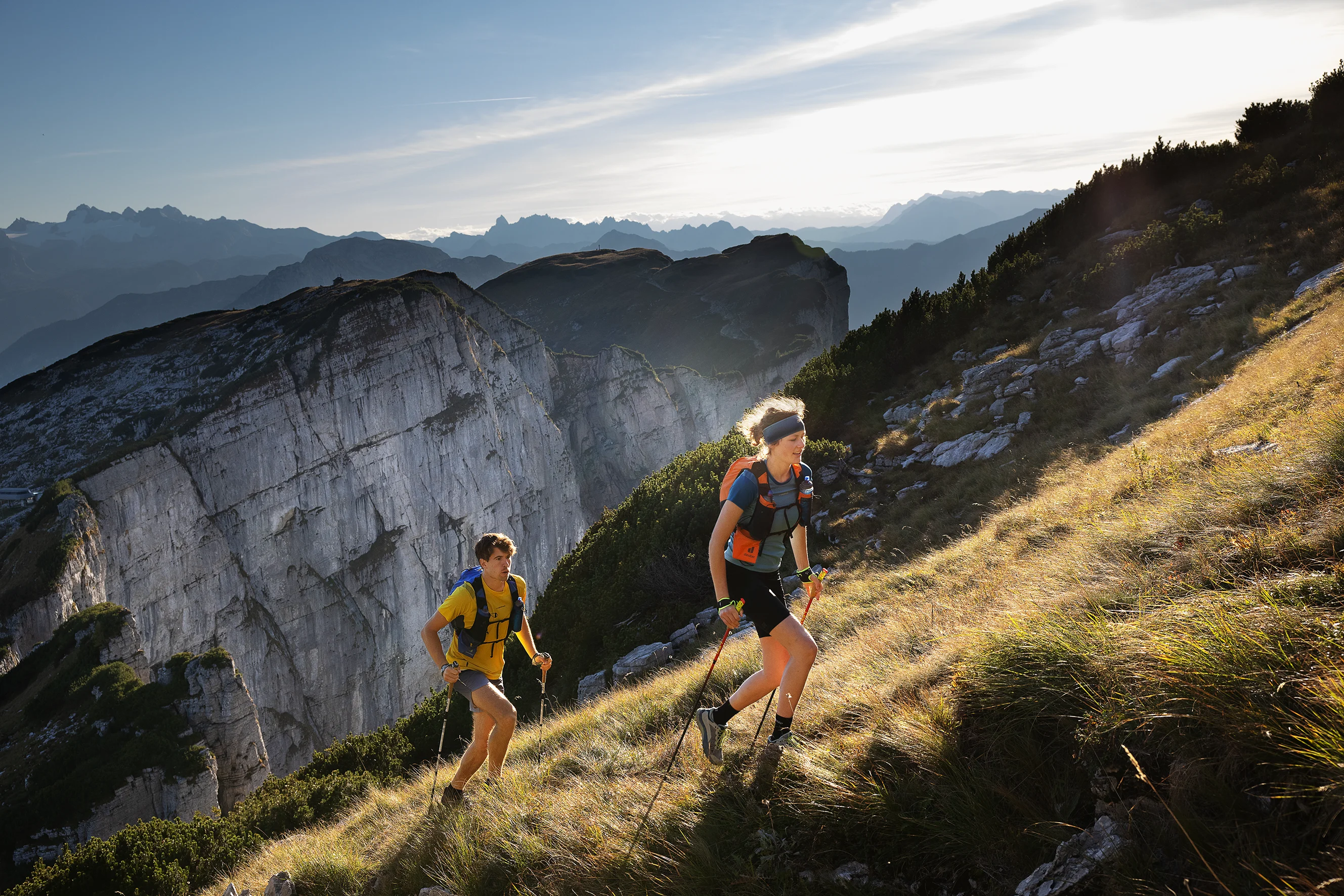
How should I run or hike uphill?
With good running technique, long challenging uphills and downhills are much less daunting. So work on your technique. Keep your heart rate low to allow you to fully focus on your technique. Stay loose and relaxed.
Here are six basic tips on how to run up mountains efficiently and without too much effort, so you still have enough energy to enjoy the spectacular mountain scenery at the top.
Uphill technique – stay loose
- Stay upright and keep your back straight. Don’t lean too far forward, i.e. don’t tilt your upper body forward from the hips, and don’t hang your head. Your centre of gravity should be just ahead of your feet.
- Use a lower gear: just like with biking, using a lower gear saves energy. So take smaller steps and increase the frequency.
- Active arms: consciously use your arms and coordinate them with your legs. Your arms should swing in line with the direction you’re running and remain close by your sides. When your arms swing back, your upper arm, forearm and torso should create what’s known as “runner’s triangle”. This helps your upward propulsion.
- Run on your forefoot: imagine the front of your foot is a coiled spring that catapults you forward with each step.
- Eyes forward: don’t look at your feet. Instead, keep your gaze a couple of metres ahead. Scan the terrain so your body and mind are prepared for what’s coming.
- Walking isn’t cheating: in fact, for especially steep ascents it’s actually more efficient. Switch to speed hiking mode and push off the ground in powerful strides. It’ll save energy and you’ll barely be any slower than if you were running. Poles will give you an extra turbo boost. They take some of the strain off your legs. Without poles, you can prop yourself up on your thighs for support, just above the knee.
- Find your own rhythm. Whether you’re running or walking, try to stick to a regular rhythm. Changing pace uses up energy and will impact your stamina.
How can I optimise my downhill technique?
Downhill is justifiably regarded as the ultimate trail running discipline. It’s good to have a healthy respect for technically demanding downhill sections, but there’s no room for fear. Keep moving and stay focused. And you’ll get to the bottom safely and efficiently.
Downhill running has its downsides. But with our pro tips, you’ll soon get to the bottom safely.
Downhill technique – full focus
- Stay upright: engage your core but don’t tense up. Shift your center of gravity slightly more forward. Tensing up too much can increase the chances of wrong footing. Similar to skiing: don’t lean back or you’ll lose control.
- Eyes forward: don’t look at your feet. Instead, keep your gaze a few metres ahead. Scan the terrain coming up, from left to right. Find a line and stick to it.
- Keep your steps small: run downhill in short, quick steps so that you can react more quickly. It also cuts down the risk of slipping, especially on scree or wet ground. Try to keep your knees ‘soft’ and supple and keep them slightly bent.
- Keep ground contact to a minimum, as if you were running over hot coals. Strike the ground with your forefoot: this will give you more precise foot placement and help prevent you from twisting your ankle. (Exception: on scree and snow/old snow, roll from heel to toe instead.).
- Your arms can swing out wider than when you’re running on tarmac, for added balance and stability.
- Try to avoid braking hard: reduce your speed in a more controlled way, not suddenly. Abrupt braking can easily lead to skidding. On steep, sloping terrain, feel free to make the occasional switchback.
TIP:
Take it slowly. Find a stretch of trail on which to specifically train downhill technique for a period of 15 minutes. Start with an easier section and run downhill for 30- to 45-second intervals. In between, you can walk. Increase the training gradually and in a controlled way over several weeks. Choose increasingly challenging terrain. This will help build confidence and technical ability.
Extra boost – trail running with poles
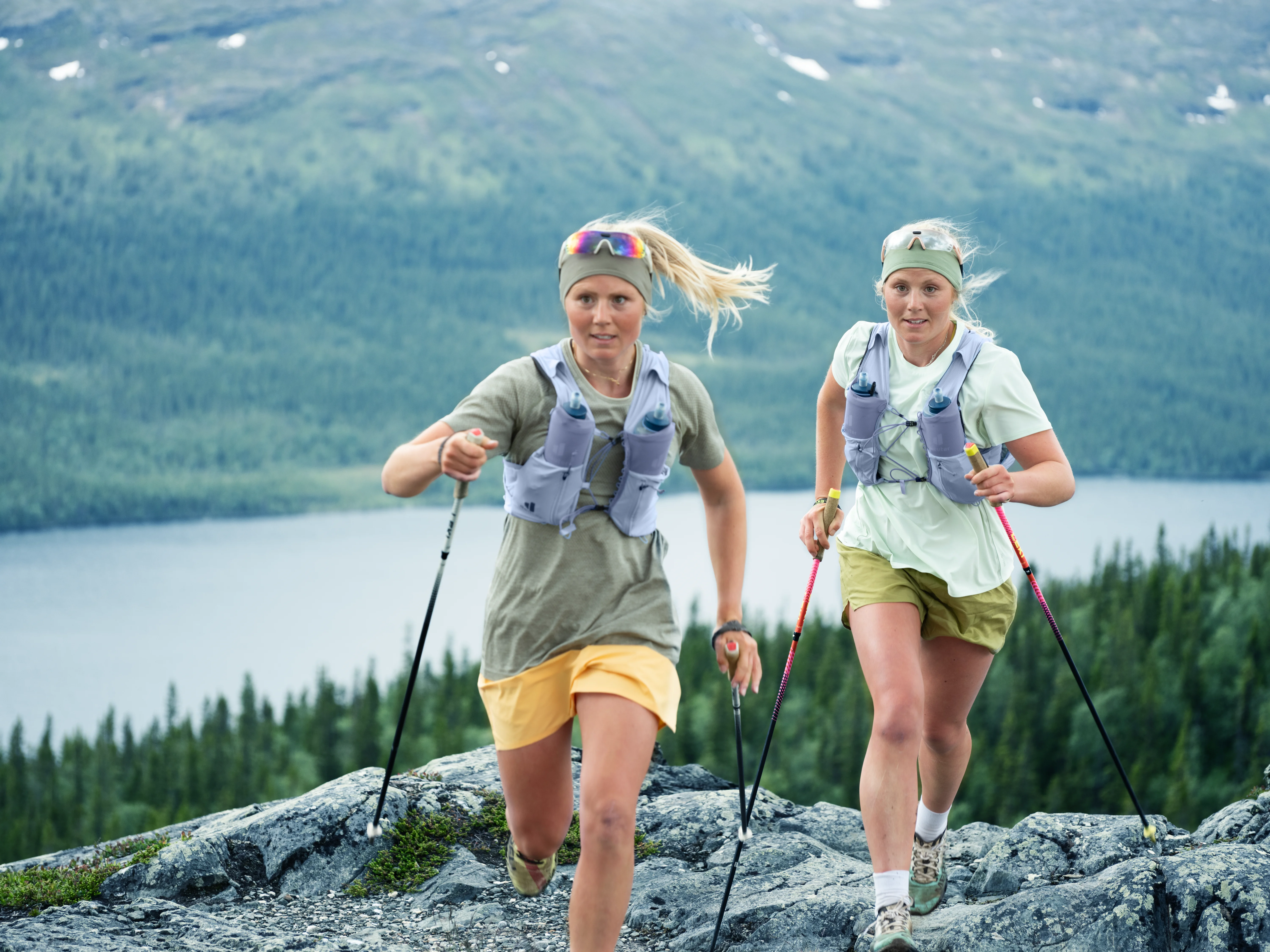
Poles, or no poles? As a trail runner, you’ve probably already pondered this fundamental question. The longer, steeper, and more technical the trail, the more of an extra boost, propulsion and energy saving poles can provide – provided you use them correctly! After all...running with poles is something that requires good coordination and timing, and that’s something that needs to be practiced.
Using poles eases the strain on the calf and thigh muscles and spreads it across the muscles in the back, arms, and shoulders. This reduces the strain on your leg muscles. Which makes it easier to build up speed and maintain that pace over longer distances. And ultimately it increases your endurance.
Poling techniques for uphill
Depending on the terrain and speed, running poles can be used in three different ways:
This technique is particularly good for very steep ascents or for when you have heavy legs. It’s also good for loose ground (scree/gravel).
- Plant both poles at the same time, just ahead of you
- Push off hard from them, to propel your body forward, and do this every three steps.
This technique is often used to build up speed quickly, over a short distance. It’s most effective over solid ground. This technique is less suited to longer trails because it uses a lot of energy.
- Plant your poles in time with the opposite foot as it strikes the ground, similar to cross-country skiing, i.e. right foot and left pole, then left foot and right pole etc.
The gallop technique is ideal for moderate speeds and moderate inclines. This method is good for saving energy.
- Plant your right pole at the same time as your right foot.
- Then take two steps without poles. Before planting your left pole in time with your left foot.
Poling techniques for downhill
Using poles to run downhill requires plenty of practice, experience, and especially high levels of coordination and concentration. Otherwise poles can be a dangerous trip hazard. You can use your poles on easier downhill sections. For example, when your legs are tired and need a little relief. And it also relieves the strain on your joints. But often, when it comes to downhill running, it can be safer, and even quicker, to keep your hands free and use your arms for balance. This is especially true for technically demanding sections of trail. In general, using poles should not impair your technique or safety. TIP Less experienced runners should start off with their hands out of the wrist loops and slowly ease into the technique.
Factor 2: Equipment
- Choosing the right backpack (volume)
- Footwear choice
- Poles
- Weather protection
- Clothing
- First aid kit
- Maps, GPS device
- Headlamp
- Provisions
- Equipment check
- Adjust clothing
- Provisions
- Injuries
- Adjust clothing
- Equipment check
What to take trail running
Whether it’s an ultra run or just a quick trail run near home, what you take with you will have a big influence on the success or failure of your run, or how much joy you derive from it. Being prepared for any eventuality means that in addition to having a pair of trail running-specific shoes with good tread that support your feet, you will also need to carry a lightweight, technical trail running backpack.
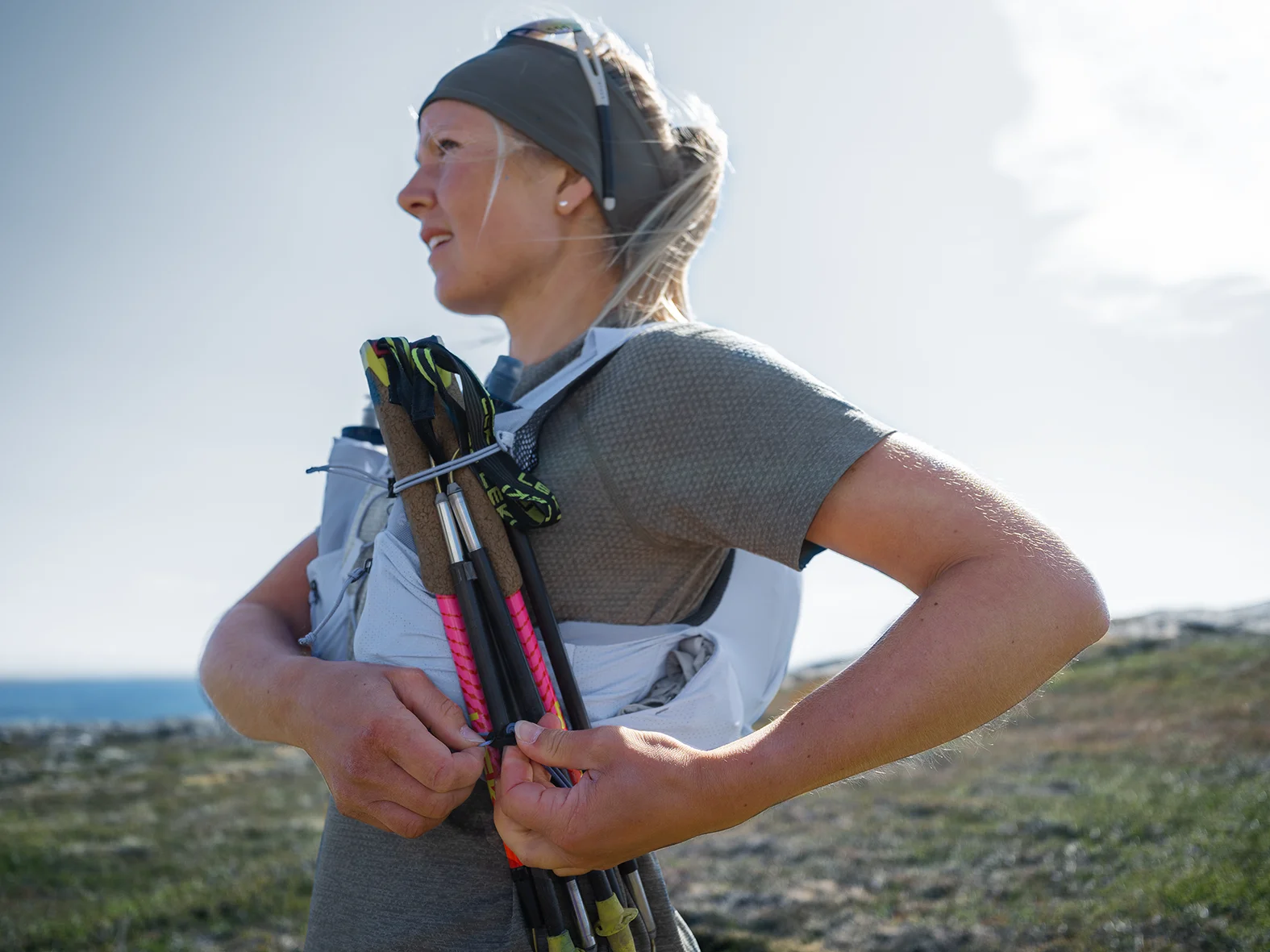
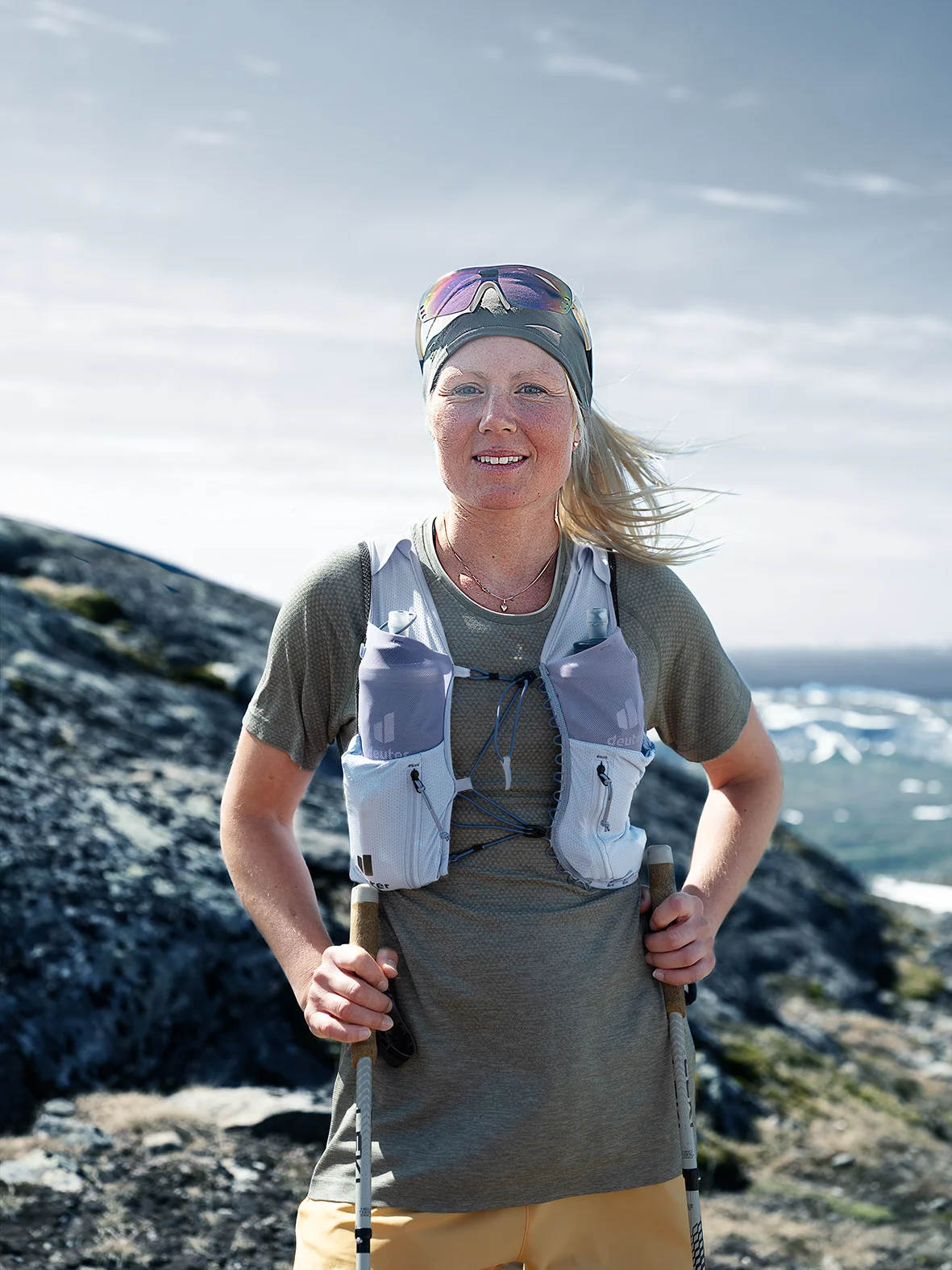
What to bear in mind when selecting a backpack or vest for trail running
Most running backpacks have a vest-like shape to create a secure, comfortable fit. This means your running backpack or running vest will hug your body like a garment. This is particularly important when moving at speed or when leaping, because the more a backpack moves around during your run, the more uncomfortable and distracting it becomes.
Good breathability
During the warmer months of the year in particular, the breathability of your trail running backpack or vest is very important. Having mesh materials against the back is proven to help with this. It allows air to circulate and creates a pleasant wear climate.
Clever partitioning
Tidiness is everything. Which is why good running packs or vests also feature clever partitioning. It means you’ll have everything close at hand. And the handling is also easier, which is important when you’re on the move. Especially when it’s a race and you need to be able to get the pack on and off fast.
Other important features
- Running pole attachments: a holster for running poles needs to be accessible when the pack is on your back. This allows you to stash and grab your collapsible poles to quickly and easily.
- Safety whistle: most trail running backpacks come with a small safety whistle to use in an emergency. This may be mandatory depending on the race rules; check the specific event regulations.
- Waterproof pocket: a waterproof pocket/section (ideally sewn into the backpack) is a good idea for your valuables.
How do I adjust my backpack or vest correctly?
With trail running you’re moving fast, and in an up-and-down direction. That’s why it’s so important a backpack fits like a second skin and has good cinching options so that it stays compact and allows full freedom of movement. This is particularly important seeing as your ribcage needs plenty of room to expand and contract when you’re running.
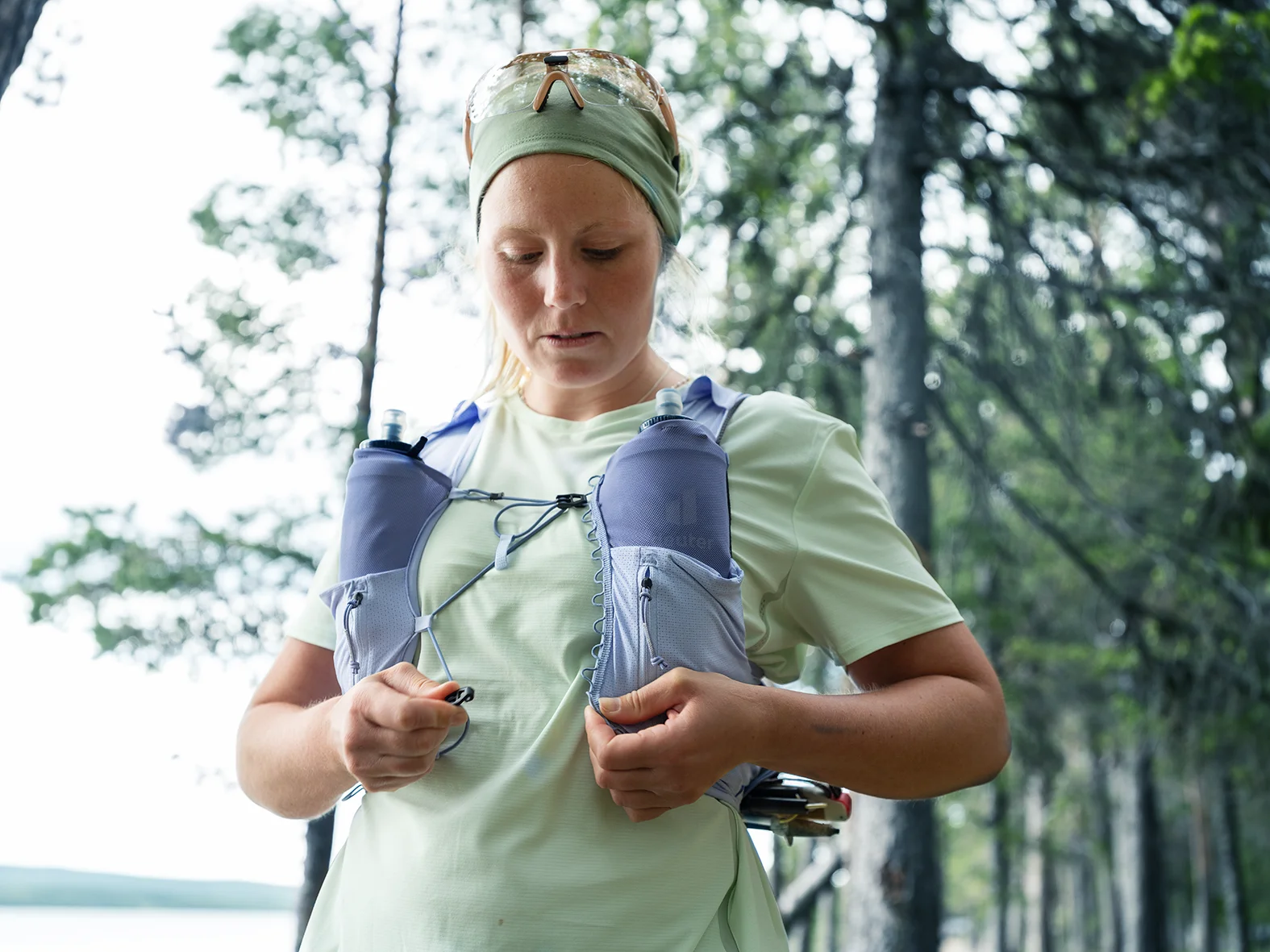
The right model
Which backpack model is right for you largely depends on what kind of trail running you’ll be doing. Or more precisely:
- Duration: how long will I be running?
- Type of run: where am I going, and how remote is the route?
- Weather or season: what will weather conditions be like? What do I need to pack?
While a running belt is big enough for a post-work run around your local lake, you’ll need a bigger backpack or a vest for ultra distances through the mountains, to fit everything you need into it. For races there’s a long list of compulsory equipment you have to take.
You can find running backpacks and vests in different sizes and with a range of features to suit your trail running adventures here.
You’ll find detailed information on each trail running pack here.
How should I pack my running pack?
The basic principles
Keep it as light as possible, but with everything you need. Every gram counts when you’re on the trail. So carefully consider each individual item you take. Once you’ve packed all the essentials, think about anything you might also want with you, for your personal needs and usual habits. Take only what you need and, where possible, trim down the weight of each individual item you take.
Optimum weight distribution
Pack your backpack so that the heaviest items are in the middle of the pack and close to your back. This will help with balance and be more comfortable to carry. If your pack has compression straps, use these to compress the volume of the pack and keep the load more snug against your body.
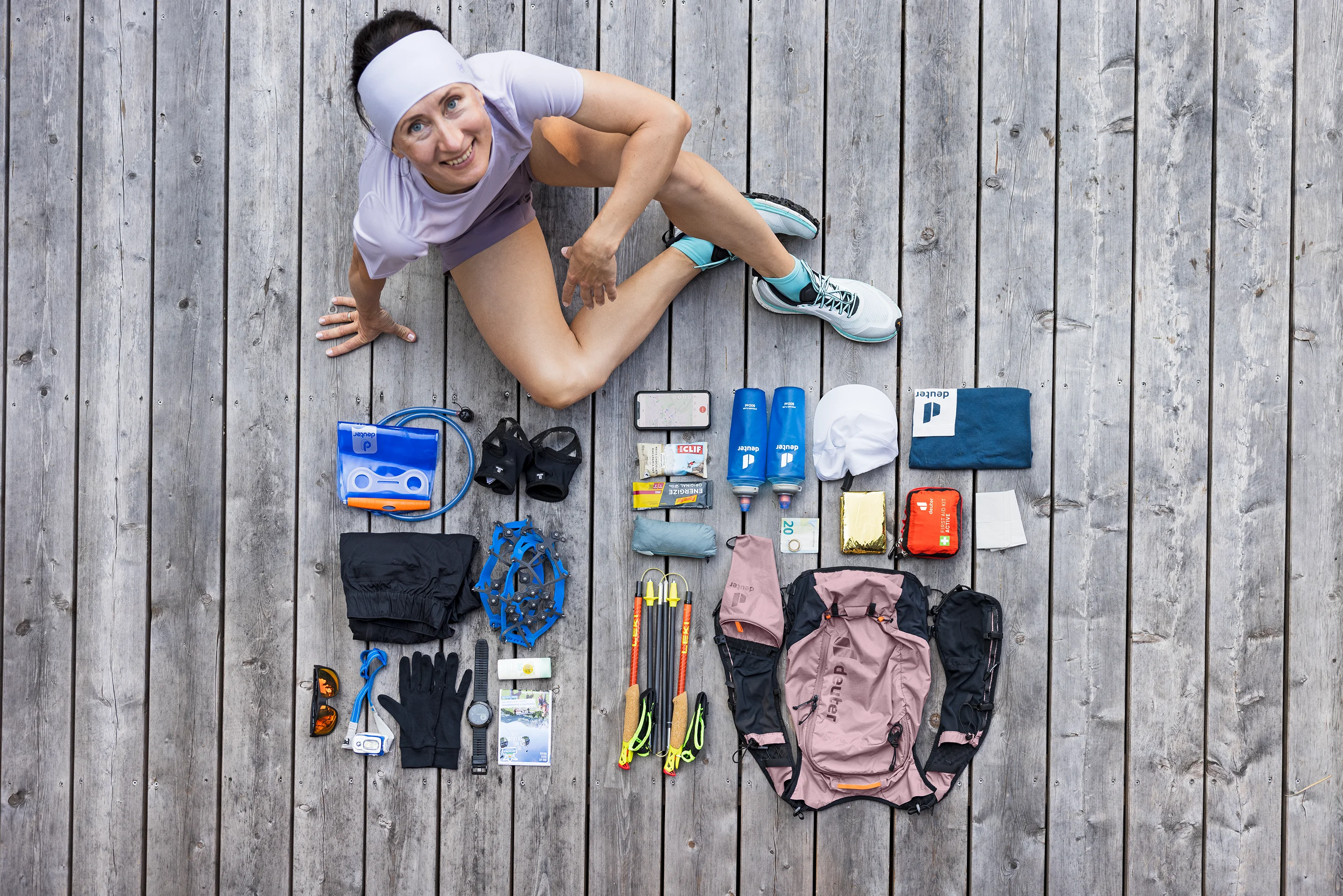
Less really is more! Find out how to optimise the weight of your stuff, where to pack it. Plus what else you might consider taking – in this video and here on our packing lists page.
First aid for trail running
First-aid skills are not necessarily intuitive and require regular practice. You should have regular refreshers on the basics of first aid. Ideally by taking a course. Or at the very least familiarise yourself online with the most important aspects of first aid. You can find an emergency first aid guide here.
A first-aid kit with a survival blanket should be part of your standard equipment. Plus a list of key telephone numbers, like huts along the route and local emergency services:
Mountain emergency numbers
Germany | 112 |
Austria (mountain rescue) | 140 (Vorarlberg 144) |
Switzerland (Rega) | +41 333 333 333 (with a Swiss phone 1414) |
South Tyrol | 112 |
Europe | 112 |
UK | 999 |
Canada/ USA | 911 |
Tip:
With the new free SOS EU Alp app you can make an emergency call quickly and easily, which is transferred to the relevant rescue coordination center along with your location data (GPS coordinates) and contact details (direct telephone number).
Factor 3: Conditions
- Weather
- Tour planning/ route
- Alternatives/ plan B
- Huts, rest places
- Retreat options
- Weather
- Current trail condition
- Route plan
- Alternative plan
- Other trail users
- Navigation
- Pace setting
- Adjust route choice
- Nature-friendly behaviour
The weather is a deciding factor
It’s hard to think of anything that will have a greater effect on your trail running experience than the weather. Rain and fog can not only be unpleasant when you’re in the mountains but can quickly turn the situation into a dangerous one. Slippery, wet trails or grassy slopes greatly increase the potential for a fall. And heat can also be dangerous — from sunburn to dehydration through to sunstroke or even cardiovascular collapse.
The big one to look out for in the mountains is the onset of a cold front that can cause temperatures to plummet, and place trail runners – wearing just shorts, and with no winter gear – in a life-threatening situation. A little rain shower, which down in the valley is nice and refreshing, can present as snow or stormy gusts of wind in middle-to-higher ground.
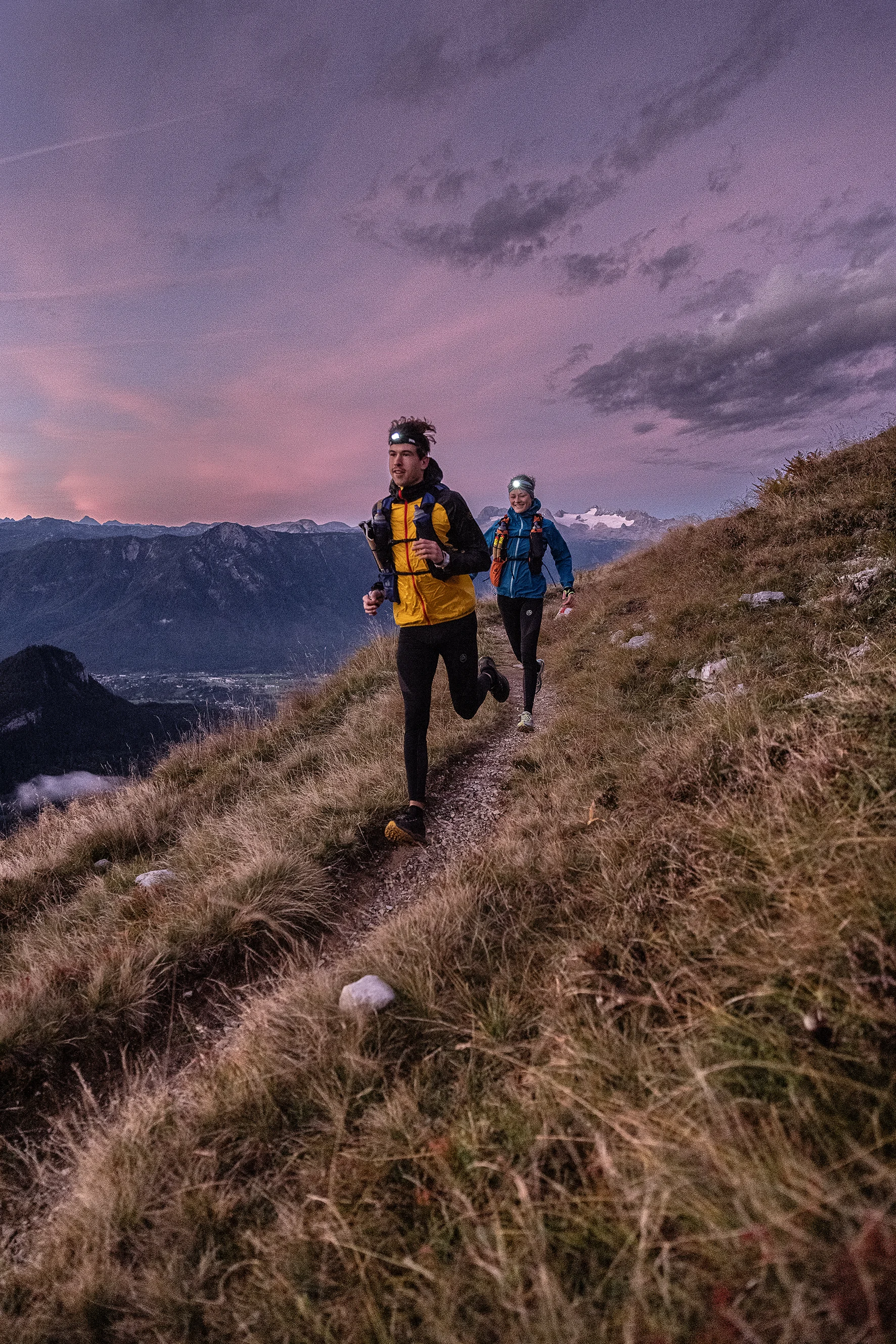
That’s why if there’s a chance of bad weather, you should always prepare for the worst and identify pull-out options or areas to retreat to, like mountain huts, and allow plenty of time. If you’ve gone through the process at home, of identifying areas where you can cut the run short or found alternative options, then you’ll save valuable time should the need arise.
TIP
Check the weather forecast before heading out and keep an eye on conditions throughout your run.
On longer trail runs in particular, find out the latest on trail conditions where you are headed. Consider that in spring, early summer, and fall, you might be faced with snow and ice on higher slopes.
What to bear in mind when planning a trail run?
Being realistic in your self-assessment will prevent you from getting into trouble on your trail run. In this video, we’ll offer some helpful tips for emergencies, and some safety questions you should address before each run.
Planning your trail running route and navigation during the run
The number of trail running routes that are signposted or online is still relatively limited. But the sky’s the limit when it comes to potential ones. In principle, any mountain biking or hiking route will also be good for trail running.
Tour planning
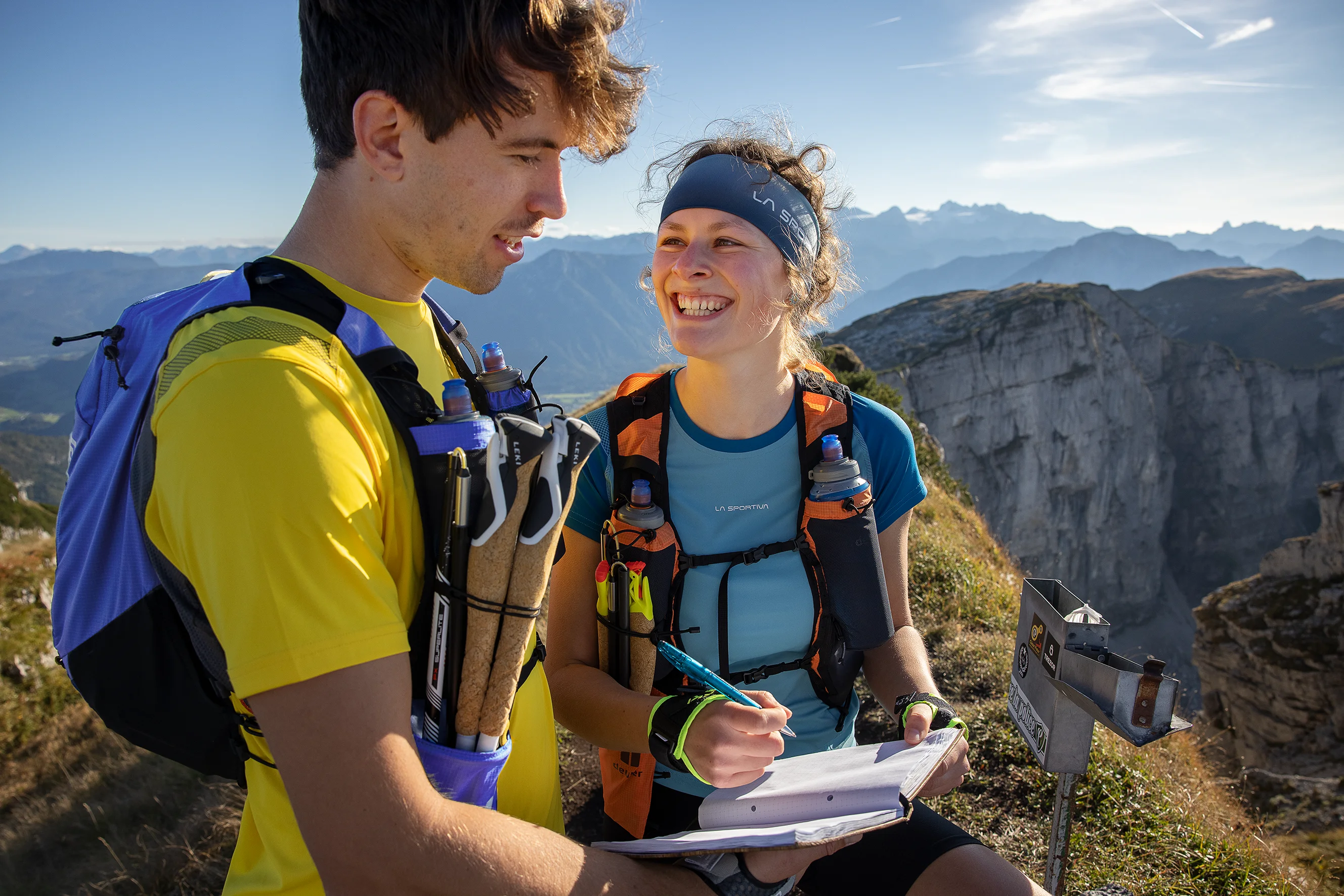
Detailed maps with a scale of 1:25,000, 1:20,000 or even better 1:10,000 are perfect for route planning – provided you can read maps. Many areas even provide detailed maps for free. Simply drop by the tourist office or local town hall.
Tip:
Be realistic with your planning, work in rest breaks – especially when you’re running in a group.
Digital representations of hiking or mountain biking routes are a good starting point for planning a trail running route. Naturally, you need to make sure that you adapt the route length and difficulty to suit your fitness level and running technique – and those of your running companions.
Useful links for routes:
Checklists, planning & navigation
- Select a suitable route
- Locate rest stops or mountain huts for breaks or as retreat options in case of an inciden
- Establish alternative routes or retreat strategies for bad weather or unexpected incidents
- Check you have a map/GPS device
- Have you saved the route info to your cell phone? Batteries all charged?
- Is navigation becoming difficult?
- Do you need to change the planned routes (weather, level of difficulty etc.)?
- Any unexpected trail closures or restriction notices?
- What alternatives are there?
Natalia Schneider
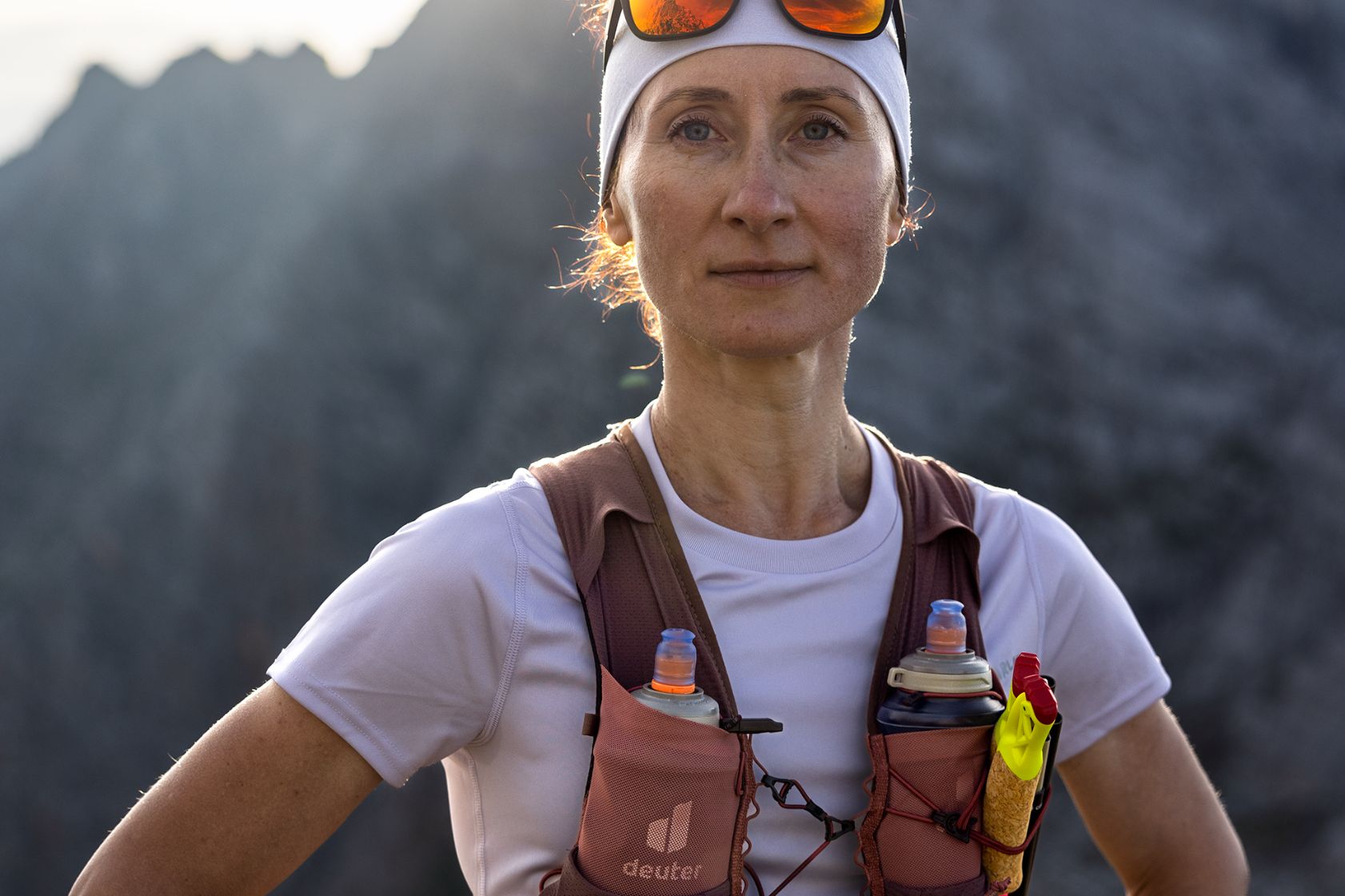
Natalia Schneider is an ASTA (Austian Skyrunning & Trailrunning association) licensed trail running guide. As a competitive runner, she knows what it takes to reach your potential when it comes to long-distance running. She’s equally passionate about relaxed runs in the mountains, where the focus is on experiencing nature.
More information under https://www.instagram.com/trailfex_original/