deuter trekking backpack advice
Looking for a trekking backpack? Planning your next adventure and still have a few questions about adjustable back systems, packing weight or types of intended use? Then you’ve come to the right place. We’ll try to answer all your questions on trekking backpacks and help you find the perfect pack for your next trekking or hiking adventure.
Frequently asked questions
- What size trekking backpack do I need?
- What kind of trekking backpack is suited to what type of activity?
- How do I adjust my trekking backpack and what is the correct way to carry it?
- How do I pack my trekking backpack correctly?
- How many kilograms can I pack in my trekking backpack?
- What gear do I need to pack for a trek?
- What are the differences between deuter’s trekking backpacks?
- What trekking accessories are there?
What size trekking backpack do I need?
Choosing the right backpack isn’t just about capacity. The larger the pack, the more important a well-fitting, adjustable back system is. A back system with anatomically S-shaped shoulder straps that wrap around the shoulder will create superior carrying comfort allow for unrestricted range of movement. And that’s why the backlength of a backpack is also key.
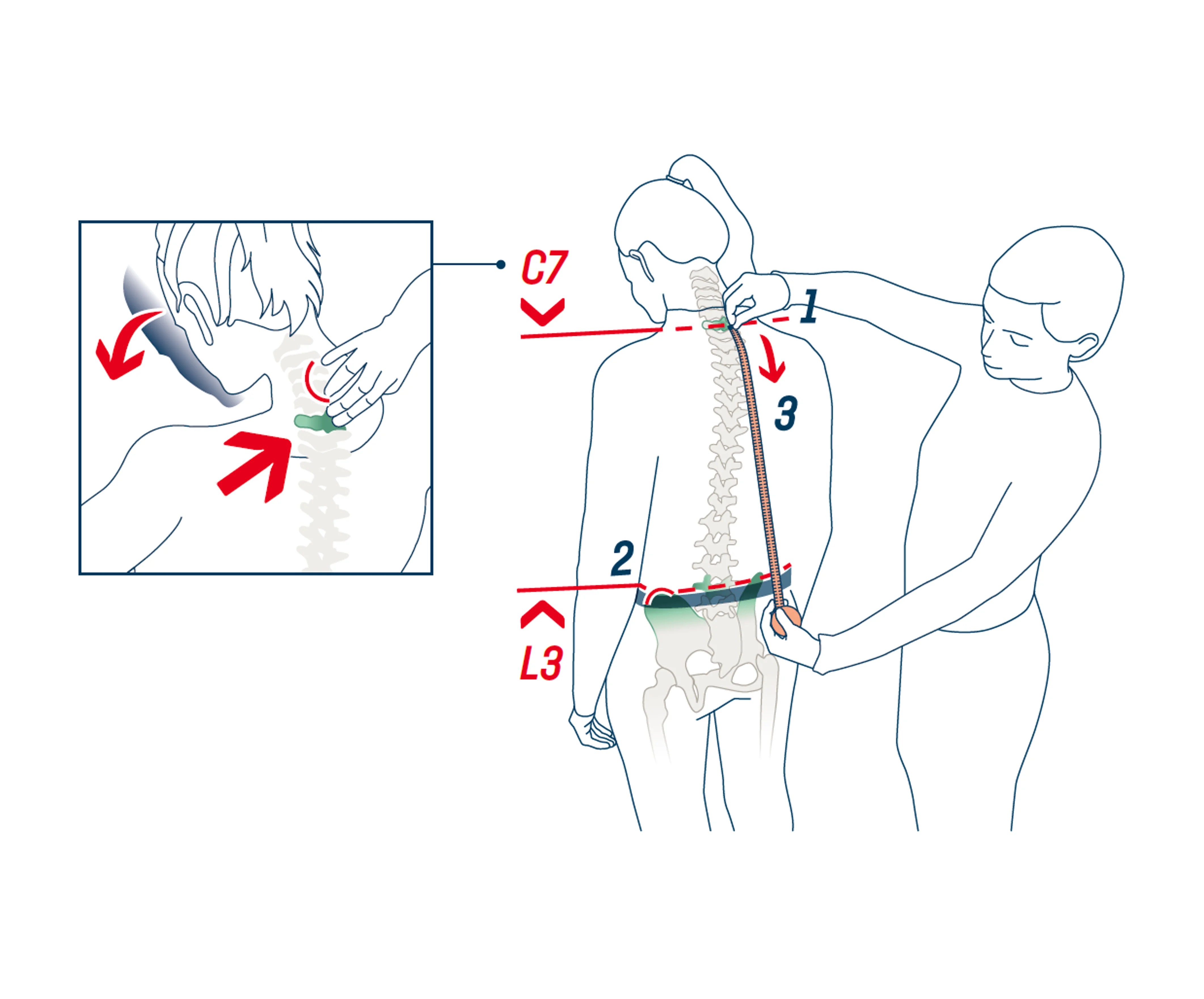
How do I measure back length?
- Measurement point 1 "neck vertebra": Tilt your head down. The C7 vertebra bulges below the base of the neck.
- Measurement point 2 "lumbar region": Use a belt to help you measure. Position the belt across the top of the hip bone. This is at the same height as the L3 lumbar vertebra.
A measuring tape can then be positioned on the C7 vertebra, and the measurement taken between this and the top of the belt or top of the hip bone. You can measure your back length by following these instructions. Once you have established your back length, you can use our size chart to see what size trekking backpack is right for you.
Types of trekking
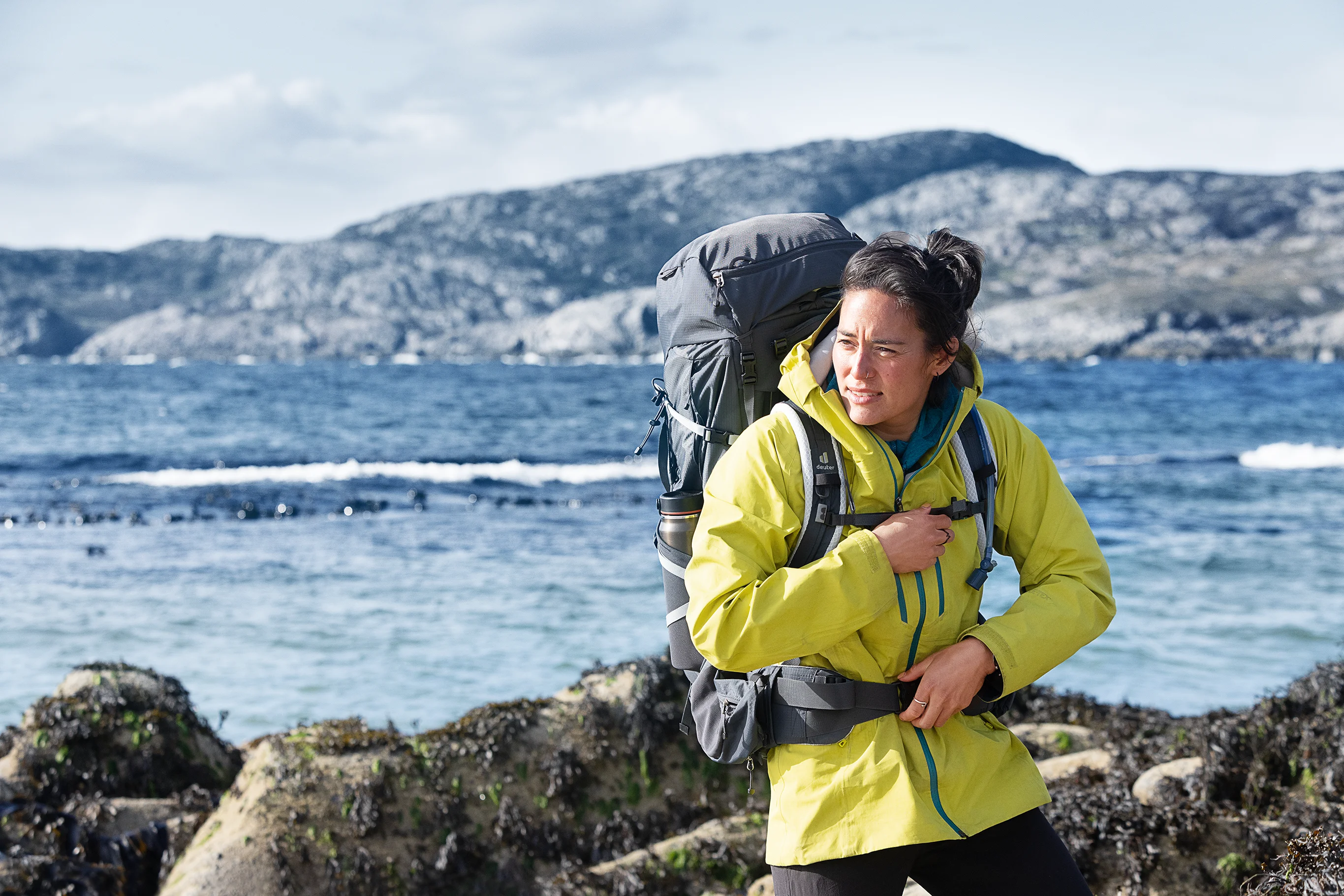
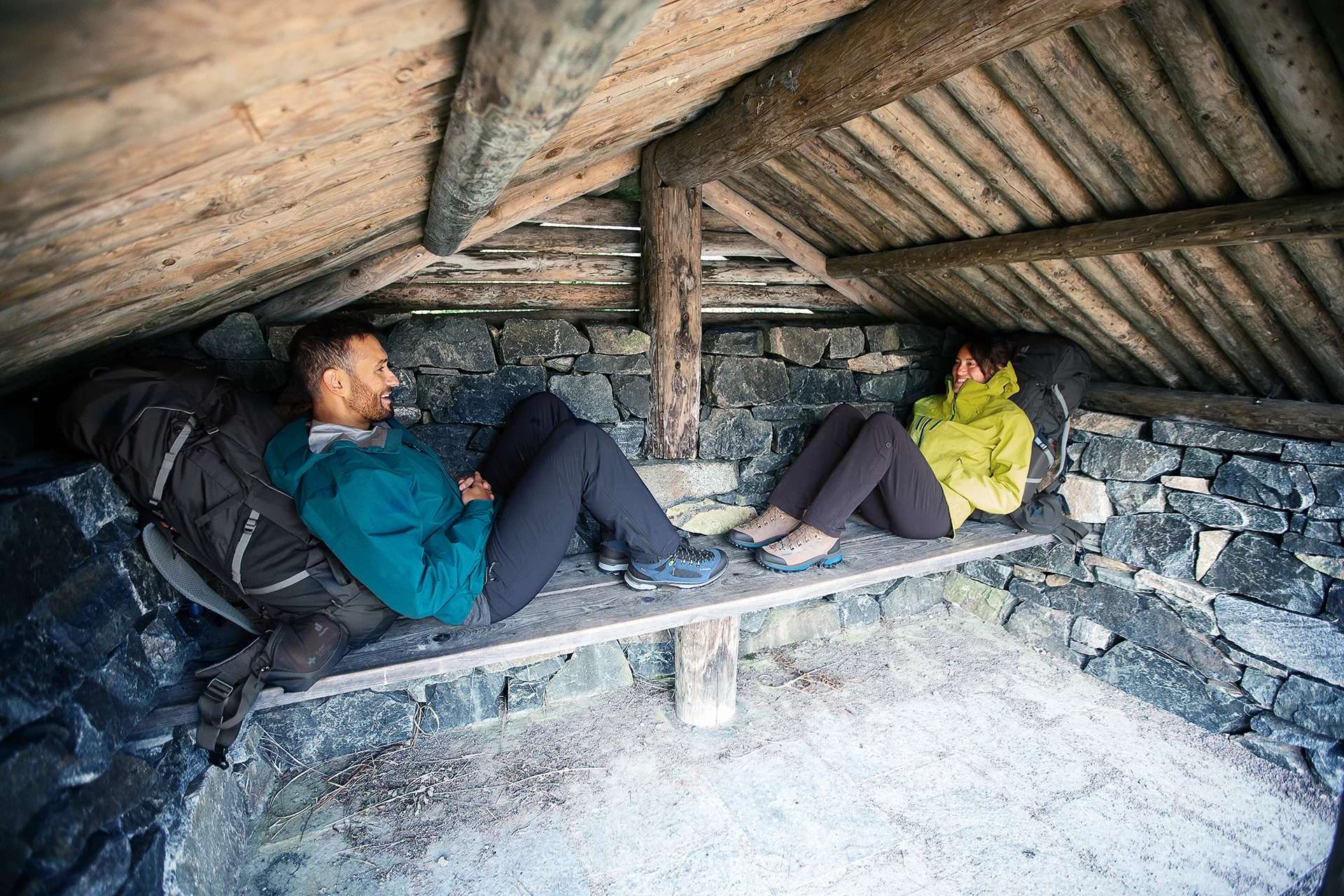
Whether it’s a long-distance thru-hike, hut-to-hut mountain hike, following a pilgrim’s trail or a full-on wilderness expedition, deuter has a trekking backpack that fits the bill. To ensure you enjoy your experience to the full, we’ve focused on maximum comfort and carefully considered features. Adjustable back systems create a tailored fit and make it easier and more comfortable to carry heavier loads for longer periods of time. Check out our trekking backpack models that cover a range of uses:

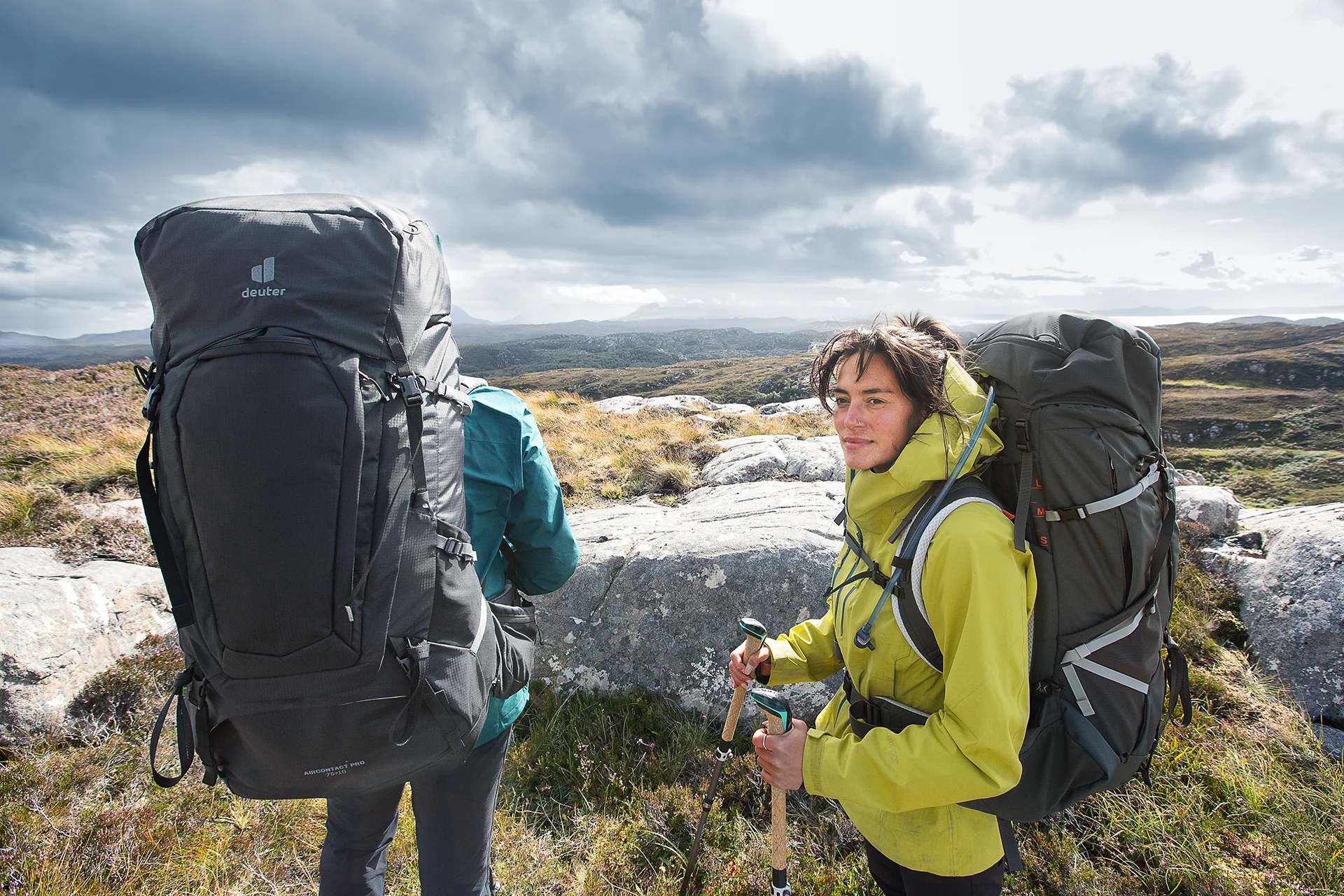
Correct way to wear a backpack
It's in the back system adjustment
With loads of 10 kg+ or when walking longer distances, ensuring the back system is correctly adjusted to your size is critical to carrying comfort. That’s why we equip all 35 liters+ backpack models with a back length adjustment system. With smaller packs, doing away with adjustable back lengths keeps the overall weight down. In such cases, back panel length can be determined by selecting a men’s/ regular (REG), women’s (SL,) or extra long (EL) model. Our backpacks are designed with an average athletic person’s proportions in mind.
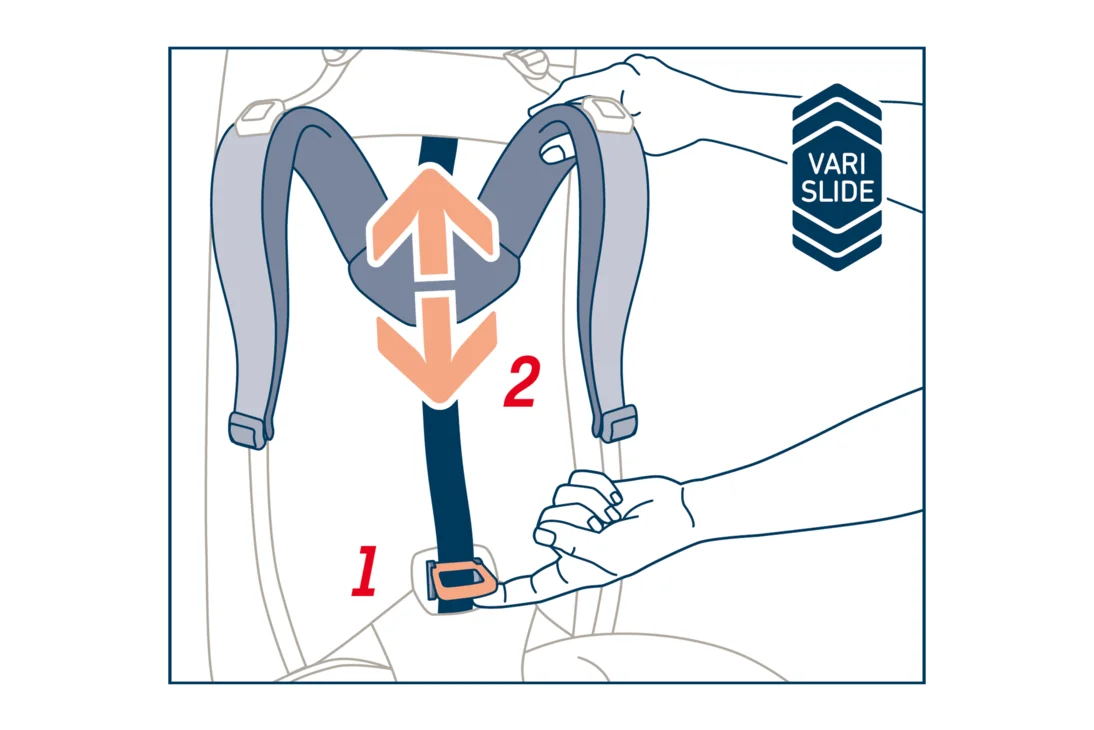
Varislide system
Precision-adjustable back length for a perfect fit on any back length.
- Lift the plastic buckle at the center of the back panel.
- At the same time, either raise or lower the shoulder strap harness to the desired position.
VariQuick system
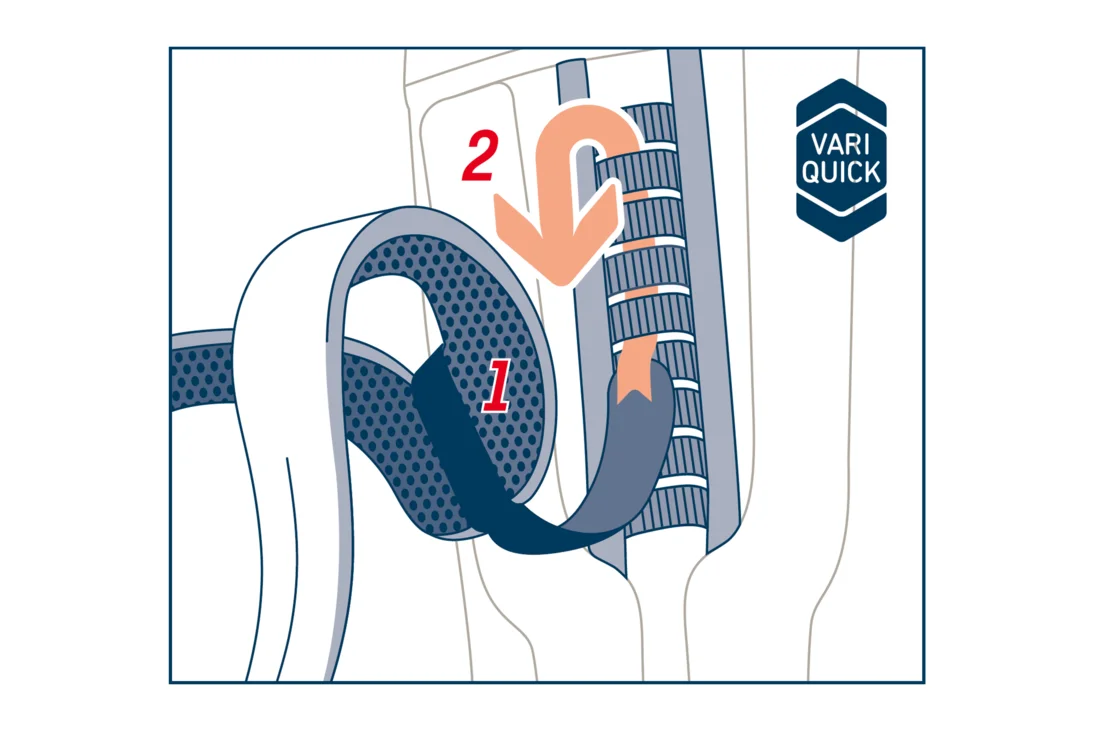
On backpacks featuring the VariQuick system, follow these steps when adjusting the back length:
- Pull back the hook & loop flap on the back panel.
- Thread the end of the strap through the desired loop in an upward direction, pull tight and fasten again.
Clip & Loop system
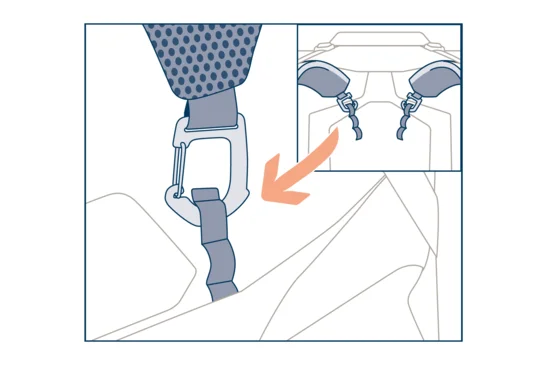
For our ultra-light trekking backpacks, we use a Clip & Loop system to adjust the back length for tailored comfort. Simply clip the carabiners into the loops at the desired height.
| Loop | 1 | 2 | 3 |
|---|---|---|---|
| Men's back length | 44 cm | 46 cm | 48 cm |
| Women's (SL) back length | 40 cm | 42 cm | 44 cm |
How to pack a trekking backpack
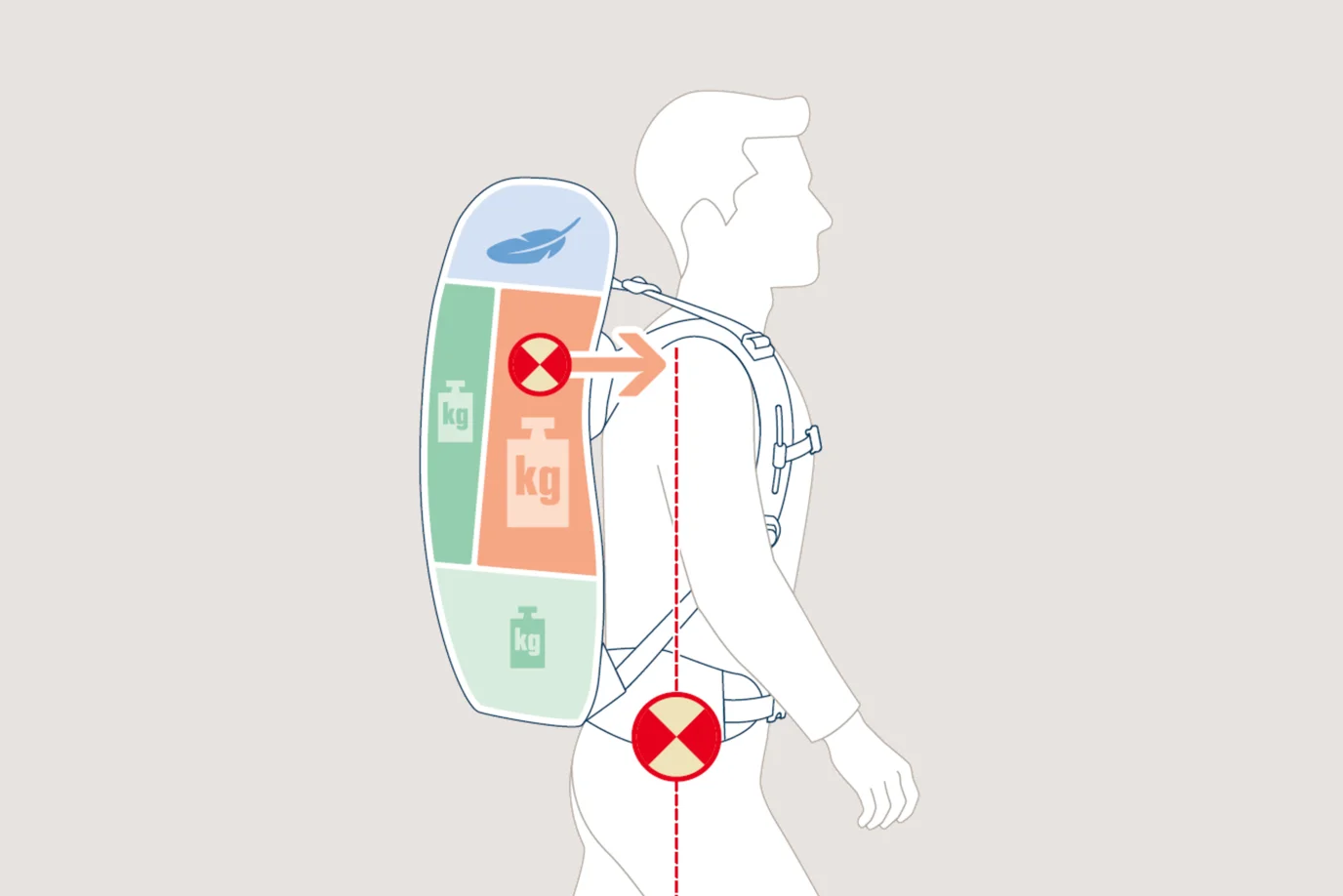
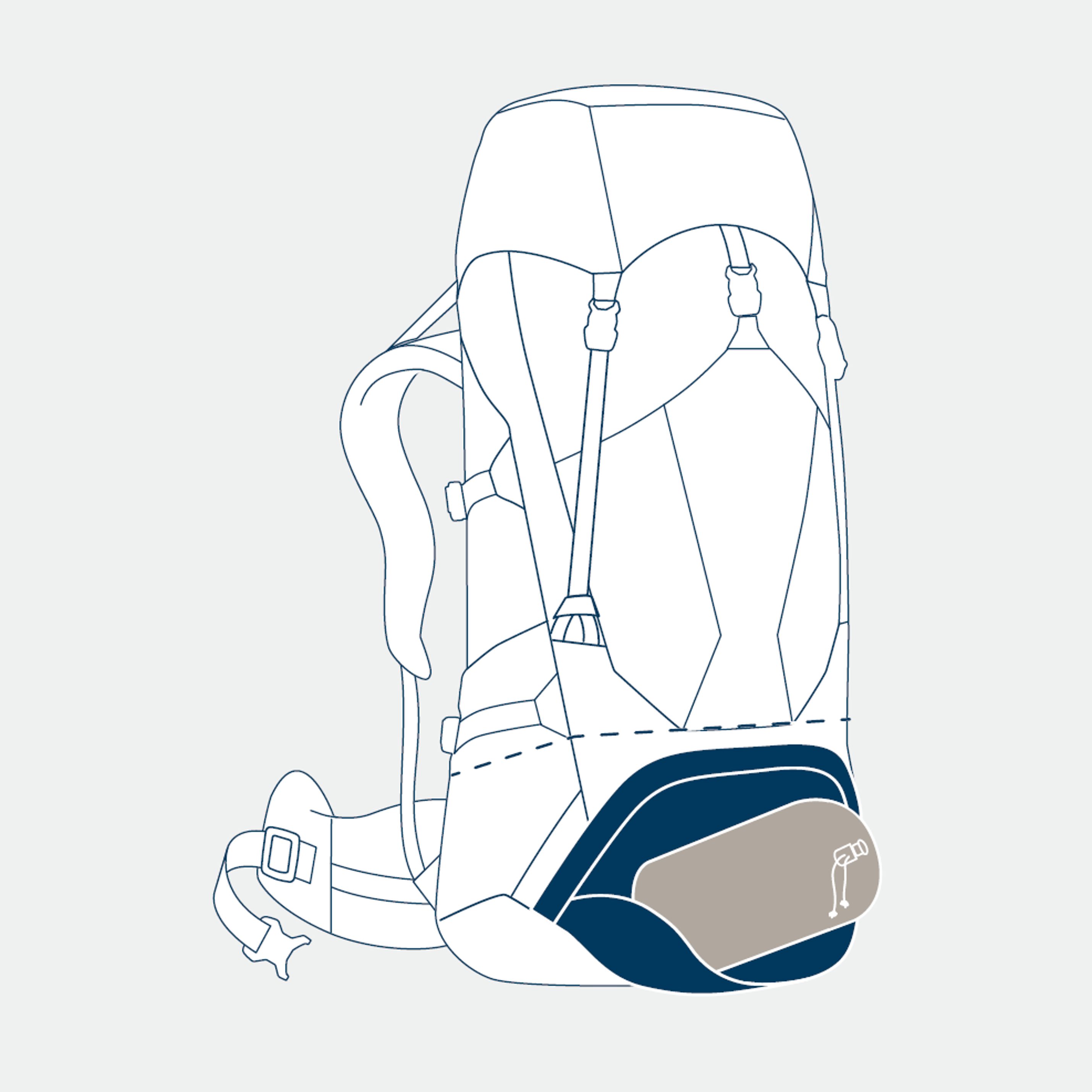
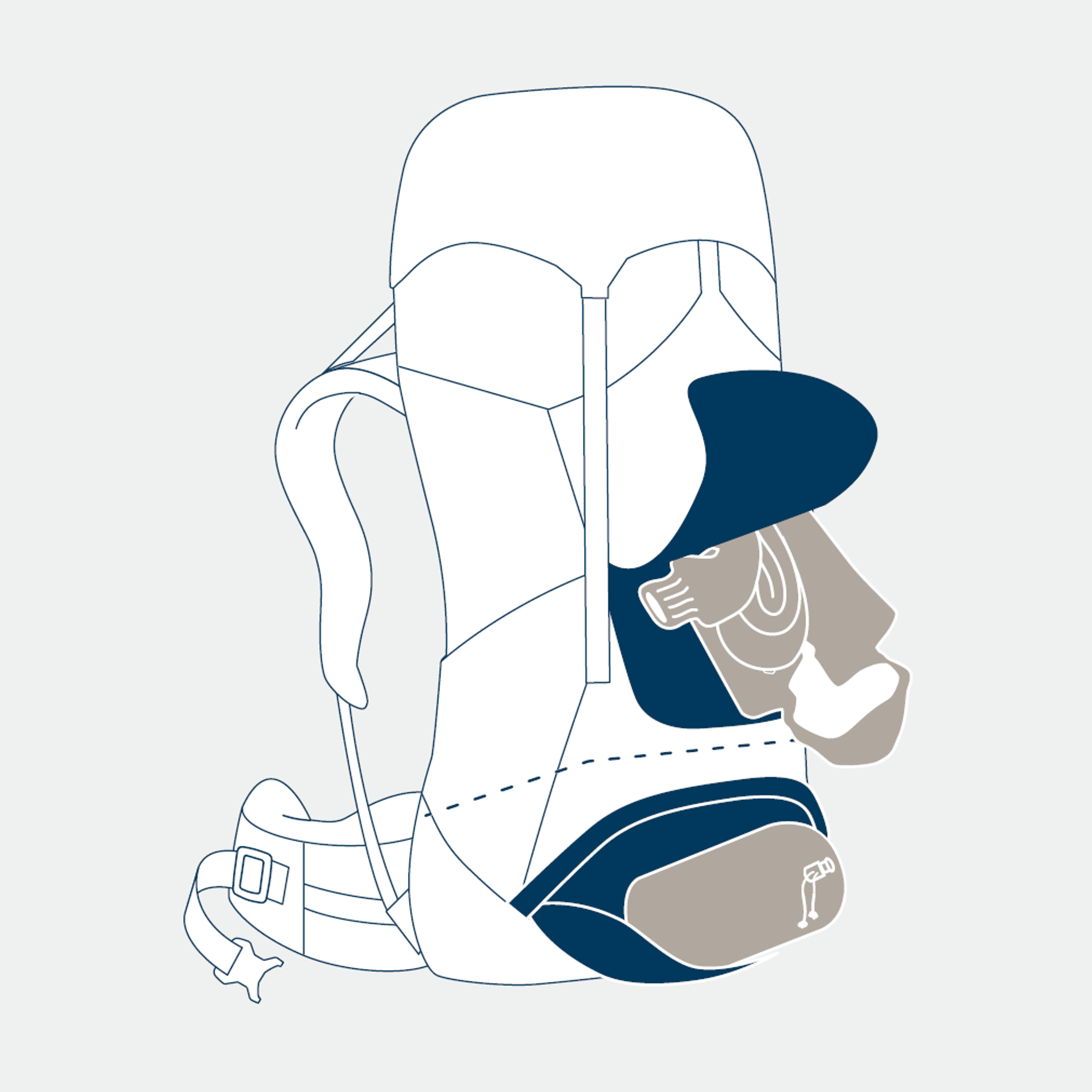
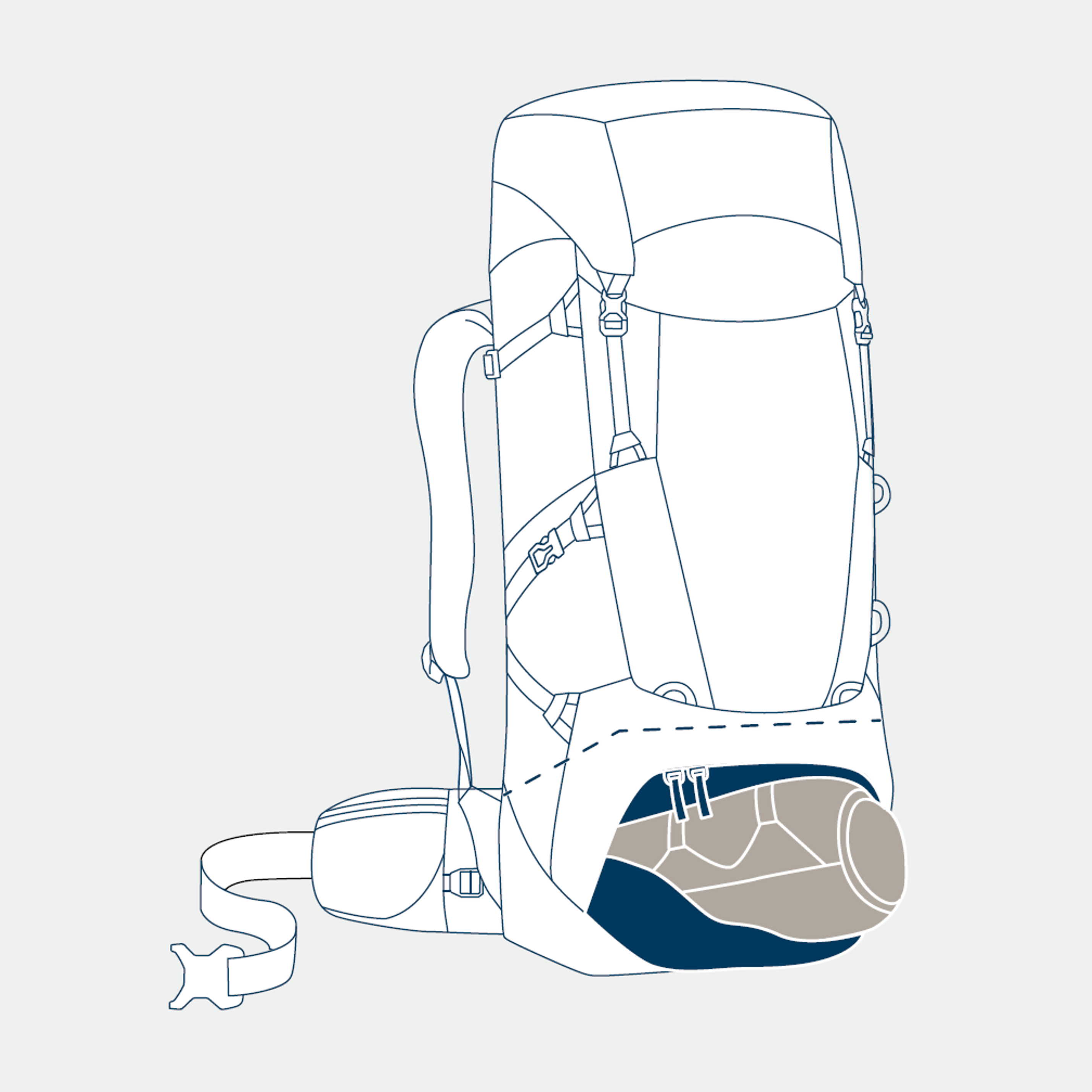
Aside from selecting the right type of backpack, using it the right way is also important in achieving the best carrying comfort. This includes packing it correctly, and for models with an adjustable back system, adjusting it precisely. The main aim when packing your backpack is to do away with any unnecessary items.
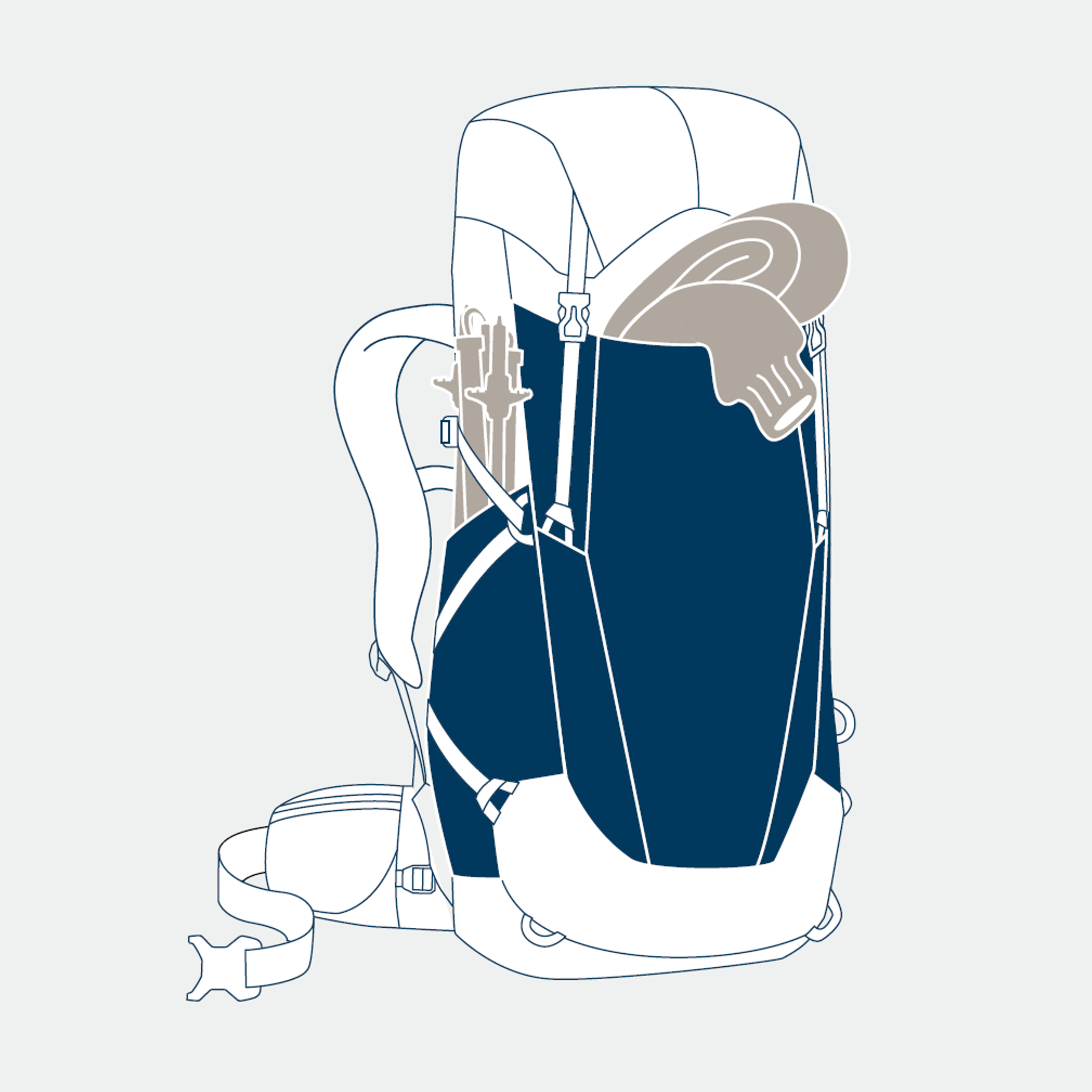
The heaviest part of the load should be close to the body and ideally at shoulder height. That way, the load’s center of gravity and your own center of gravity will be aligned, and the pack will not pull you backwards.
How heavy should a trekking backpack be?
What do these "trekking load categories" within our trekking backpacks mean?
With our load categories, we don’t mean the maximum load our trekking backpacks can take – they can handle way more than anyone would want to carry. They are intended as a guideline. It’s all about carrying comfort. The categories are decided based on a combination of the following:
- Build and sturdiness of the back system
- Expected carrying duration, e.g., trekking backpack compared to travel backpack
- Personal requirements, e.g., thru-hikers will want the lightest backpack possible, trekkers will place emphasis on comfort
- Individual fitness levels, e.g., the aspirations of an expedition team member will be greater than a hobby hiker’s
- They are also based on the usual or appropriate equipment required for that activity
Our load categories are only intended as a guide to help find the right trekking backpack. We would always recommend that customers test out carrying a backpack with a realistic load before buying.
“Recommended load up to”
These are not the maximum weight that can be carried in a particular backpack, but instead the load that is most common for that particular application. It is the weight that can be carried in comfort over several hours in a particular backpack model, when correctly fitted. When selecting a backpack model, in addition to load weight, the anticipated carrying duration and target group-specific requirements for carrying comfort are also taken into account. So, the ‘recommended load’ figures serve as an aid in finding the right backpack.
Packing lists: what you need to take on a trek
In general, for any trek:
Take only what you need – and nothing you don’t need! Together with state certified mountain guides from the German Association of Mountain and Ski Guides, we’ve compiled packing lists and some well-earned top tips. Please note that all weights are only intended as a guide and may vary. As a general rule, the higher quality the equipment, the more lightweight it will be. Have fun on your adventures!
What are the differences between deuter's trekking backpacks?
Our trekking backpacks come with either the Aircomfort or Aircontact back system, and also differ in size, features and handling. The characteristics of each backpack are geared towards a particular type of use.
Aircontact Ultra
Recommended load
Load category 1
Up to 15 kg
Type of use
Thru-hiking, distance hiking, fast-packing, trekking with accommodation / tarp
Key features
- deuter Aircontact back system
- Lightweight
- Clip & Loop adjustable back length
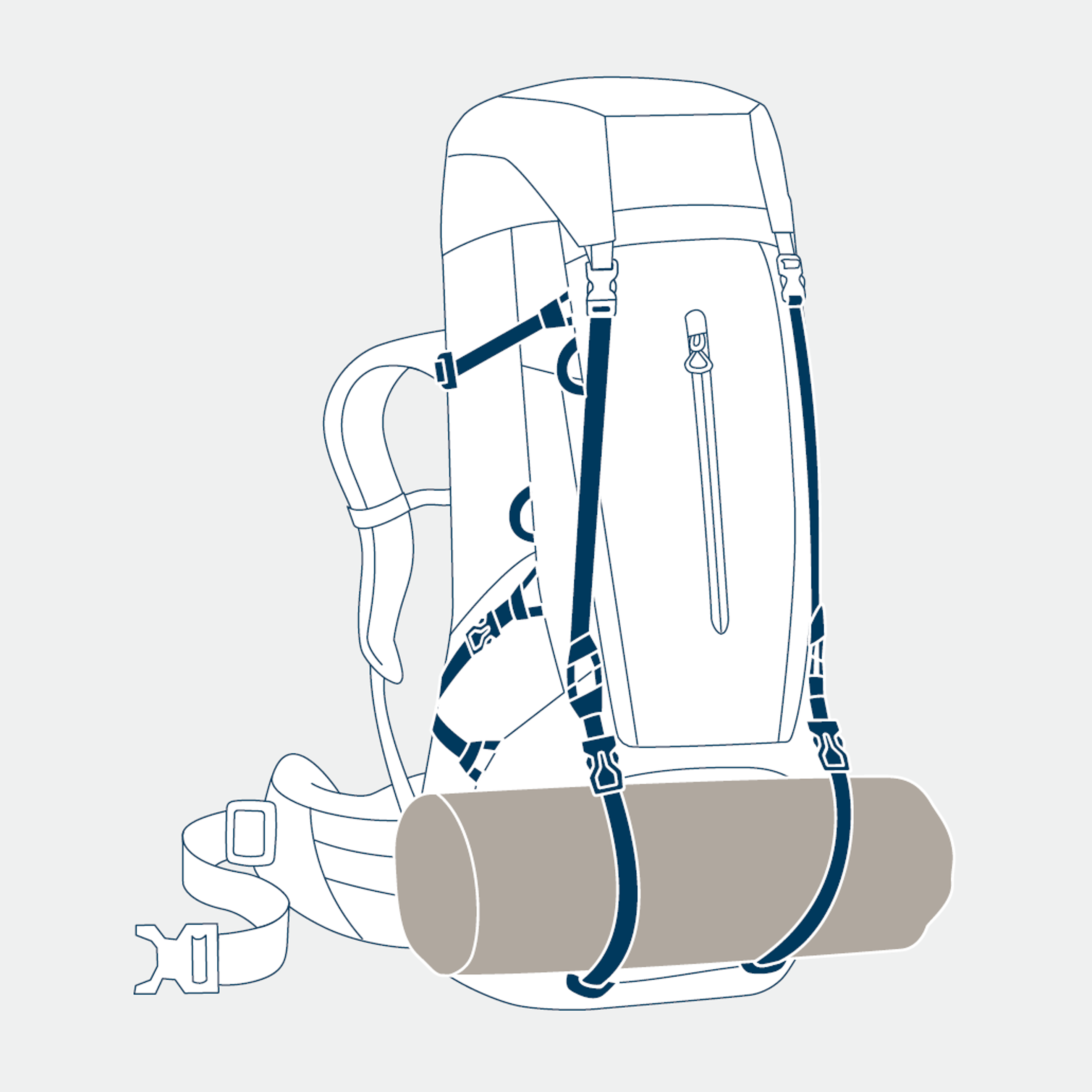
- Modular gear straps to attach a sleep mat or tent, or to compress the load in the base of the pack
- Height-adjustable, detachable lid
- Hydration compatible
Back system
- Air Spacer mesh performs several functions: comfort, cushioning and ventilation
- Lightweight spring steel frame
- Clip & Loop adjustable back length
- Ergonomic lumbar pads
- Slender, ergonomic hip fins for moderate loads
- VariFlex hip fins with ECL (Ergonomic Comfort Lock)
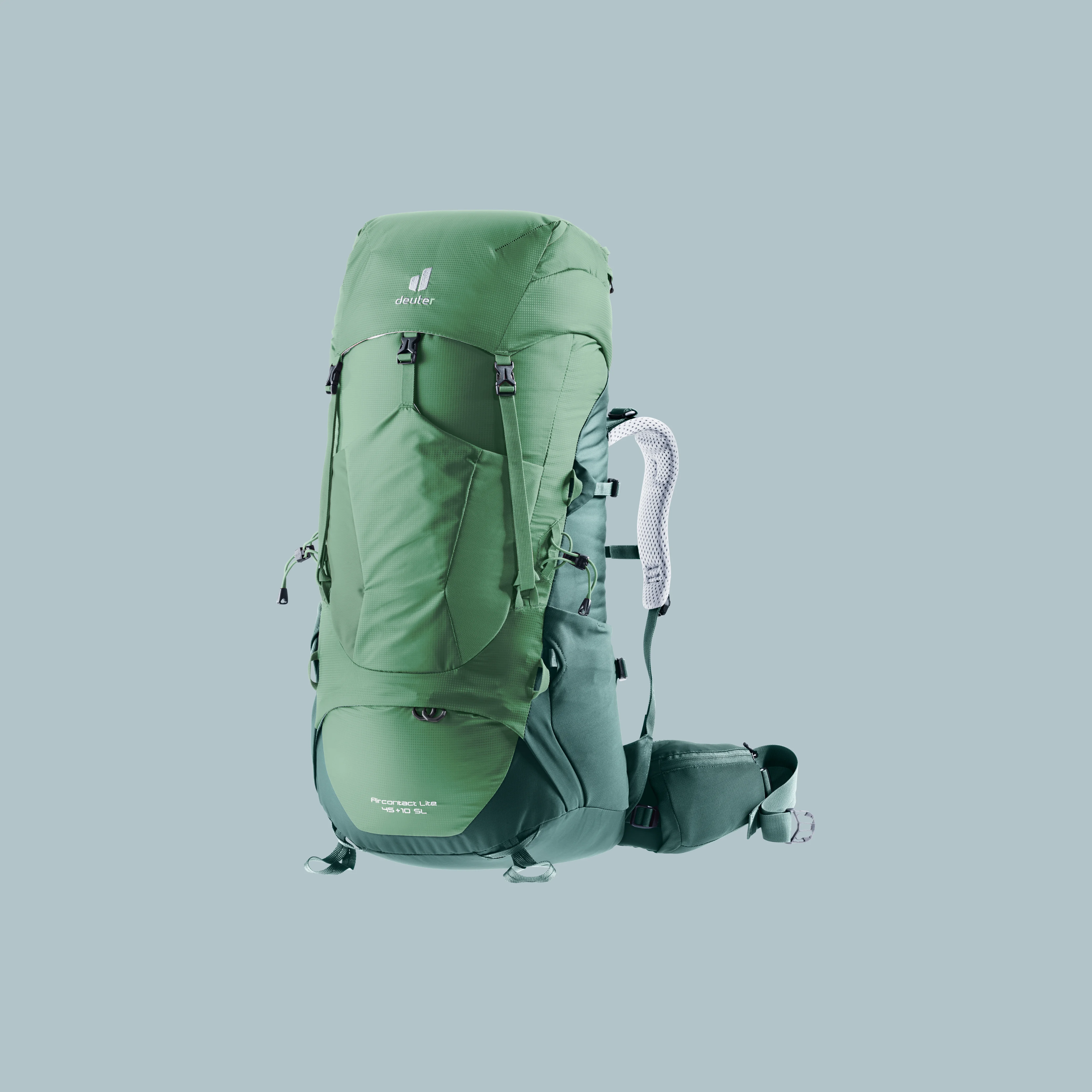
Aircontact Lite
Recommended load
Load category 1
Up to 15 kg
Type of use
Hut-to-hut trekking, alpine traverse, pilgrim route, trekking with accommodation & food
Key features
- deuter Aircontact back system
- Lightweight
- VariQuick
- Ice axe and trekking pole attachment
- Detachable backpack lid doubles as a day pack using front straps
- Separate bottom compartment
- Hydration compatible
Back system
- Open cell Aircontact foam dissipates moisture and heat
- Wide ventilation channels between back pads
- Lightweight, flexible internal frame
- VariQuick back length adjustment
- Ergonomic lumbar pads
- Slender, ergonomic hip fins for moderate loads
- ECL (Ergonomic Comfort Lock)
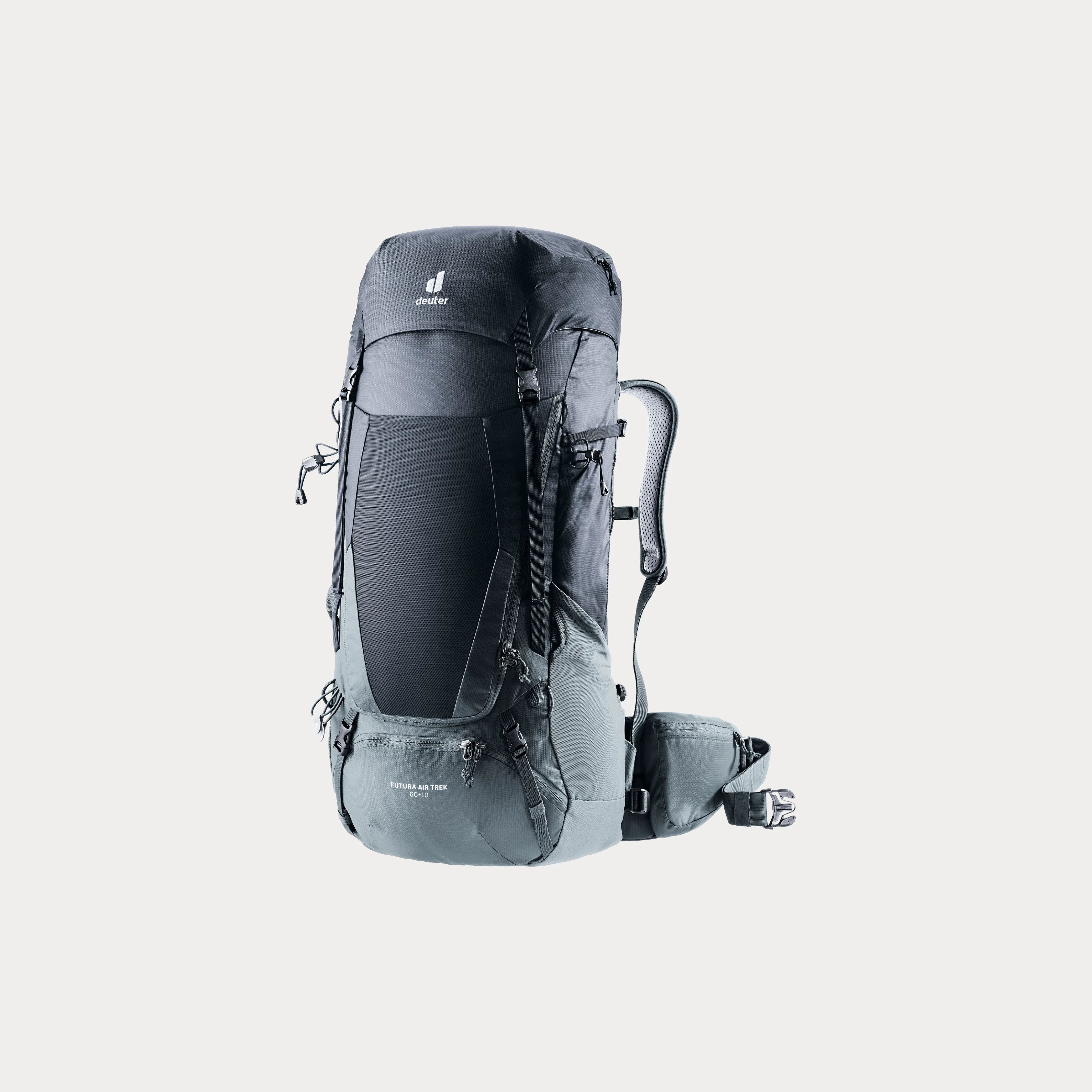
Futura Air Trek
Recommended load
Load category 2
Up to 20 kg
Type of use
Distance hiking, pilgrim route, trekking journey with accommodation & food
Key features
- deuter Aircomfort back system
- VariSlide back length adjustment
- Separate bottom compartment
- Front zipper opening
- Detachable rain cover
- Hydration compatible
Back system
- Aircomfort suspended mesh back creates maximized 2-way ventilation across back and shoulders
- VariSlide precision-adjustable back length
- Full contact in the lumbar region
- Padded, firmer hip fins
- VariFlex hip fins with ECL (Ergonomic Comfort Lock)
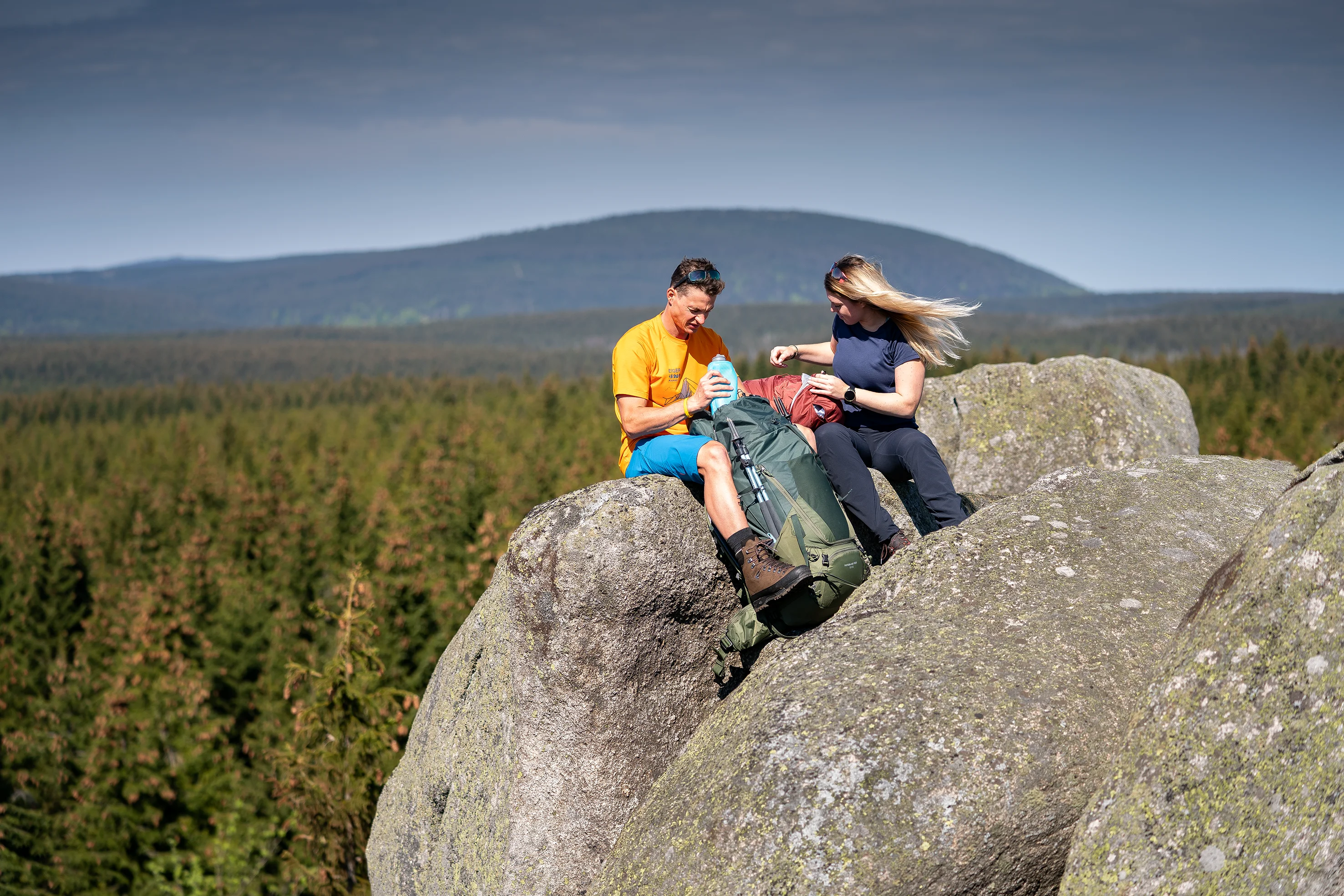
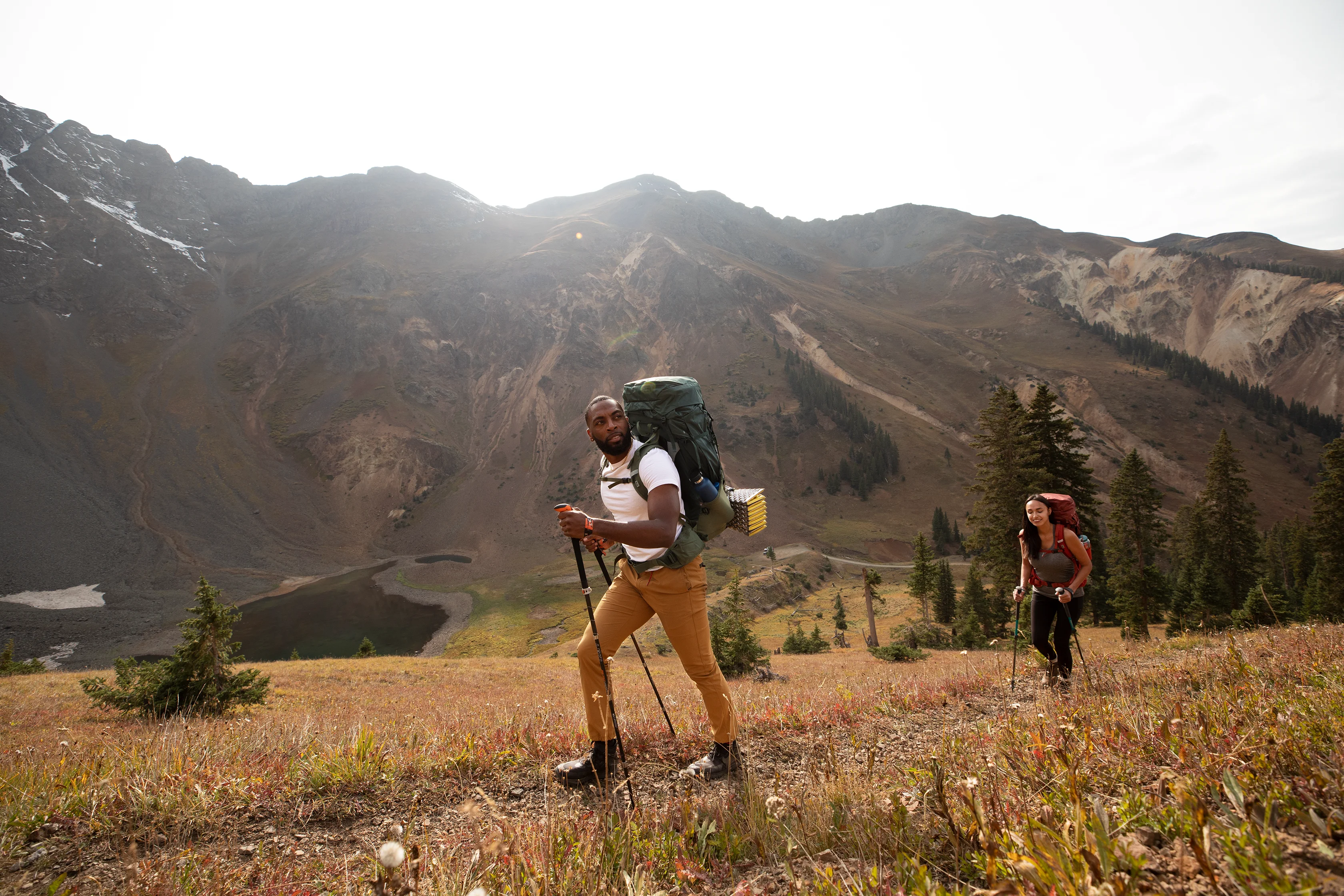
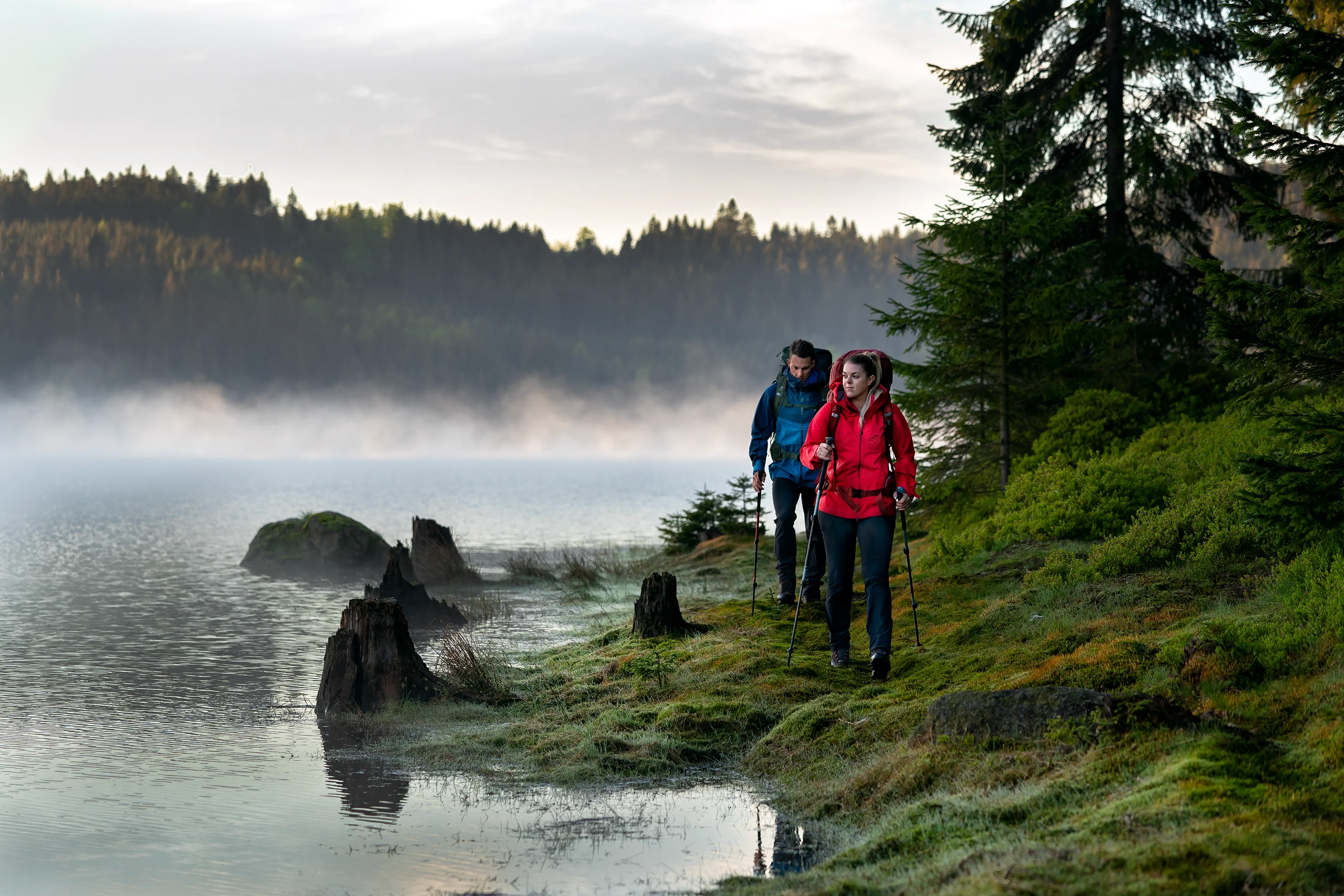
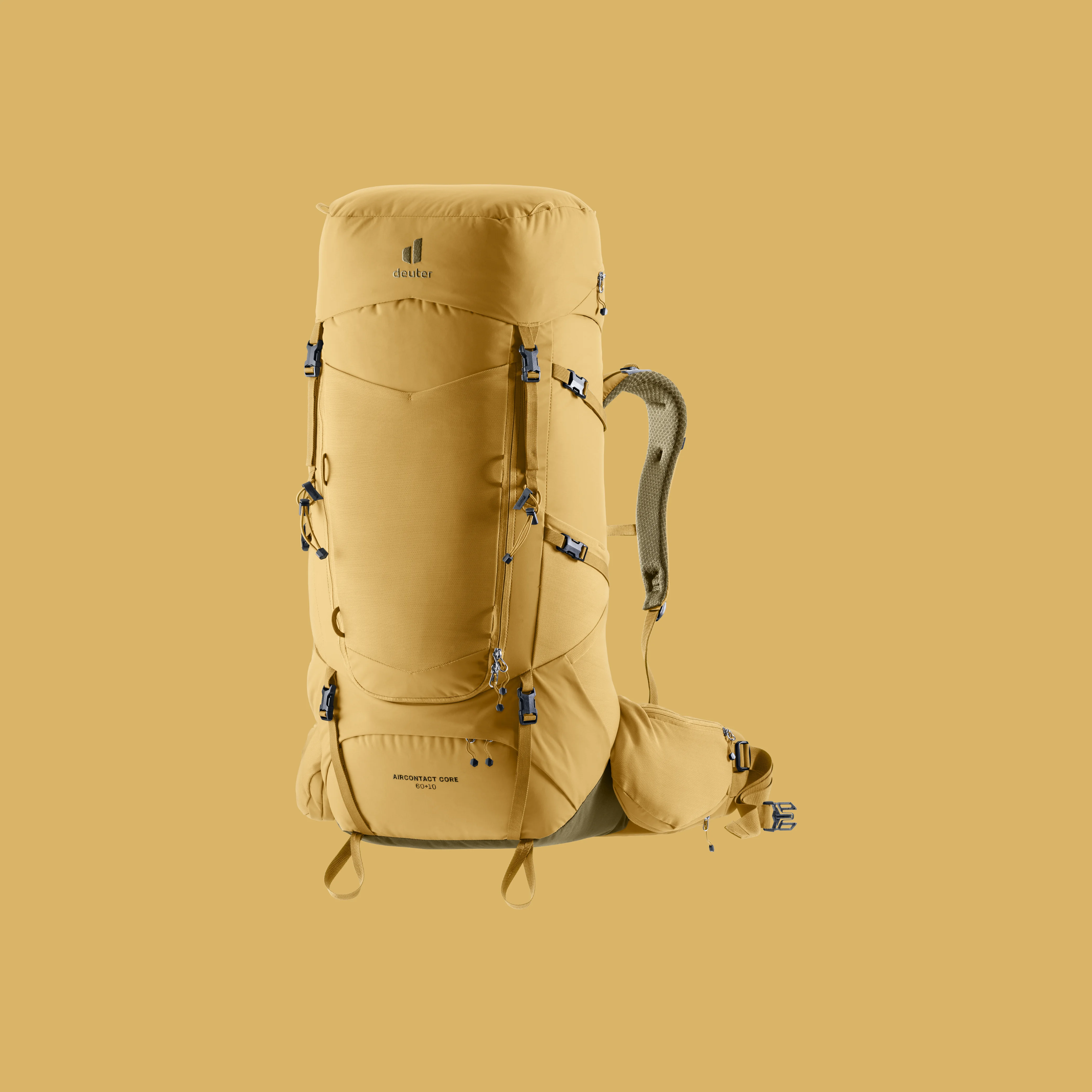
Aircontact Core
Recommended load
Load category 2
Up to 20 kg for earlier models
Up to 25 kg
Type of use
Tent-trekking, lodge trekking, backpacking with accommodation / tent
Key features
- deuter Aircontact back system
- VariSlide back length adjustment
- Modular gear straps to attach a sleep mat or tent, or to compress the load in the base of the pack
- Height-adjustable, detachable lid for extra 10 liters capacity (safely secured under the lid)
- Separate bottom compartment
- Large 3-liter volume detachable hip fin pockets (>55 L)
- J-shaped zipper opening on front (>55 L)
- Hydration compatible
Back system
- Air Spacer mesh performs several functions: comfort, cushioning and ventilation
- Y-frame combined with mobile hip fins and pivoting shoulder straps
- VariSlide precision-adjustable back length
- Ergonomic lumbar pads
- Extra-firm, ergonomically shaped hip fins designed for heavy loads
- Cushioning, load-distributing Air Spacer mesh
- VariFlex hip fins with ECL (Ergonomic Comfort Lock)
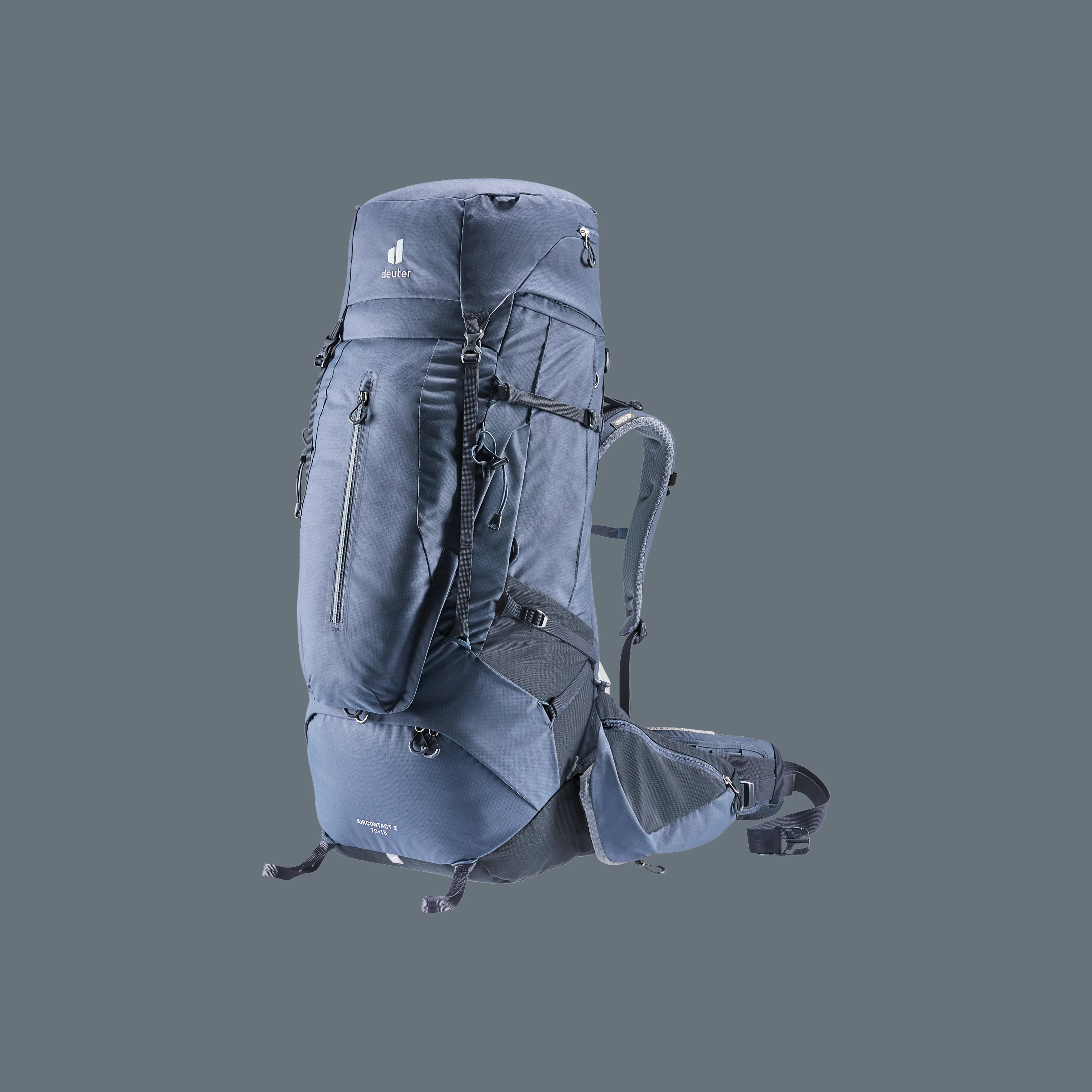
Aircontact X
Earlier models: Aircontact Pro until 2021
Recommended load
Load category 3
Up to 30 kg
Type of use
Wilderness trekking, expeditions, work & travel, self-supported with tent
Key features
- deuter Aircontact back system
- VariSlide back length adjustment
- Large front opening
- Separate bottom compartment
- Modular gear straps to attach a sleep mat or tent, or to compress the load in the base of the pack
- Two stretch side pockets and zippered front pocket with extra 5 liters capacity, large bellows side pockets for extra space
- Height-adjustable, detachable lid
- Two large detachable hip fin pockets (3 L)
- Spindrift collar with compression strap to secure extra 15 liters capacity
- Day pack inside lid compartment
- Detachable rain cover
Back system
- Air Spacer mesh performs several functions: comfort, cushioning and ventilation
- Y-frame combined with mobile hip fins and pivoting shoulder straps
- VariSlide precision-adjustable back length
- Sturdy, ergonomic lumbar pads
- Hip fins designed for heavy loads, with leg recesses
- Load distribution across a wide surface area on the back to protect the spine
- Cushioning, load-distributing Air Spacer mesh
- VariFlex hip fins with ECL (Ergonomic Comfort Lock)