
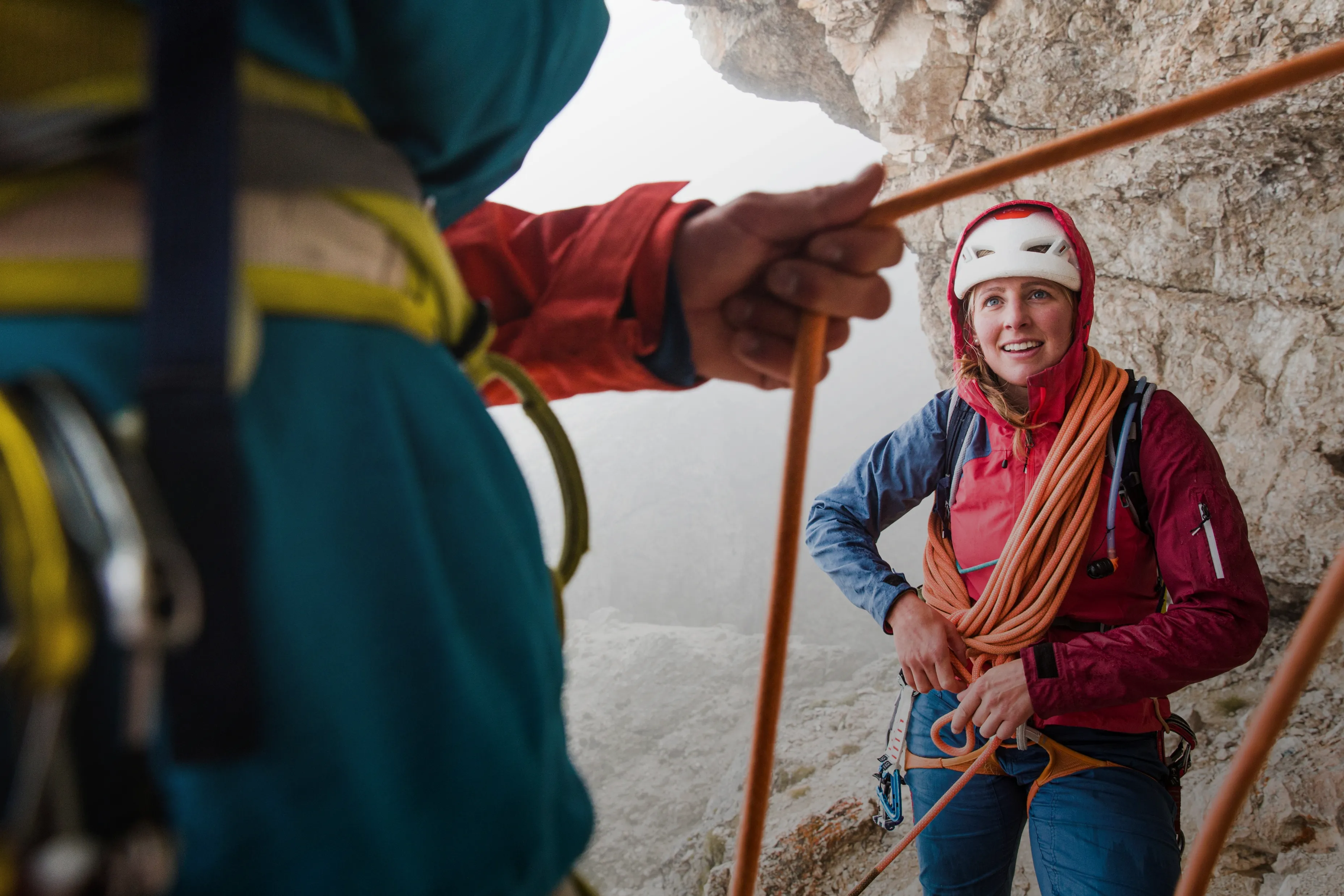
Why are there still so few female mountain guides? What does it take for women to become mountain guides? And what strengths do women bring to the role? Allgäu-based mountain guide Bianca “Bibi” Schöferle offers fascinating insights into her life in the mountains and her training to become a mountain guide.
Bibi is a passionate skier and mountaineer. Having grown up in the Allgäu region, she turned her passion for the mountains into a career after completing her degree in mechanical engineering. As only the 15th female mountain guide in Germany, she loves freeriding in the Kleinwalsertal and tackling high-alpine tours in the Western Alps. One of her personal highlights was climbing the Innominata Ridge on Mont Blanc in a single day.
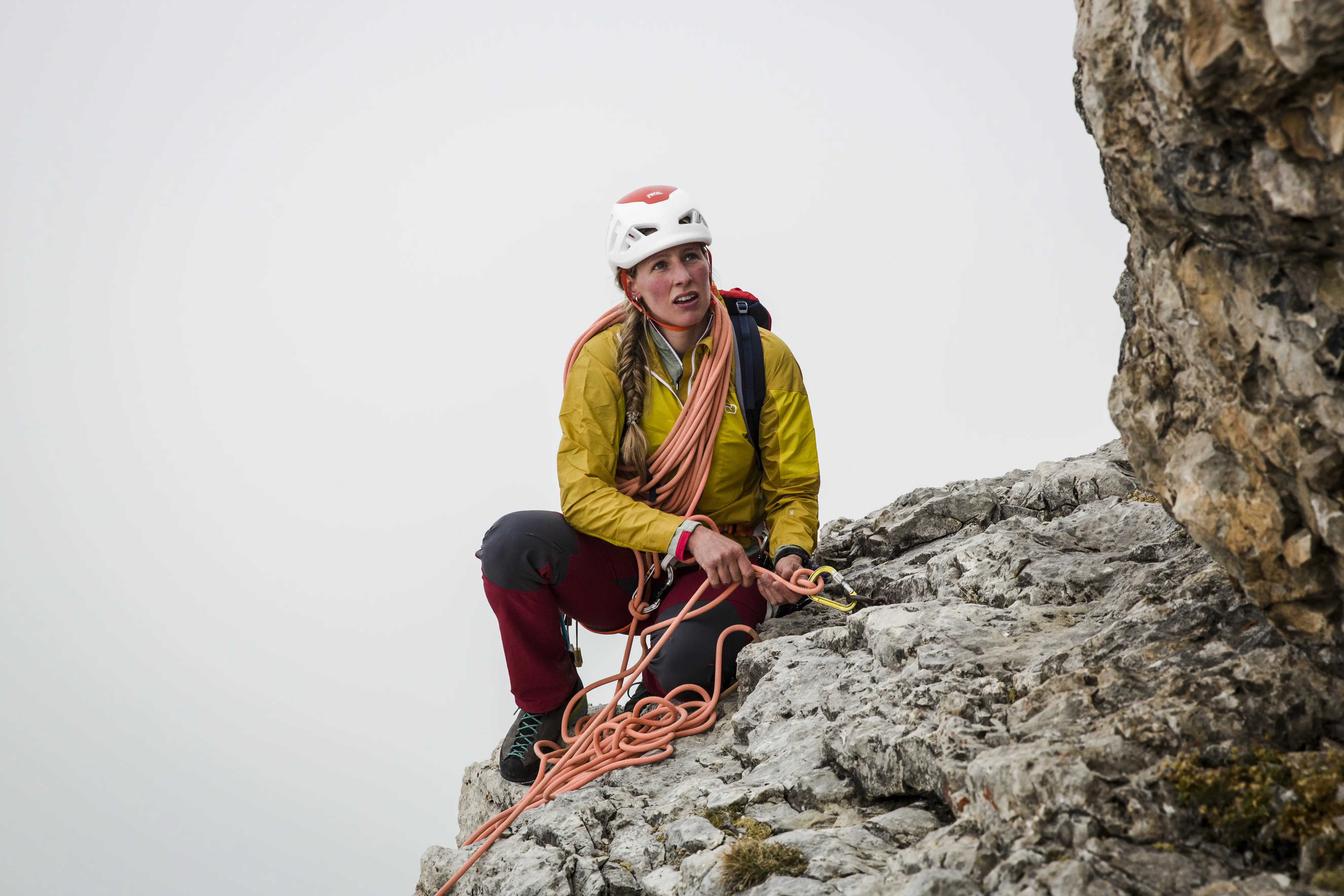
There wasn’t one specific trigger. It was more of a natural progression. I’ve always loved spending time in the mountains in my free time – climbing, ski touring, ice climbing and mountaineering.
That allowed me to gradually improve my skills and gain experience. I have several mountain guides among my circle of friends, so the idea of starting mountain guide training came quite naturally. I could easily imagine working as a mountain guide part-time alongside my office job.
Everyone starts from a different level. The important thing is not to be a beginner in every discipline. You should feel truly at home when climbing and ski touring. The more you need to catch up in certain disciplines, the more time you should allow for training to build up the necessary technical skills and physical fitness.
In my view, there are two main reasons. First, the entrance exam is challenging. We women have to meet the same standards as men, which makes sense. After all, female mountain guides work with the same guests as their male colleagues.
Second, physically demanding professions tend to be less popular among women in our society. That may sound stereotypical, but this attitude is still deeply rooted in society. Personally, I believe that women are just as capable of performing at a high level in the mountains.
I’m not currently working full-time as a mountain guide. At the moment, I only spend around two weeks a year on tours that require me to stay away from home overnight. Most of the tours I guide are right on my doorstep in Oberstdorf in the Allgäu region. There are plenty of day tours I can guide there, both in winter and summer. That’s particularly important to me right now.
When my daughter is older and more independent, that may change again. Combining life as a mountain guide with having a family and children isn’t always easy. Even so, I find it incredibly rewarding. You just have to be creative when planning your life.
For me, it’s a fantastic profession. It’s incredibly varied, and in the end, you can focus on the things you enjoy most. I also receive a great deal of appreciation from my clients.
Even for those who don’t plan to work as a mountain guide full-time later on, the training is a great and worthwhile experience. You’re taught by some of the most highly qualified professionals in Germany. And as a mountain guide, you can combine guiding with other parts of your life – whether that means taking care of your family or working reduced hours in an office job alongside guiding.